Bob haircuts come in many variations, each defined by how the shape and length are structured. Some focus on even lines, while others use angles to create movement and dimension. The way the back and front are cut plays a big role in how the style looks and feels.
An inverted bob is known for its shorter back and longer front, creating a sharp, angled silhouette. This shape adds volume at the back while keeping length around the face for a flattering finish. The hairstyle ideas below explore different inverted bob variations with modern structure and style.
22 Inverted Bob Hairstyles
Inverted Bob Hairstyle with Clean Undercut Nape
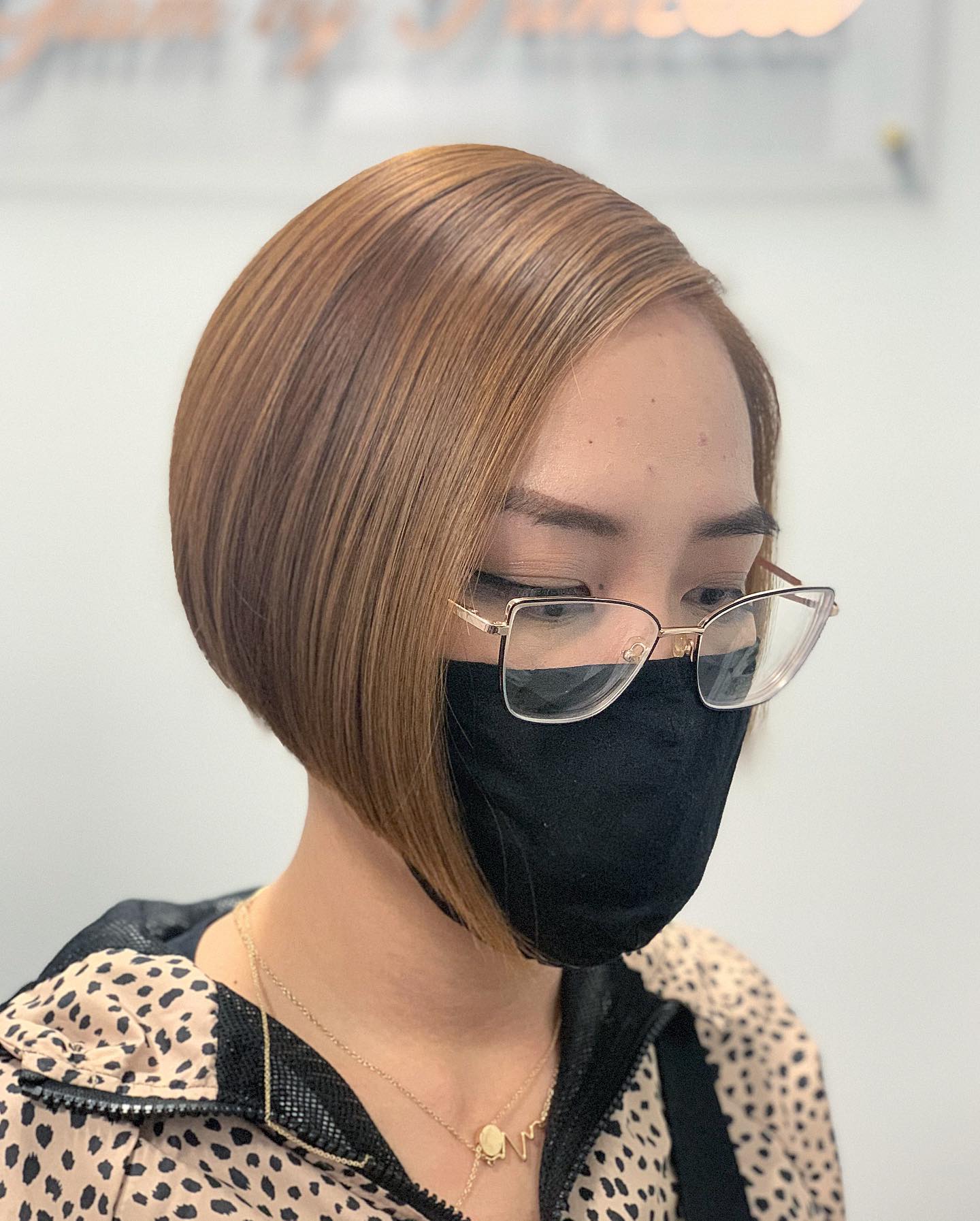
This inverted bob pairs a sharp angled shape with a clean undercut that keeps the neckline crisp.
The back sits high and tight, creating a strong contrast against the longer front pieces.
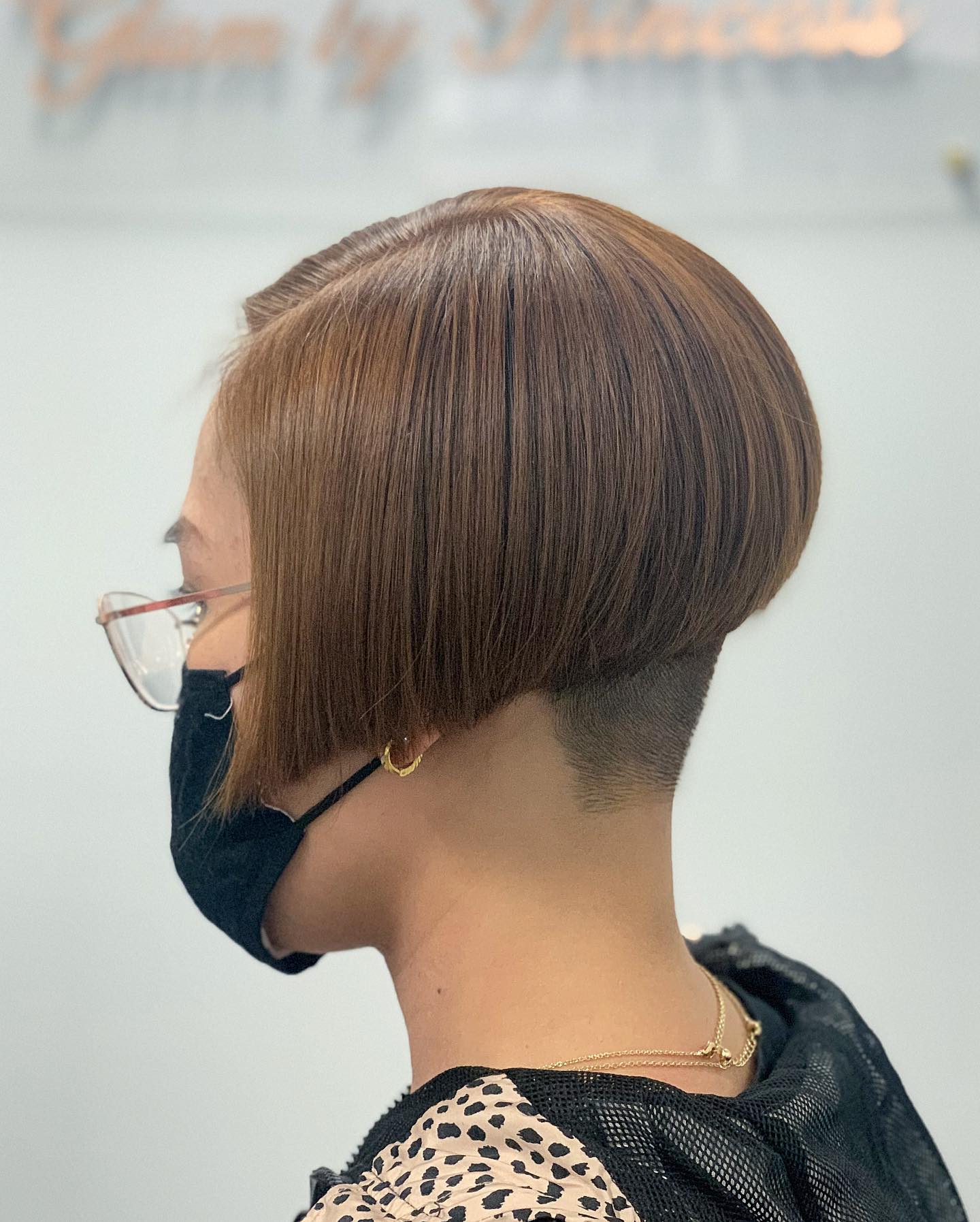
Hair falls smoothly toward the chin, framing the face with a sleek finish.
The precise cut adds structure, while the undercut removes bulk and keeps styling simple. You can wear it straight for a polished look or add slight bend for softness and movement.
Inverted Bob Hairstyle with Black, Blonde and Blue Color Blend
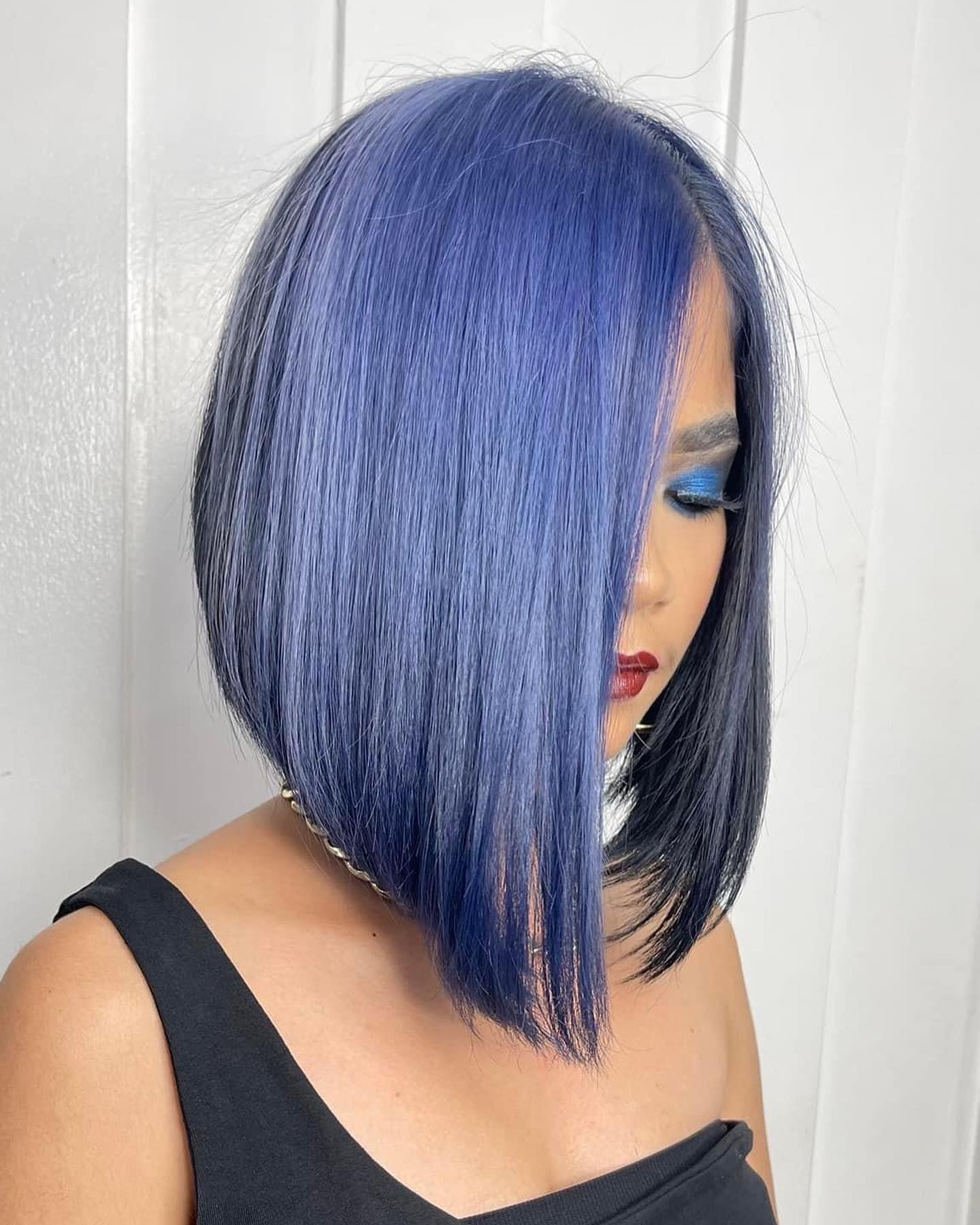
This inverted bob features a bold color mix that blends black, light blonde, and deep blue tones.
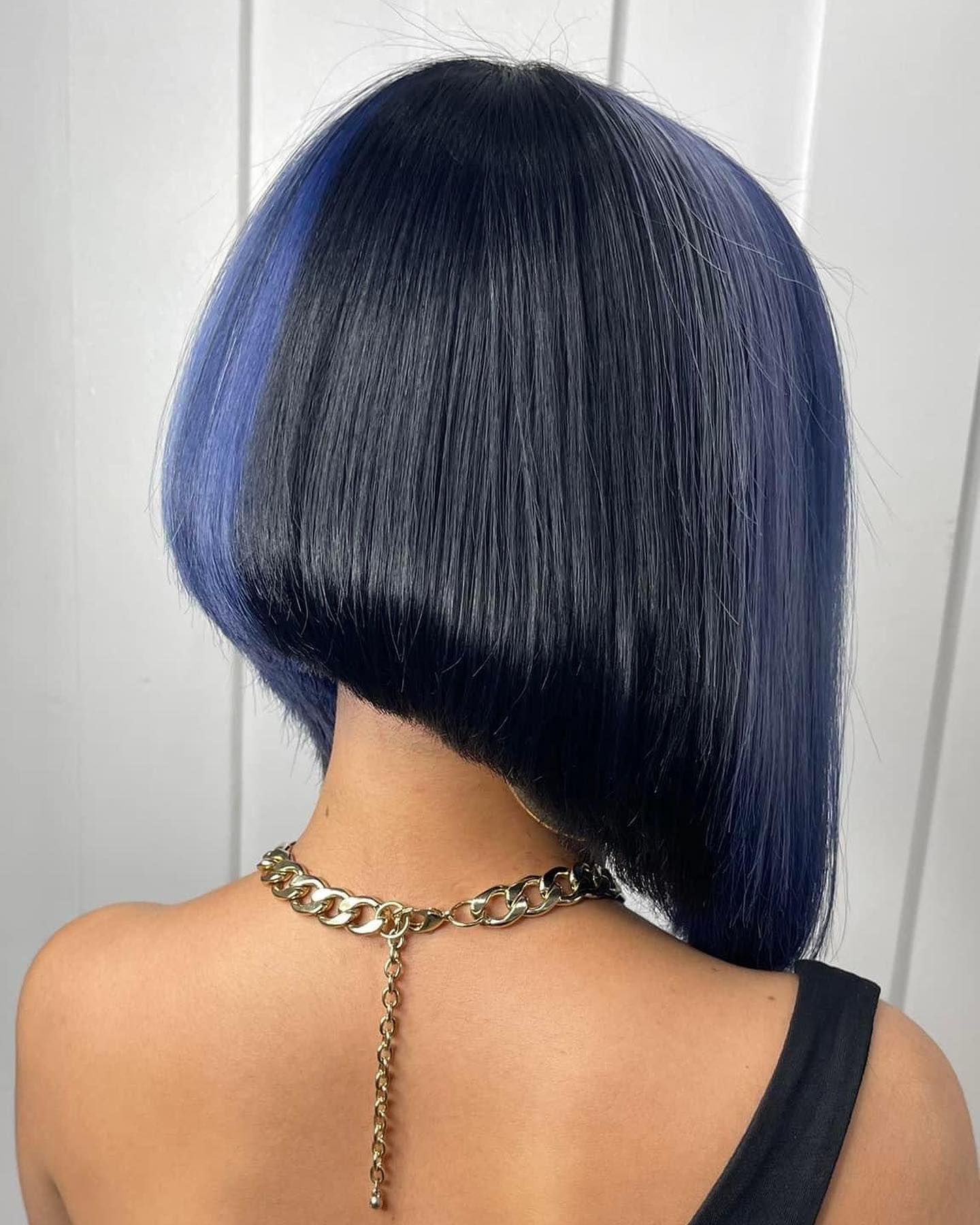
The back is shorter and rounded, creating volume that supports the longer front pieces. The front angles forward past the chin, adding sharp definition and movement.
The color placement adds depth, with darker roots transitioning into cooler blue and lighter tones.
The sleek finish keeps everything smooth, allowing the color contrast and precise cut to stand out clearly.
Sharp Inverted Bob Hairstyle with Blunt Fringe
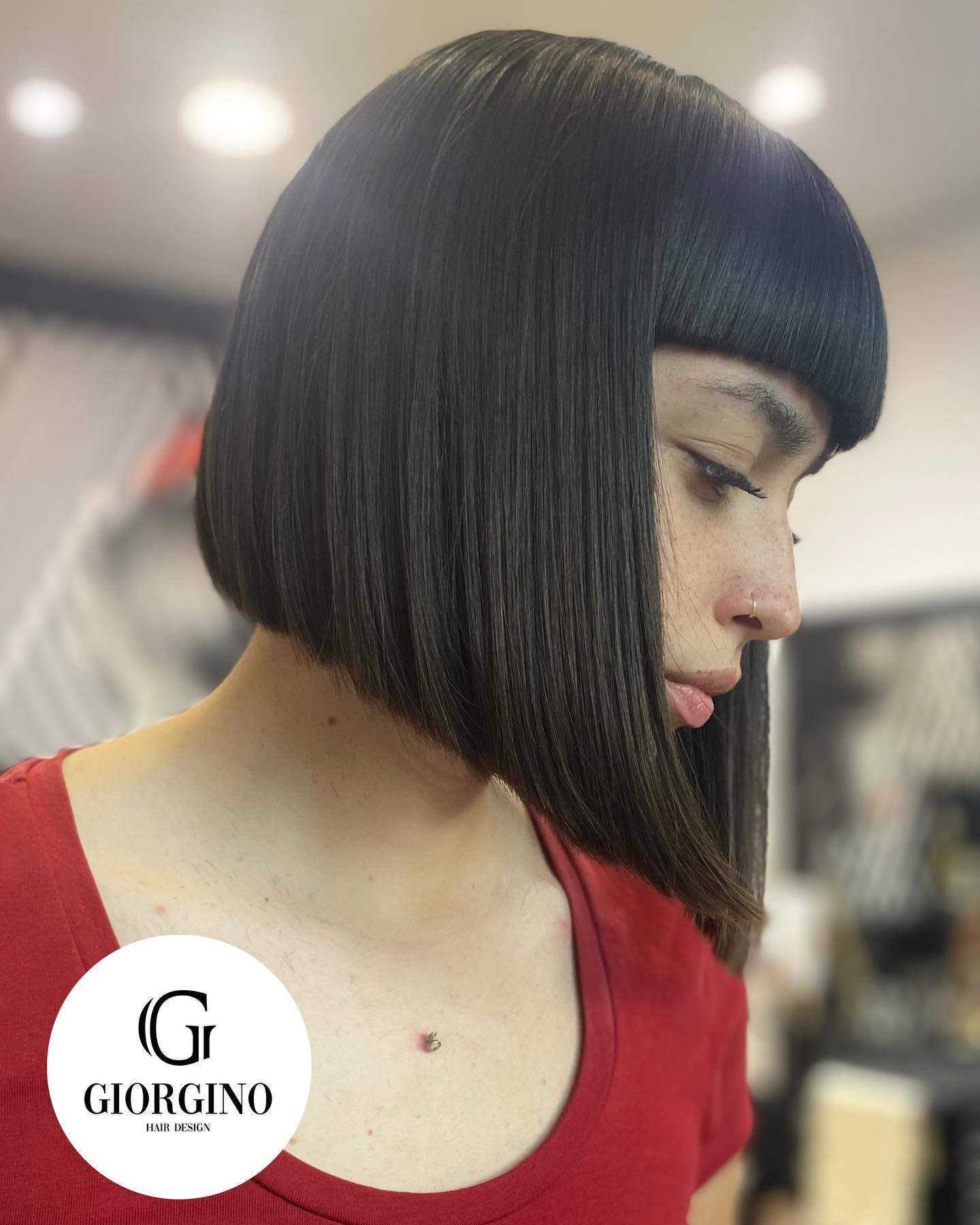
This inverted bob features a sleek, glossy finish with a strong forward angle that defines the shape.
The back sits slightly shorter, while the front extends below the chin for a bold, face-framing effect.
A blunt fringe adds structure and draws attention to the eyes, creating a clean and modern look. The precision cut keeps every line sharp and controlled.
It works best when styled straight, allowing the shine and smoothness to highlight the exact shape.
Inverted Bob Hairstyle with Undercut at Back and Sides
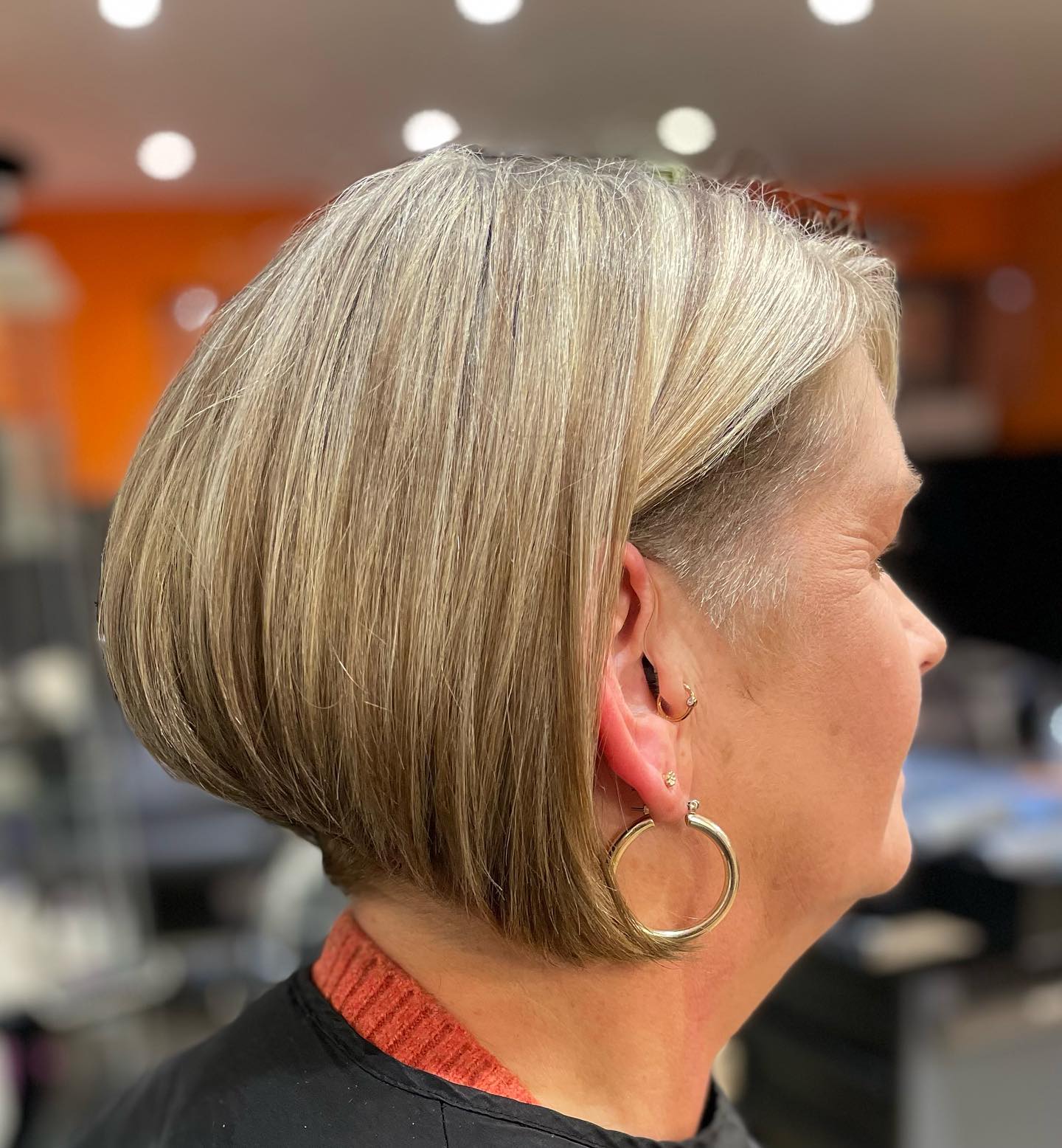
This inverted bob stands out with a clean undercut at the back and along the front sides.
The shaved sections remove bulk, allowing the longer top layers to fall smoothly and keep a rounded shape.
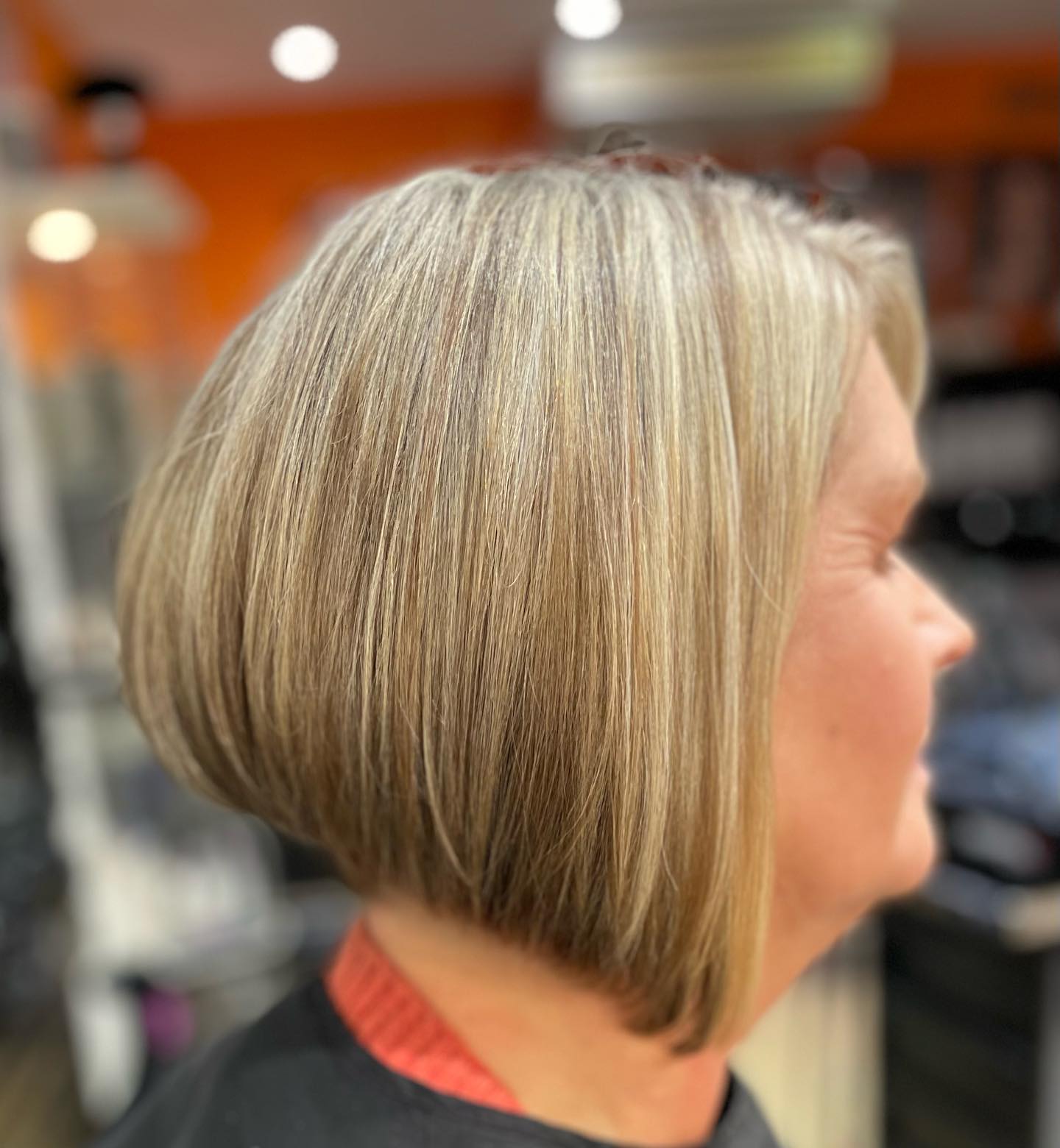
The back builds soft volume, while the front angles forward to frame the face neatly.
Light blonde tones add dimension and keep the cut from looking flat. It feels modern and practical, with easy upkeep and quick styling for everyday wear.
Inverted Bob Hairstyle with Soft Highlights and Warm Tint
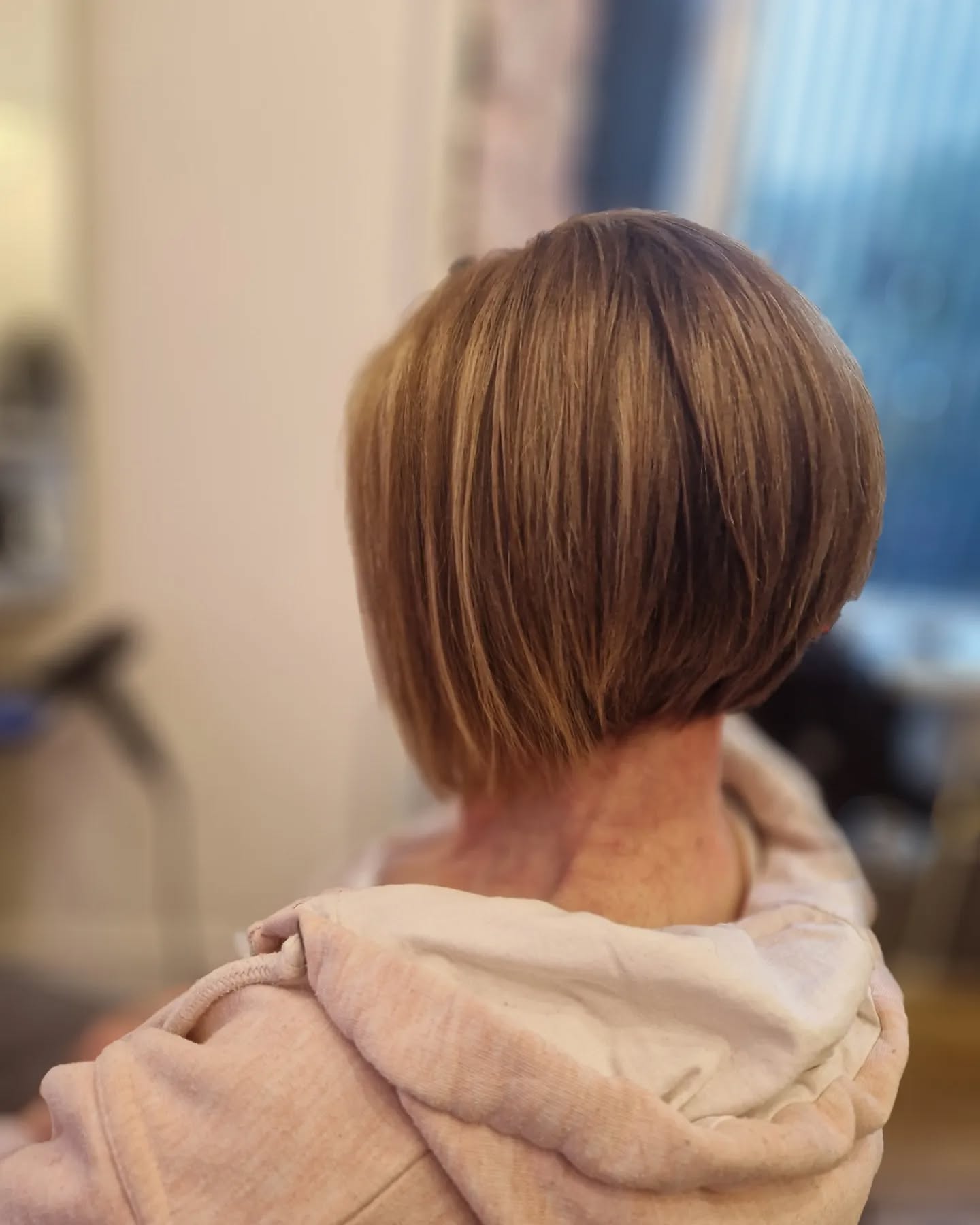
This inverted bob features a softly stacked back that builds natural volume without looking heavy or stiff.
Subtle highlights blend through a warm tint, adding depth and gentle dimension across the layers.
The cut curves slightly under at the nape, creating a smooth and rounded finish from every angle. Light layering keeps movement natural while maintaining a clean shape.
It works well for everyday wear, with minimal styling needed to keep the shape looking fresh and balanced.
Sleek Inverted Bob Hairstyle with Natural Gray Blend
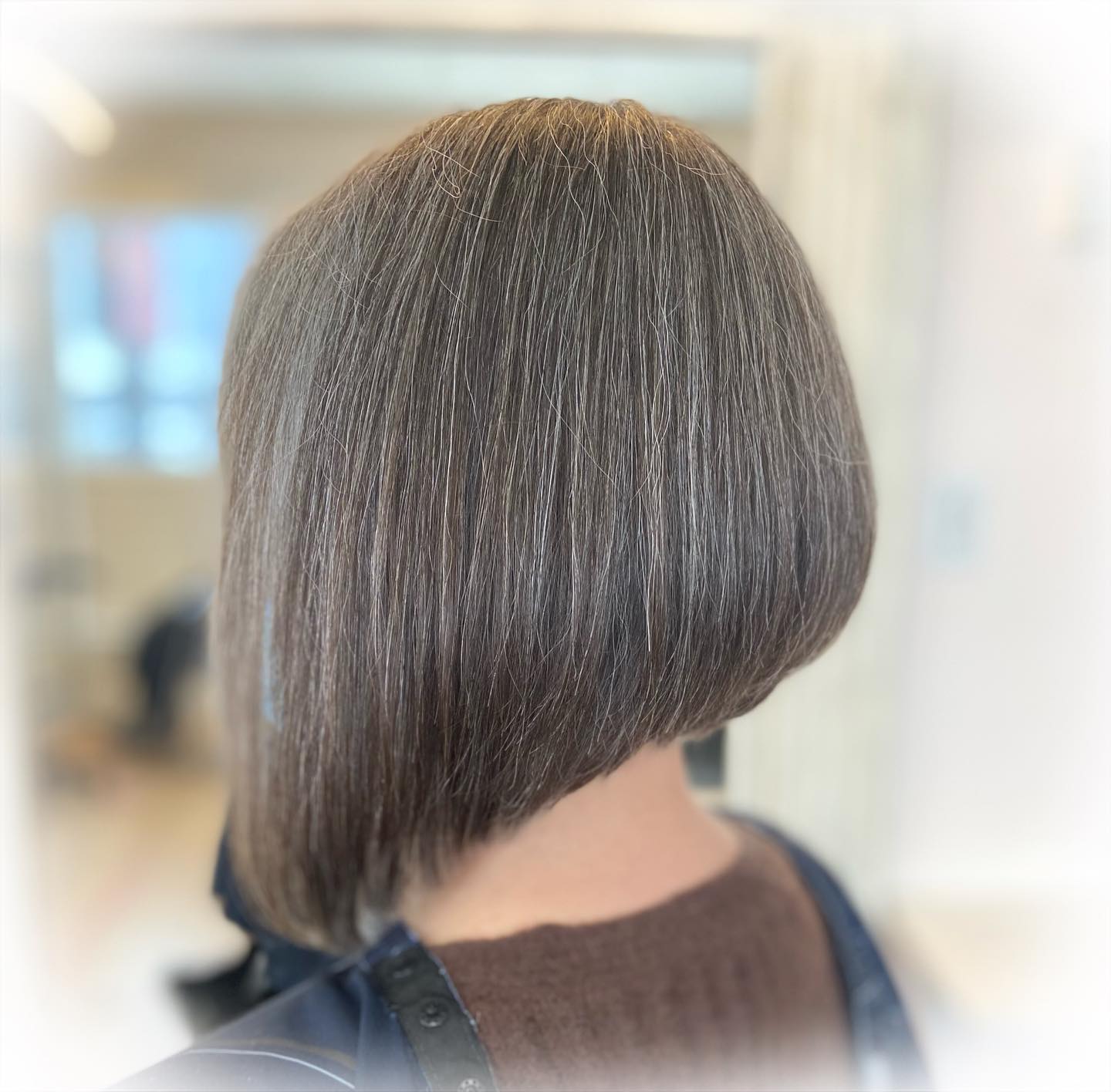
This inverted bob features a smooth, rounded shape that builds gentle volume through the back.
The length gradually extends toward the front, creating a clean and flattering angle around the face.
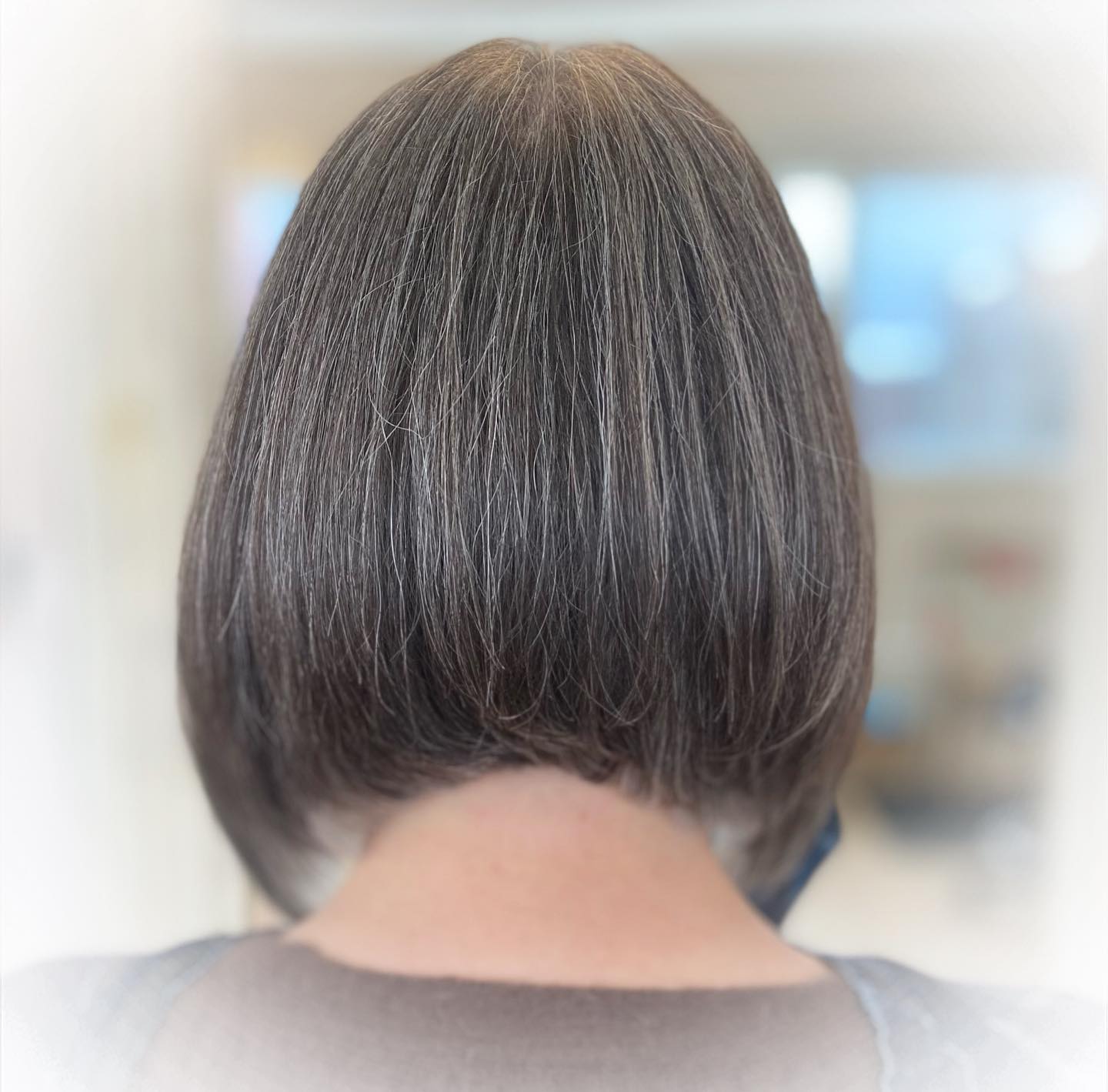
Natural gray strands blend softly with deeper tones, adding dimension without harsh contrast. The ends curve slightly inward, giving the cut a polished and controlled finish.
It works well for low-maintenance routines, as the shape holds easily with minimal styling and simple brushing.
Curly Inverted Bob Hairstyle with Defined Ringlets
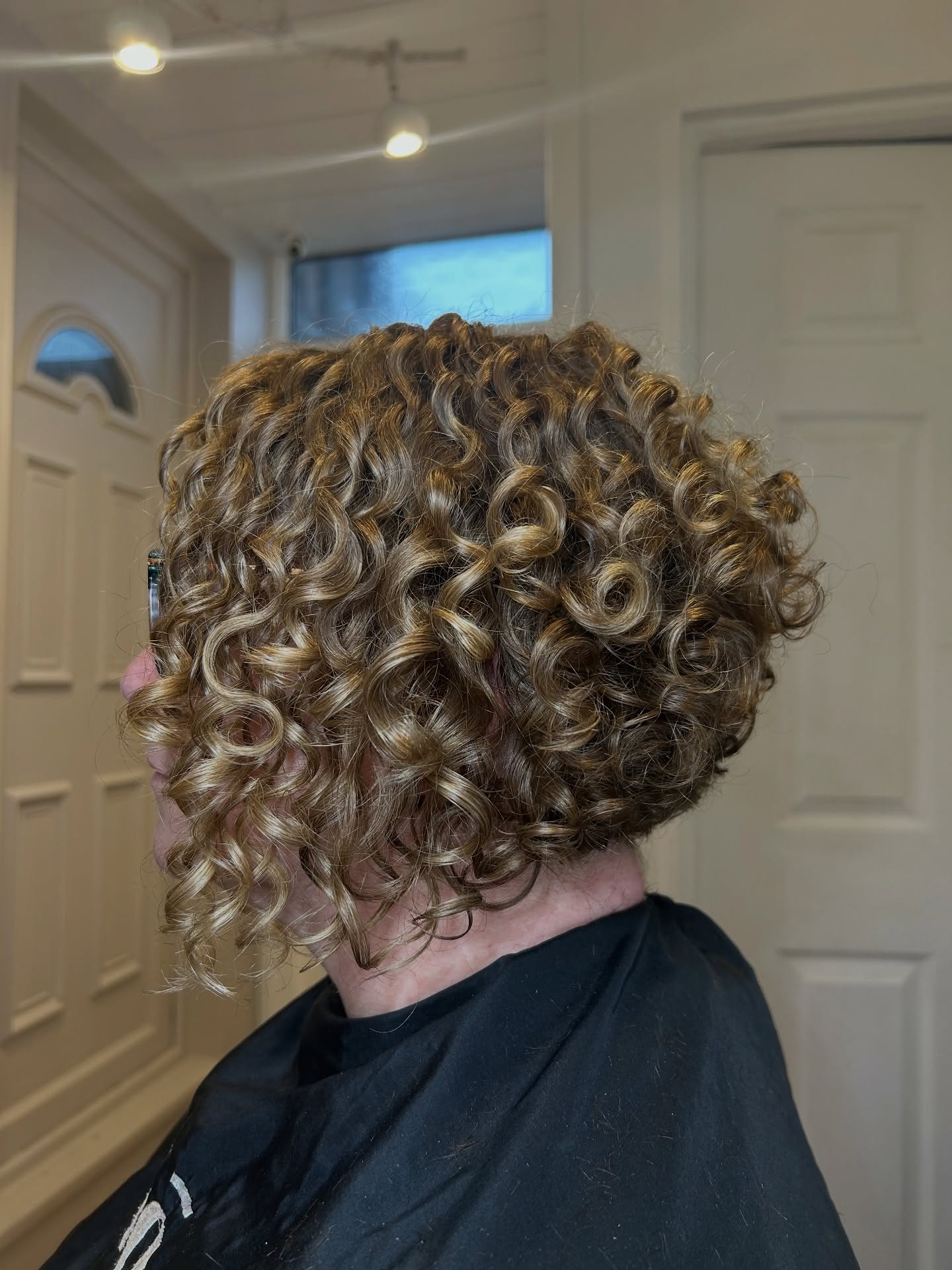
This inverted bob embraces natural curls, creating a full and textured shape that builds volume through the back.
The shorter back supports the weight, while the longer front pieces fall softly toward the face.
Defined ringlets add movement and prevent the cut from looking heavy or flat. Subtle color variation enhances depth, making each curl stand out more clearly.
It suits low-heat routines, as the shape works best when curls are hydrated and allowed to form naturally.
Soft Inverted Bob Hairstyle with Natural Shine and Side Part
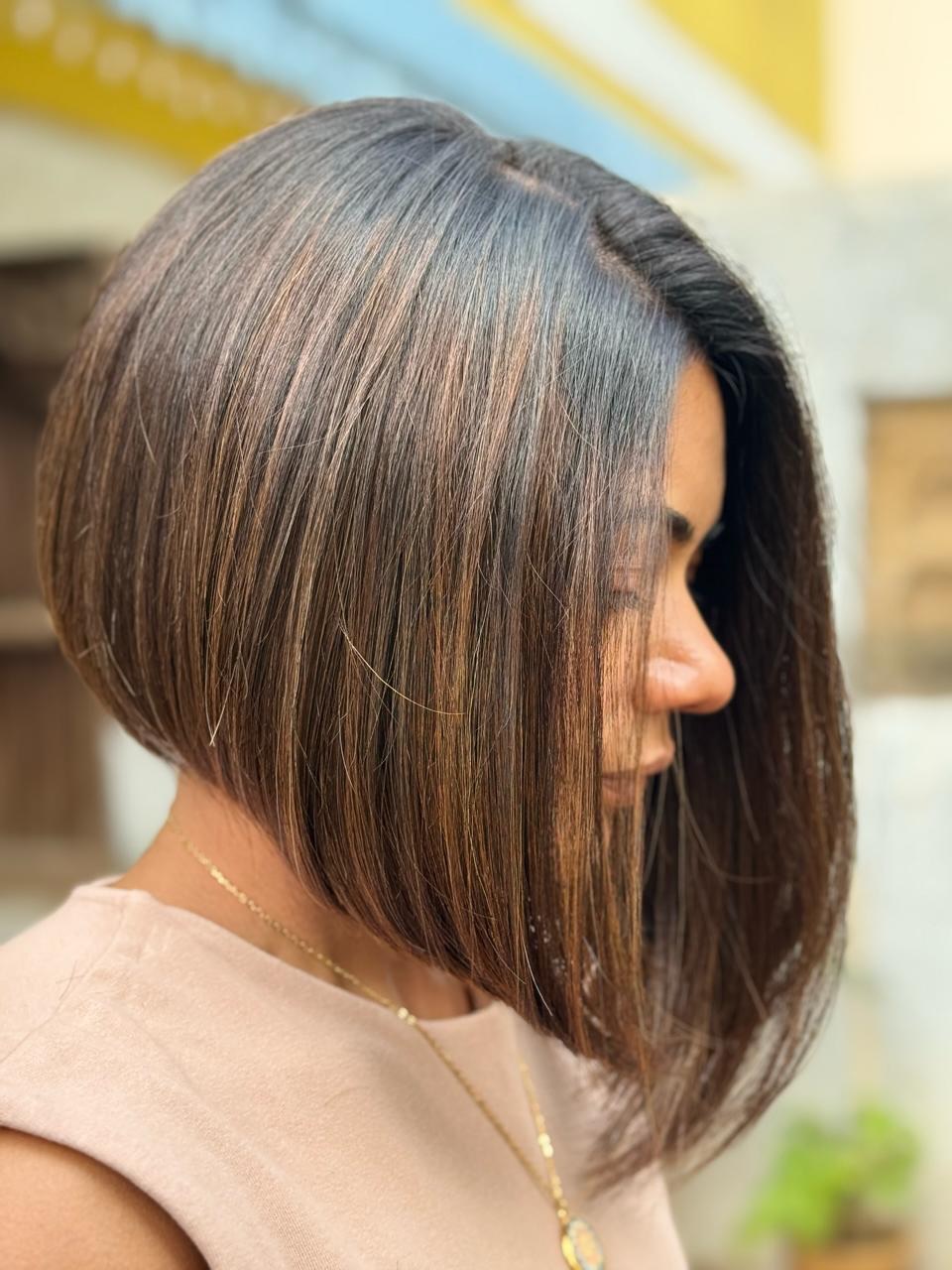
This inverted bob features a smooth, rounded back that builds subtle volume without looking bulky.
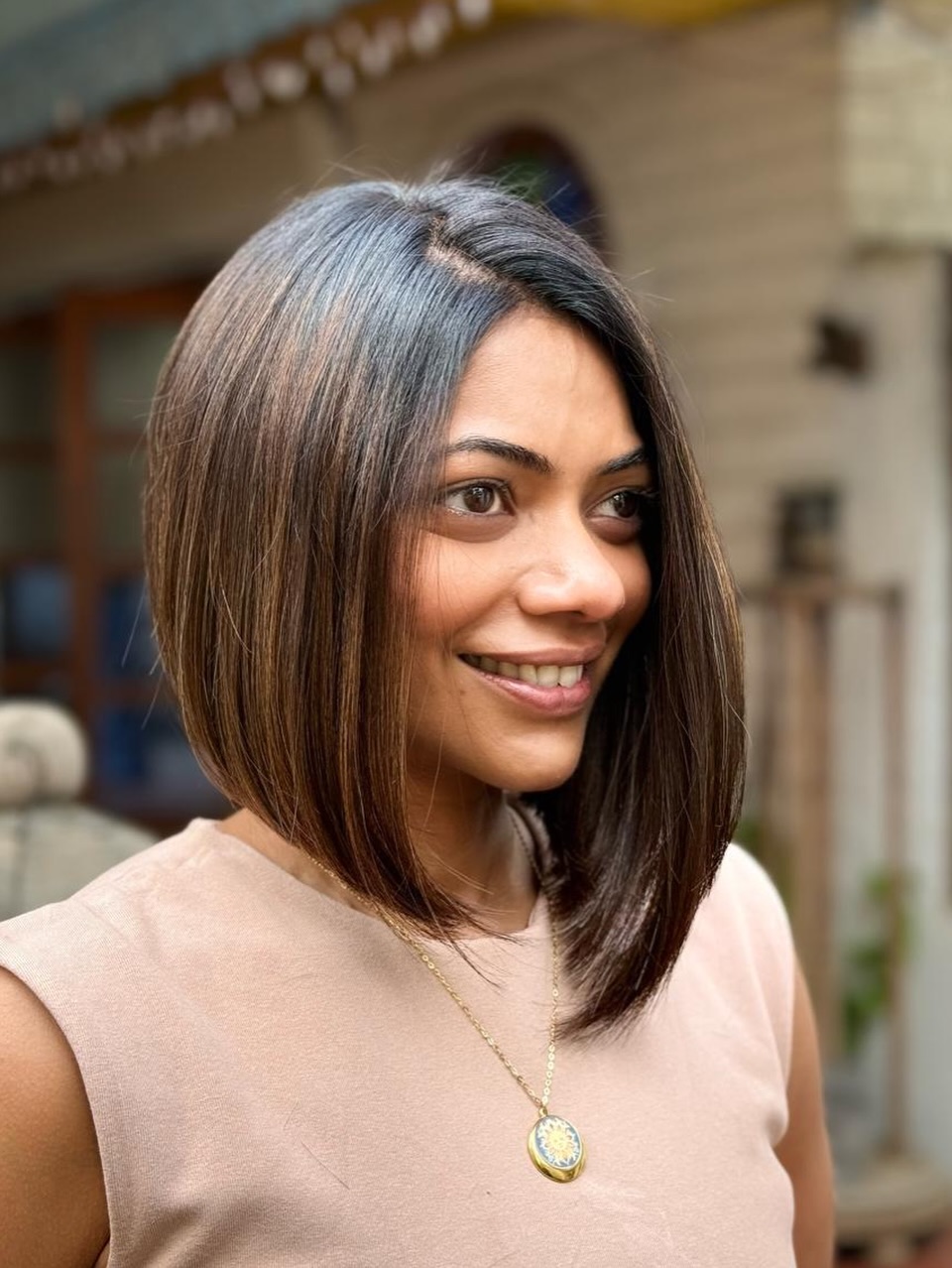
The front extends slightly longer, creating a soft angle that frames the face naturally.
A side part adds movement and keeps the look relaxed and easy to wear. The sleek finish enhances shine, making the hair appear healthy and polished.
It works well for everyday styling, requiring only light brushing or a quick blow dry to maintain its clean shape.
Textured Inverted Bob Hairstyle with Loose Defined Curls
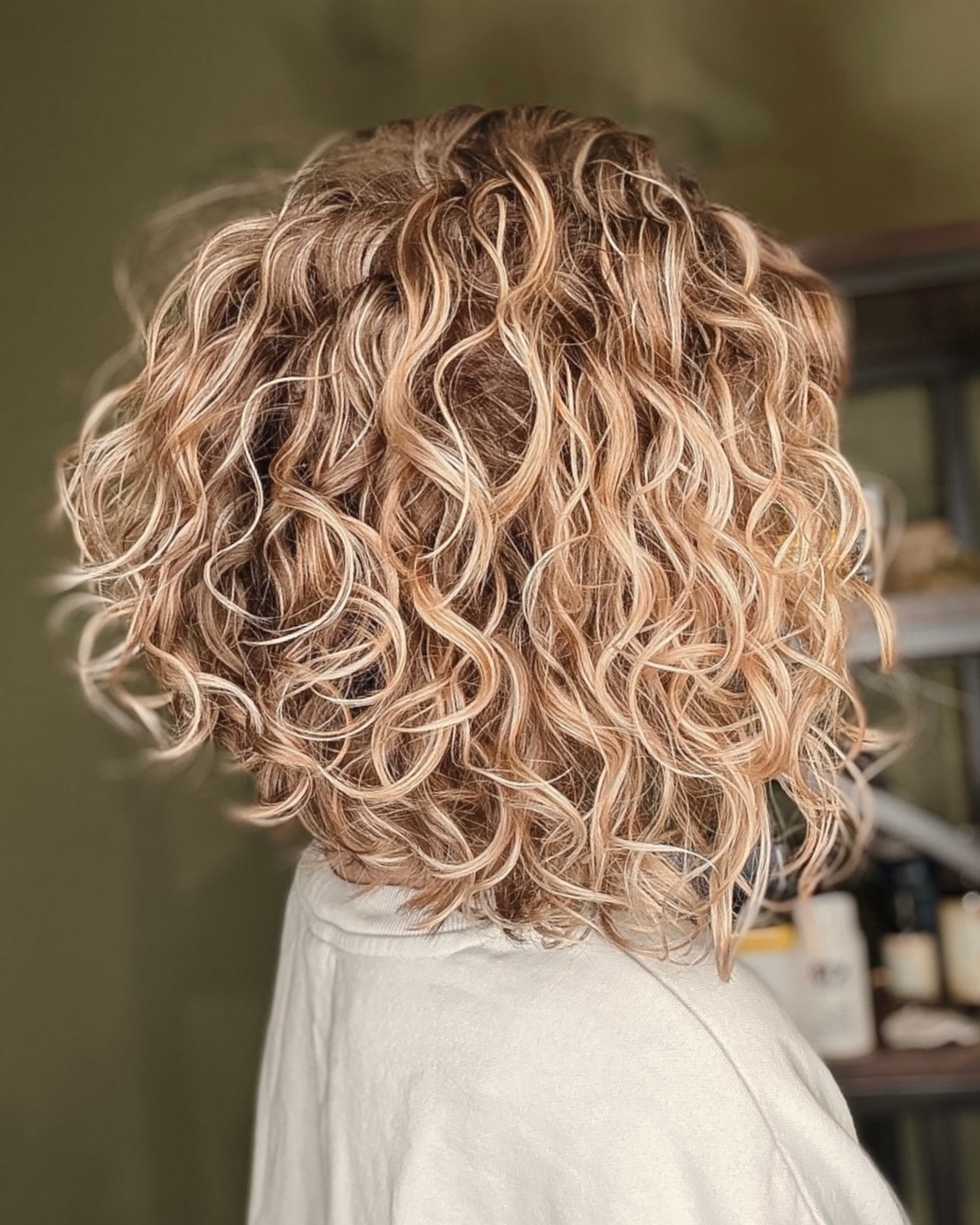
This inverted bob highlights loose curls that create a full, textured shape with natural movement.
The back sits slightly shorter, giving structure and lift, while the front keeps more length for balance.
Soft layering allows the curls to form without clumping, keeping the overall look light and airy. Subtle blonde tones run through the curls, adding dimension and depth.
It works best with curl-friendly products that define shape while keeping the hair hydrated and flexible.
Curly Inverted Bob Hairstyle with Soft Natural Volume
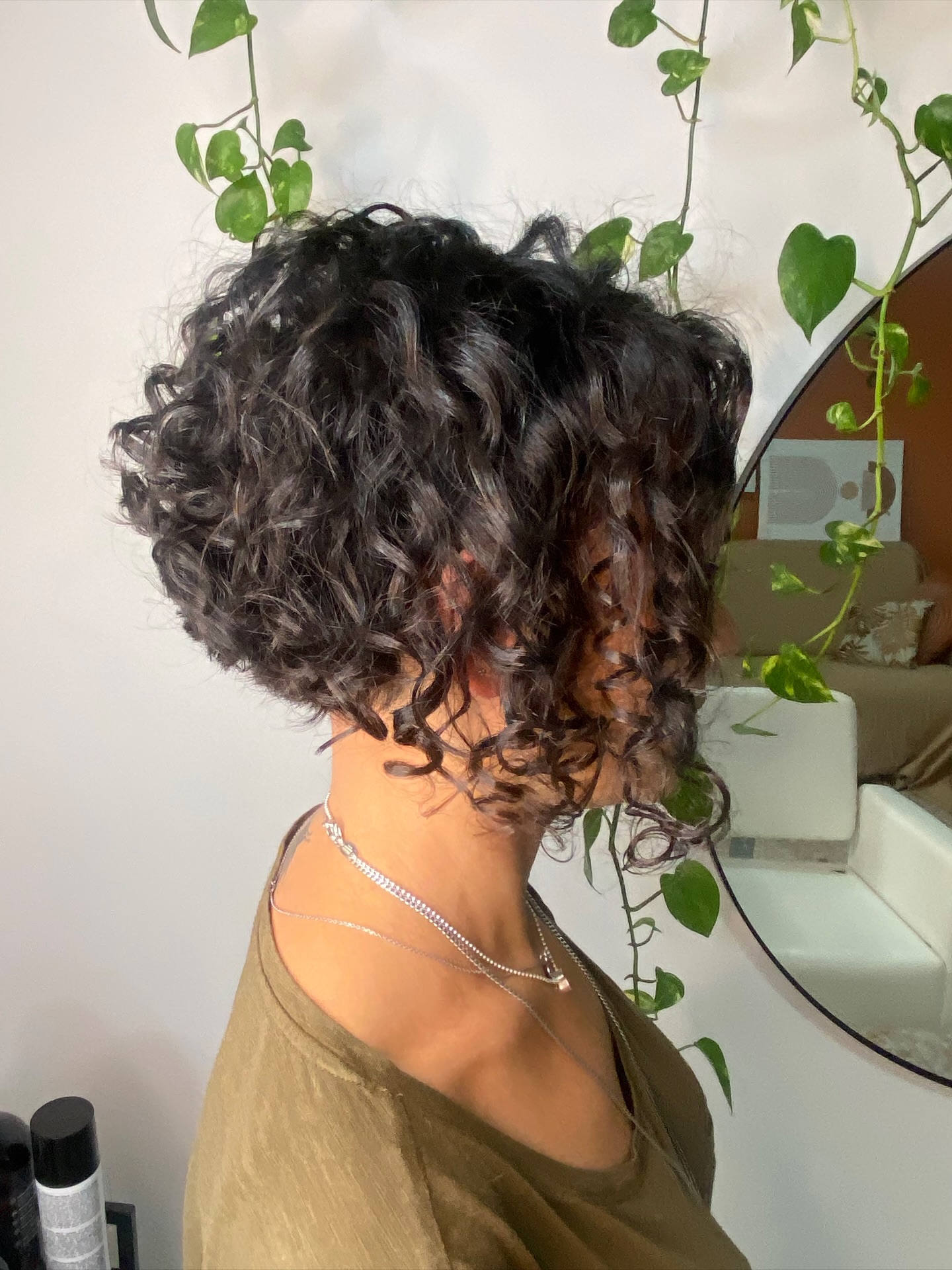
This inverted bob features soft, natural curls that create a rounded shape with noticeable volume at the back.
The shorter back lifts the curls, while the front keeps slightly longer pieces that fall gently toward the face.
Layers help separate the curls, preventing heaviness and keeping the look balanced.
The texture adds movement from every angle, making the cut feel relaxed and modern. It works best with simple curl care, allowing the natural pattern to shape the style.
Inverted Bob Hairstyles Style Guide
Here is a style selection guide for the Inverted Bob, designed to help you choose the right variation based on your specific hair and lifestyle.
What is an Inverted Bob?
An inverted bob is a haircut characterized by a stacked, layered back that creates volume and a slight curve, while the front sections are left longer to frame the face.
The key feature is the visible length graduation from the back to the front.
Unlike a blunt bob that has one uniform length, the inverted bob has a lifted, rounded shape at the nape that seamlessly transitions into longer pieces at the front corners.
It is a versatile cut that can be adapted to suit many different hair types and personal styles.
Short, Medium, or Long Inverted Bobs
The overall length of your inverted bob will dramatically change its look and feel. Here is how to decide which length category suits you.
Short Inverted Bob (Nape-Length)
This version features a closely cropped, heavily layered back that sits at the natural nape or higher. It offers the most volume and lift at the crown.
- Best for: Those wanting a bold change, individuals with fine hair seeking maximum volume, and people who prefer a lower-maintenance, cooler style.
- Considerations: It requires more frequent trims to maintain the short shape and the high contrast between the back and front.
Medium Inverted Bob (Shoulder-Skimming)
This is often referred to as an inverted lob. The back is stacked but not extremely short, and the front pieces typically hit anywhere from the chin to the collarbone.
- Best for: First-timers hesitant to go very short, those who want to keep some length, and people who like versatility in styling (able to wear it straight, wavy, or even pull it back).
- Considerations: The weight of the longer front pieces can sometimes pull on the shorter layers if your hair is very thick, so your stylist needs to manage the internal layering carefully.
Long Inverted Bob (Past the Collarbone)
A longer version where the graduation is much softer. The back has subtle stacking to encourage a slight flip or curve, but the overall length remains long.
- Best for: Those not ready to commit to a short cut, people with very long hair wanting to add shape and movement, and those who prefer to wear their hair in ponytails frequently.
- Considerations: The inverted effect is subtle, so if you want that dramatic stacked volume, this may not provide it.
Inverted Bob vs. Stacked Bob
These two terms are often used interchangeably, but there is a technical difference you should know.
An inverted bob is defined by its graduated line; the hair is shorter in the back and gets progressively longer toward the front.
The interior layers are cut to create this smooth, angled shape. The focus is on the silhouette.
A stacked bob is a type of inverted bob, but with a more aggressive, visible stack of layers at the back.
It creates a heavy, rounded, and often more dramatic volume at the occipital bone (the back of the head).
The stacking is more concentrated, while a general inverted bob can have a softer, less dense graduation.
Graduated Bob Explained
The term “graduated bob” is the technical name for what we are discussing.
A graduation in haircutting means that the hair has been cut with tension and elevation to create layers that stack upon one another.
In this cut, the degree of elevation determines how much “stack” or volume you get. A low graduation creates a gentle slope from back to front, while a high graduation creates that bold, rounded, and voluminous shape.
When you see an inverted bob, you are looking at a graduated haircut.
Thin Hair vs. Thick Hair
This cut interacts very differently depending on your hair’s natural density.
For Thin or Fine Hair – The inverted bob is an excellent choice. The stacked layers in the back build in instant, artificial volume and fullness that thin hair often lacks.
It creates the illusion of a much thicker, rounder shape. To keep it looking its best, avoid cutting the front pieces too long and thin, as this can make the ends look wispy. A soft, internal texture is better than heavy chunking.
For Thick Hair – While you can certainly get an inverted bob with thick hair, it requires a skilled stylist.
Without proper texturizing and internal layering, thick hair can become too heavy and “bubble” out at the back.
Your stylist will need to remove significant weight from the interior so the hair falls smoothly and the graduation lies flat and elegant, rather than looking bulky or pyramid-shaped.
Hair Texture and Density Explained
Texture (the shape of your individual hair strand) and density (how many strands you have) both play a role.
Straight Hair: This texture will show the precision of the inverted cut best. Every angle and layer will be visible. It is a very graphic, clean look.
Wavy Hair: This is a fantastic match for an inverted bob. The natural wave will add body and movement, making the cut look effortless and lived-in. The layers will encourage the wave pattern and prevent the hair from looking like a triangle.
Curly Hair: A curly inverted bob, sometimes called a “curly bob,” can be stunning. The graduation removes bulk from the back while allowing the front curls to frame the face. It is crucial to find a stylist experienced in cutting curls dry or in their natural state to ensure the graduation falls correctly.
Coarse Hair: This cut works well, but internal texturizing is key to remove bulk and allow the hair to move freely without looking stiff or poofy.
Choosing a Cut for Your Face Shape
The adjustable front length of an inverted bob makes it easy to flatter your specific face shape.
Oval: You have the most flexibility. Almost any length and degree of stacking will suit you. You can experiment with sharper angles or softer curves.
Round: Look for a cut with more length in the front. Pieces that fall below the jawline will help to elongate the face and create a more vertical line, balancing softness. A bit of height in the back from the stacking can also help.
Square: A softer, less severe graduation works well. Ask your stylist for face-framing layers that are not too blunt. Wispy ends and soft, side-swept front pieces can help soften a strong jawline.
Long (Oblong): A fuller, more rounded shape is your goal. A shorter inverted bob with significant stacking at the back will add width and volume to the sides, shortening the appearance of the face. A blunt, heavy front line is better than long, thin pieces.
Styling Effort and Maintenance
Be honest with yourself about how much time you want to spend on your hair.
- Daily Styling: To get that classic curved-under look, you will need to use a round brush and a blow-dryer, directing the front pieces toward your face and the back under. A flat iron is also useful for a sleek finish. The cut can be air-dried for a more textured, casual look, especially if you have natural wave, but it may not fall perfectly smooth on its own.
- Product Needs: You will likely need a few key products. A volumizing mousse or spray for the roots when blow-drying, a heat protectant for styling, and a lightweight pomade or wax to define the front pieces or add texture.
- Maintenance Schedule: This is a shape-dependent haircut. To preserve the precise angle and the stacked volume in the back, you will need a trim every 4 to 6 weeks. If you let it grow out, the graduation will drop, the volume will flatten, and the line will lose its definition.