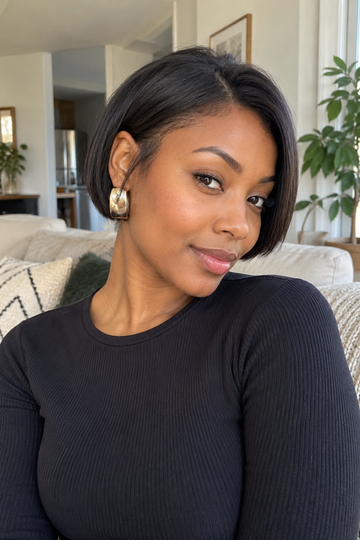
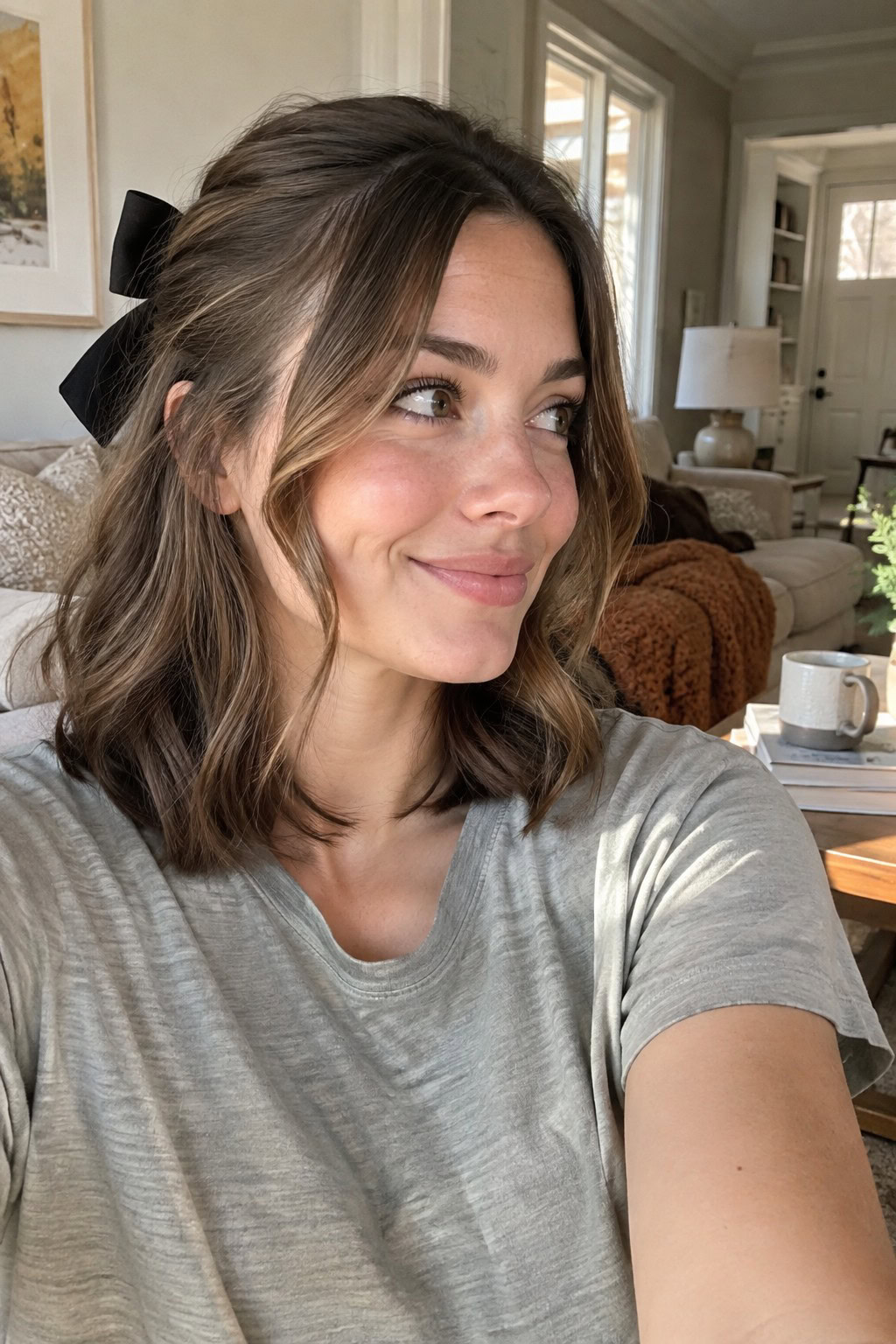
Most women over 60 don't need a dramatic reinvention, they need a haircut that stops fighting their hair. Fine strands, shifting density, and gray that drinks up moisture differently than pigmented hair all change what works. A layered bob handles most of these issues at once, which is why it keeps showing up on salon mood boards year after year.
The styles below range from chin-grazing to collarbone, blunt to feathered, soft silver to warm chestnut. Each one includes the cutting technique to ask for and what to do at home, because a good consultation goes further than a screenshot. Bring photos, ask about point cutting, and tell your stylist where your hair tends to fall flat.
22 Layered Bob Hairstyles for Women Over 60
Soft Silver Chin Bob with Feathered Layers
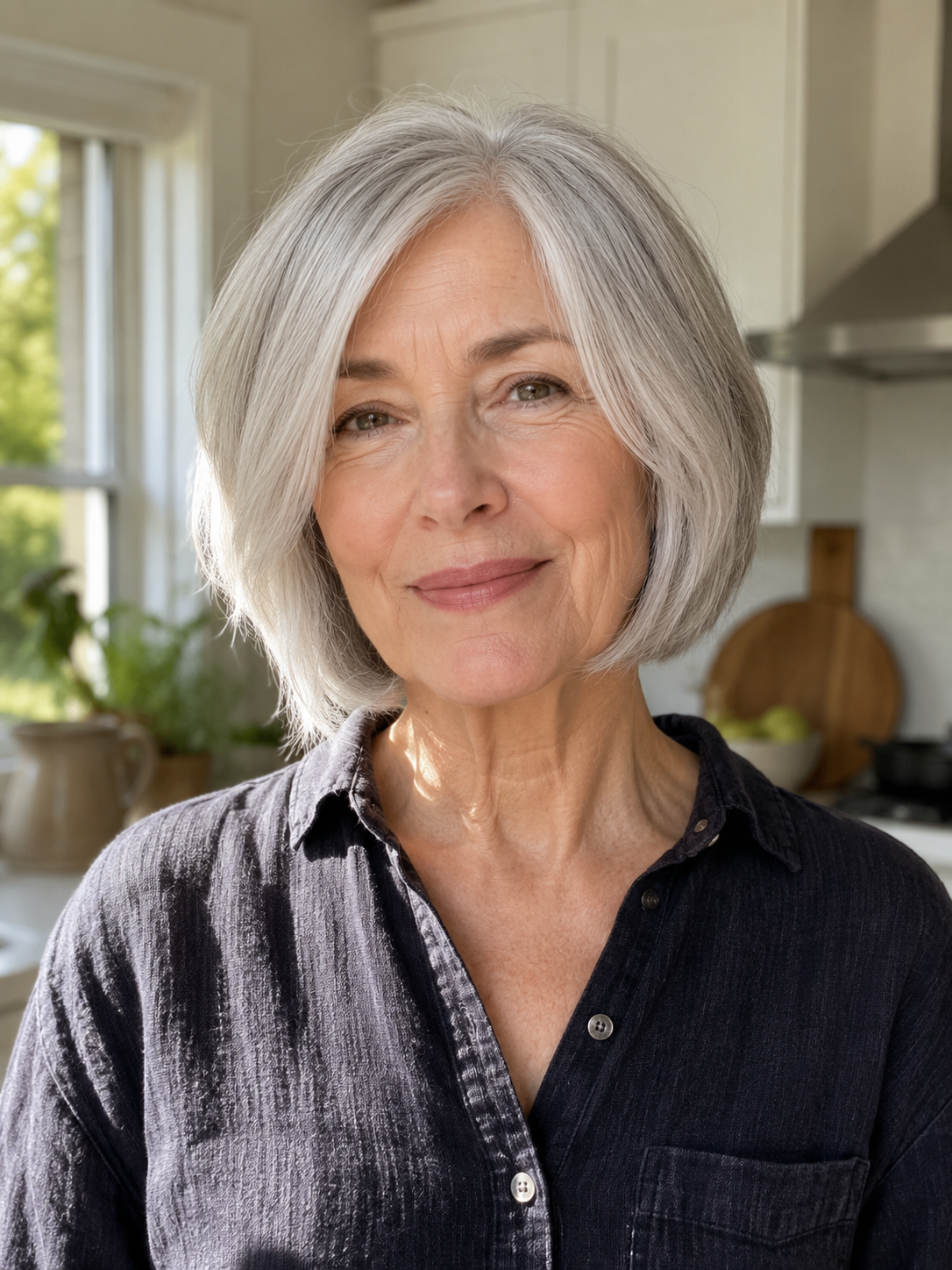
Ask your stylist for feathered interior layers starting around the cheekbone, with the perimeter kept blunt to hold weight at the ends.
This combination works for natural silver because gray strands often feel coarser, and the layers stop the cut from looking helmet-like.
Wash twice a week with a sulfate-free formula, then air-dry with a dime-sized amount of mousse worked through damp roots.
Skip heavy oils on the lengths, they flatten gray hair fast. A round brush at the crown adds the lift most over-60 hair quietly loses.
Jaw-Length Blunt Bob with Hidden Layers
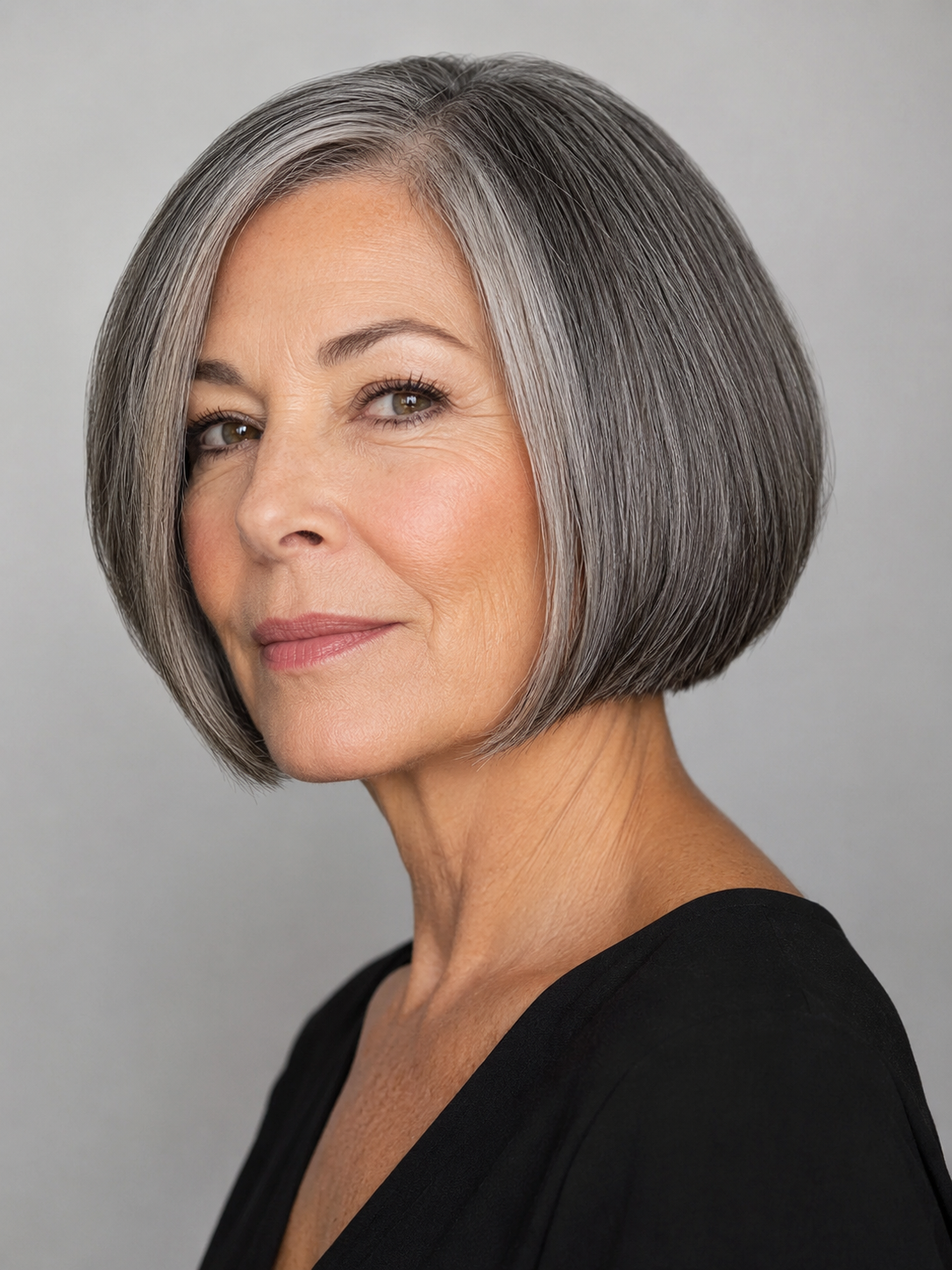
The trick here is layers you can't see.
Most stylists will use point cutting at the ends, which means cutting into the hair at a 45-degree angle instead of straight across.
The perimeter stays strong, but the inside loses weight, so fine hair gets lift without thinning out. Ask for the cut to land right at the jaw, where it elongates the neck and frames the face.
Style with a flat brush and a low-heat blow dryer pointed downward at the ends.
Collarbone Lob with Long Layers
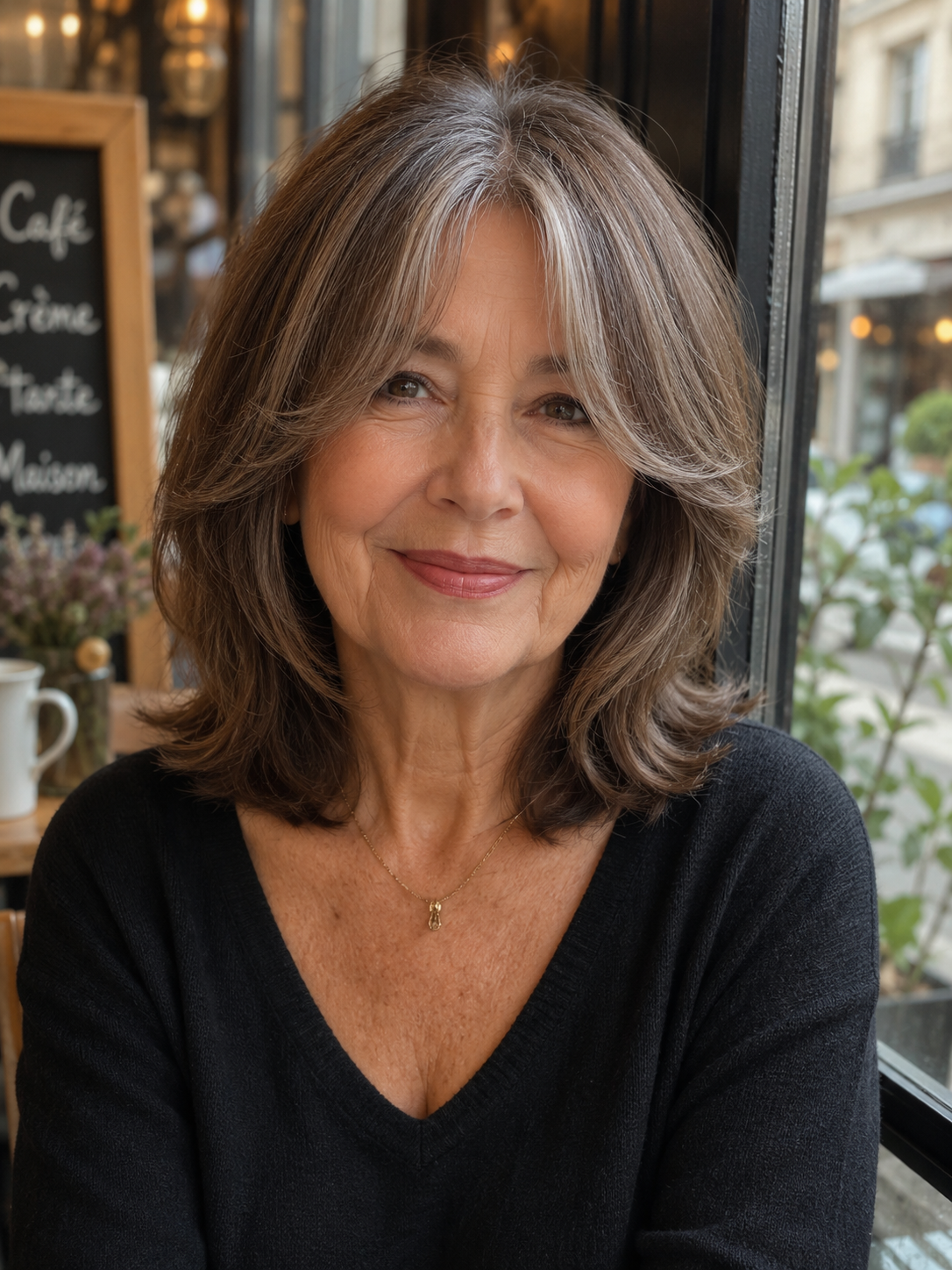
The longer bob works well if you're not ready to commit to chin-length.
Ask for the perimeter to sit just above the collarbone, with layers starting around the chin to keep the lengths from looking heavy.
Curtain bangs blend the front into the cut and soften the forehead. For styling, a round brush and a blow dryer give the ends a soft inward bend.
Living Proof Full Dry Volume and Texture Spray works well at the roots once the hair is dry, especially if your crown tends to flatten.
Stacked Bob in Salt and Pepper
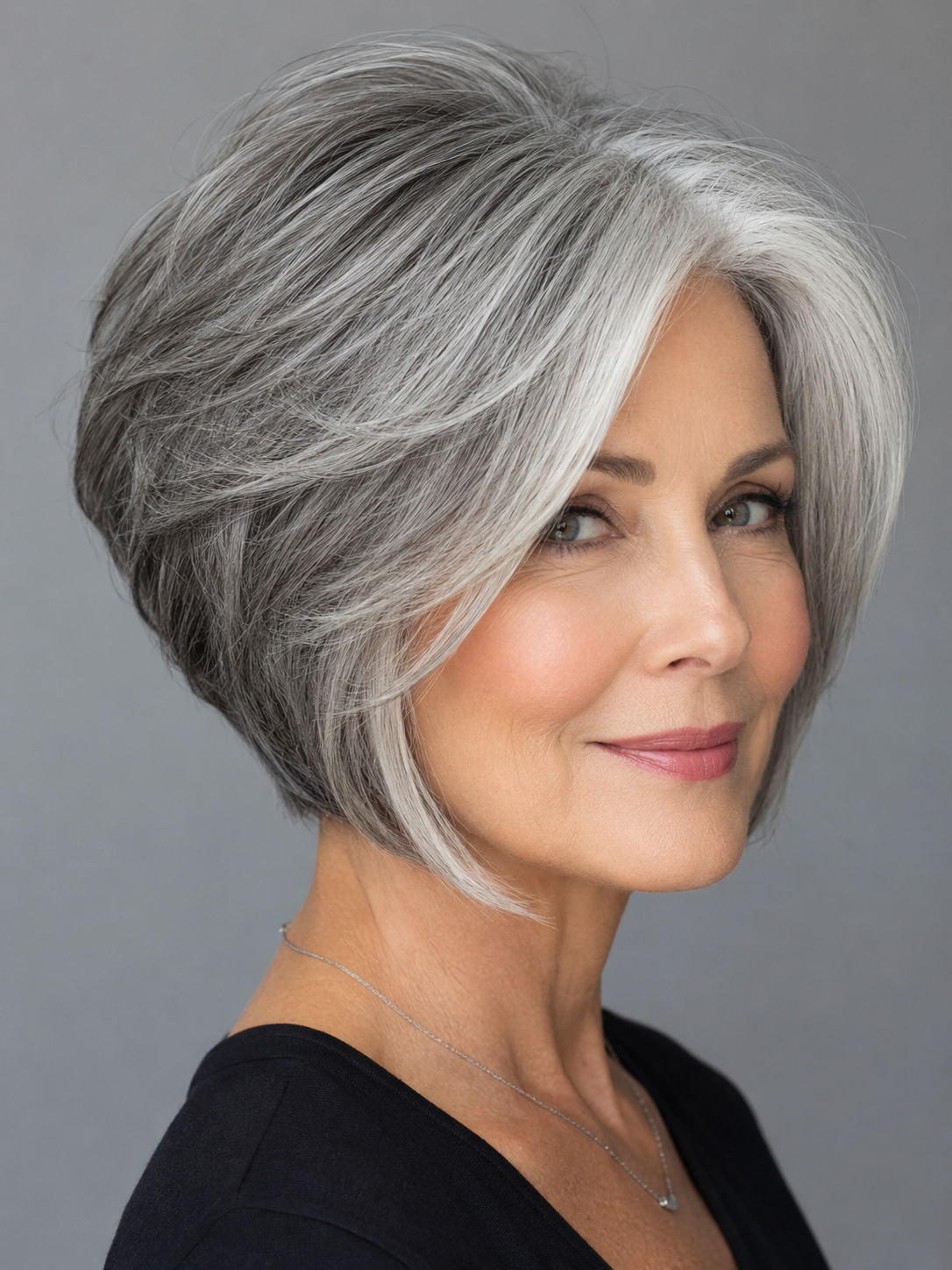
A stacked bob keeps weight at the back of the head, which lifts hair off the nape and creates fullness where most women over 60 want it most.
Ask for graduated layers stacking from the nape up to the crown, with the front kept slightly longer. Natural salt and pepper looks especially good here because the stacking catches light and shows off the dimension.
Blow-dry with a medium round brush, rolling the back sections under. A small amount of pomade at the crown holds the shape without crunch.
Choppy French Bob with Wispy Bangs
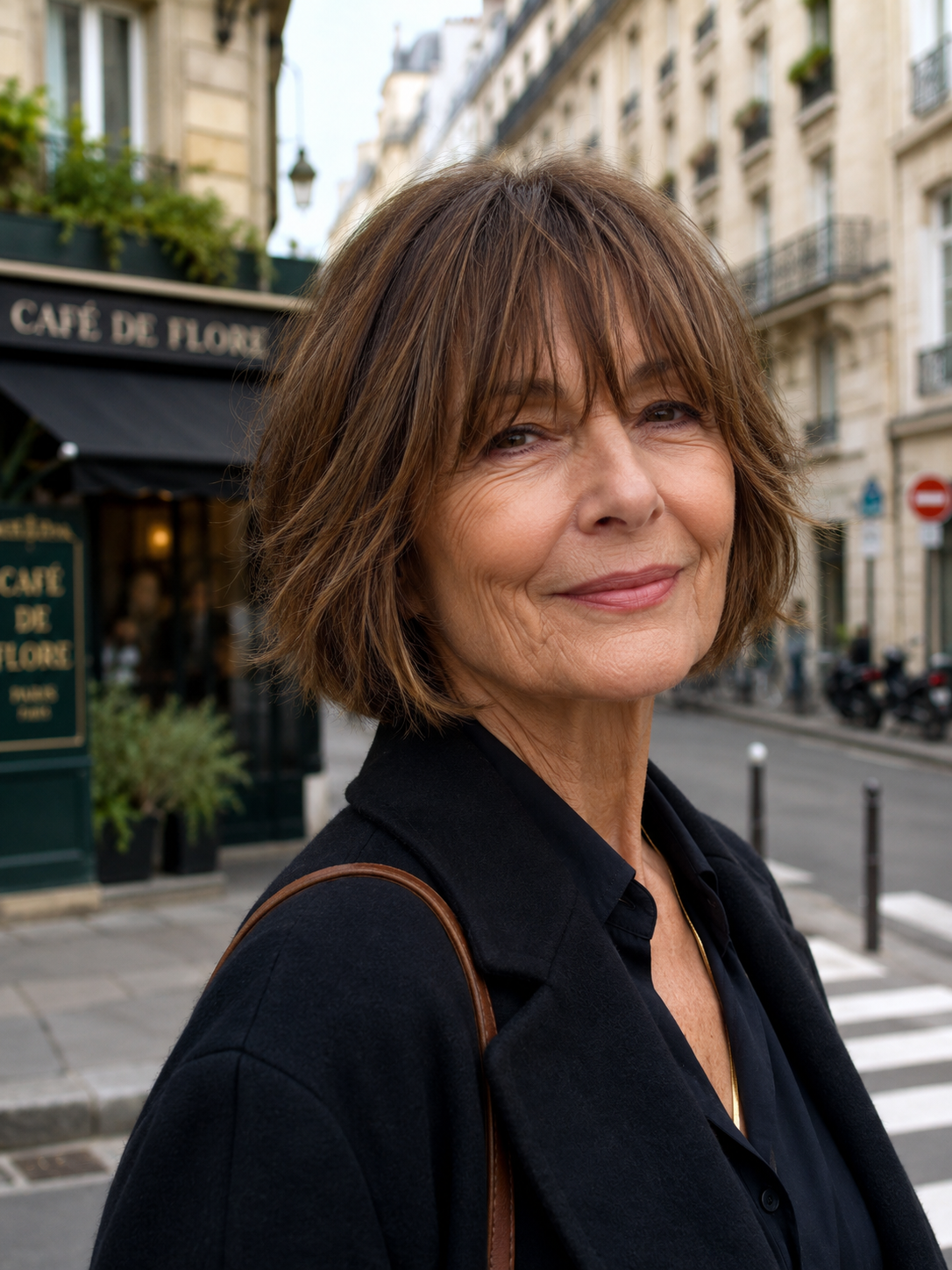
The French bob sits right at the jaw, with bangs that fall just past the eyebrows.
What makes the modern version work for over-60 hair is the chop. Ask for point-cut ends and soft, piecey bangs, not a heavy fringe.
The texture keeps fine hair from looking flat against the head. Style is minimal, run a leave-in through damp hair, twist sections with your fingers, and air-dry.
The bangs need a quick brush and maybe a touch of dry shampoo at the roots.
Rounded Bob with Crown Volume
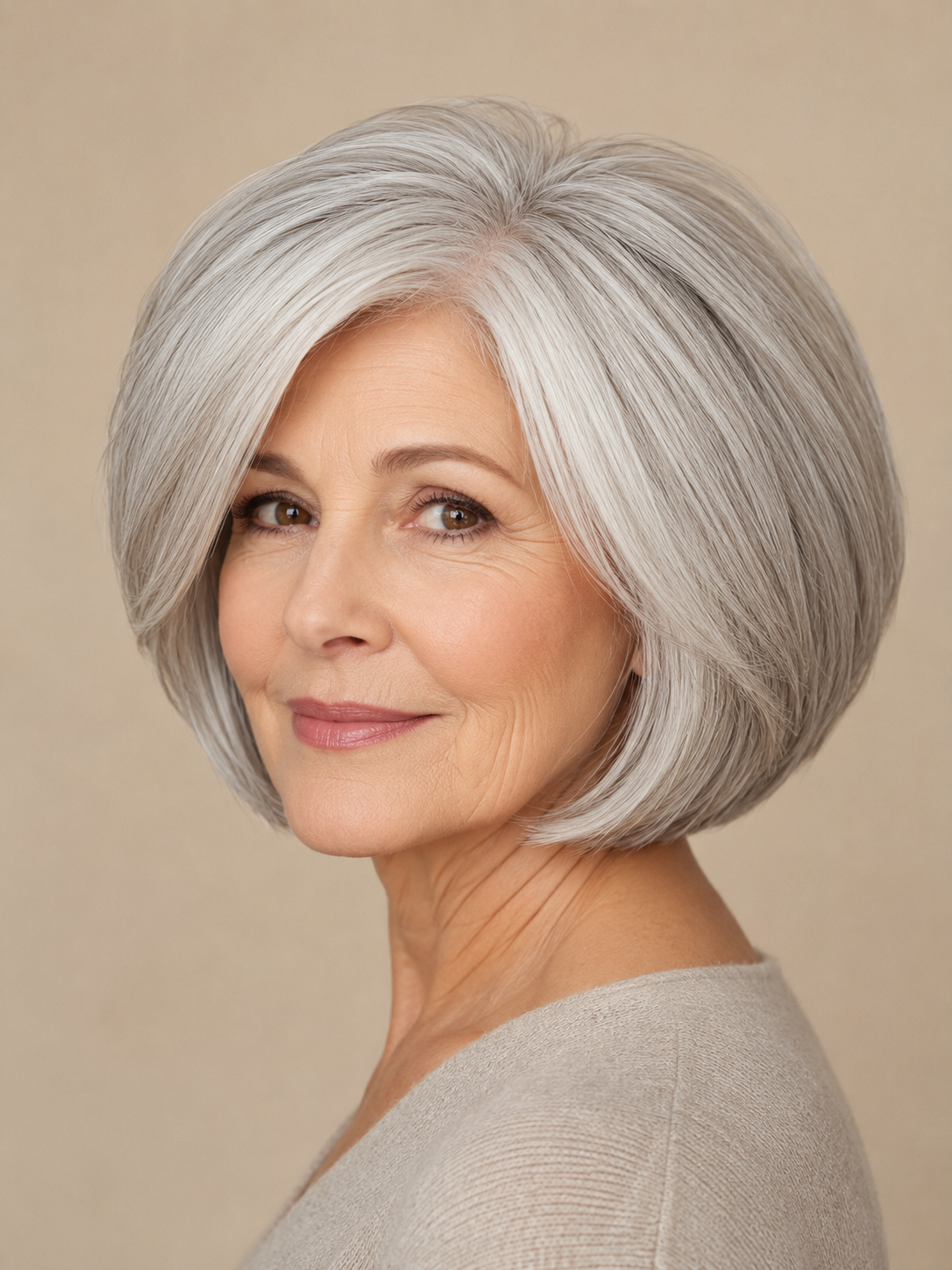
Ask for a rounded perimeter with internal layers concentrated at the crown.
This shape gives the illusion of fuller hair from any angle, which matters if thinning has started at the part line.
The cut works beautifully on naturally straight hair and on slightly wavy textures alike. Style with a round brush and a hand-held dryer, lifting at the roots while you dry.
A volumizing mousse like Kérastase Densifique Mousse applied to damp roots holds the shape without weighing the lengths down.
Angled Bob with Face-Framing Layers
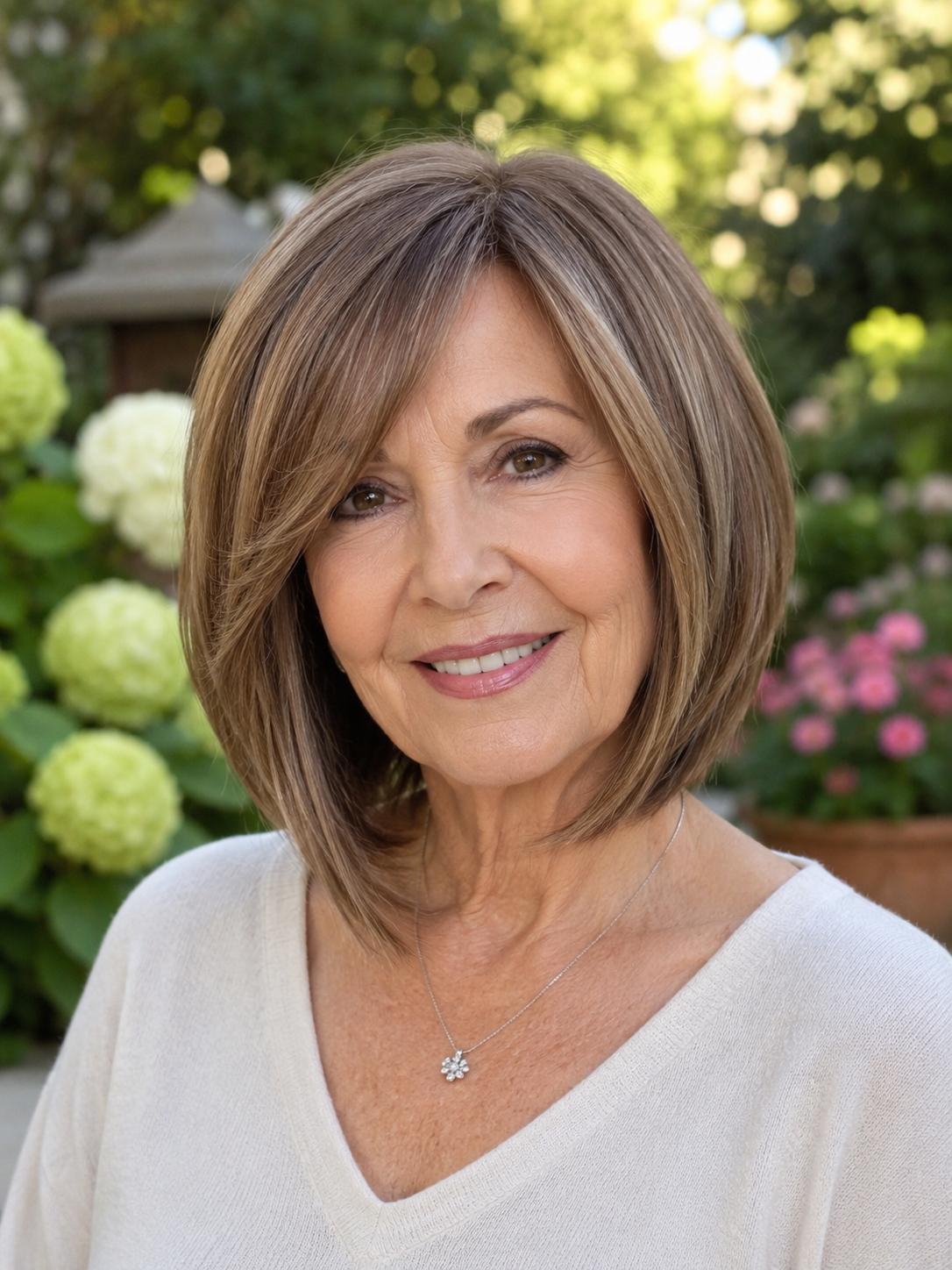
The angled bob runs slightly longer at the front than the back, which gives the illusion of a longer face and a sharper jawline.
Ask for a small angle, around an inch, and face-framing pieces cut into the front sections. The face-frame should start at the cheekbone and blend into the perimeter.
This cut handles fine and medium hair equally well. Blow-dry with a round brush, finishing with a cool shot of air to set the shape and keep it from flattening through the day.
Tousled Lob with Beachy Bend
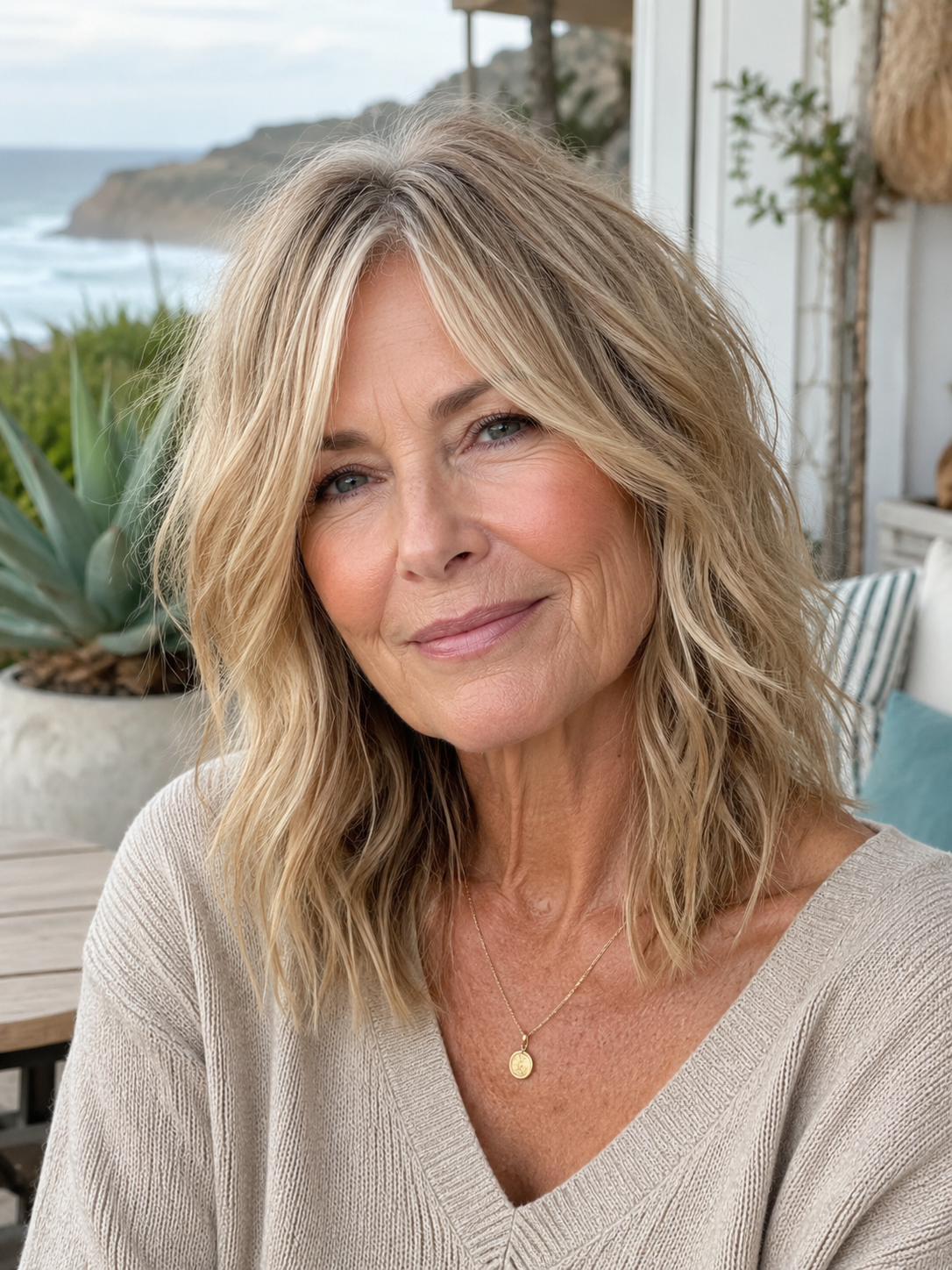
A shoulder-grazing lob with soft tousled texture suits women who want something low-maintenance but not severe.
Ask for long, sweeping layers starting at the chin, with point-cut ends to keep things light.
Skip the formal blowout. Instead, work a sea salt spray through damp hair, twist a few sections, and air-dry.
If you want more definition, use a 1.25-inch curling iron on a few face-framing pieces. The look should feel like you slept on it, not styled it.
Ear-Length Bob with Side Sweep
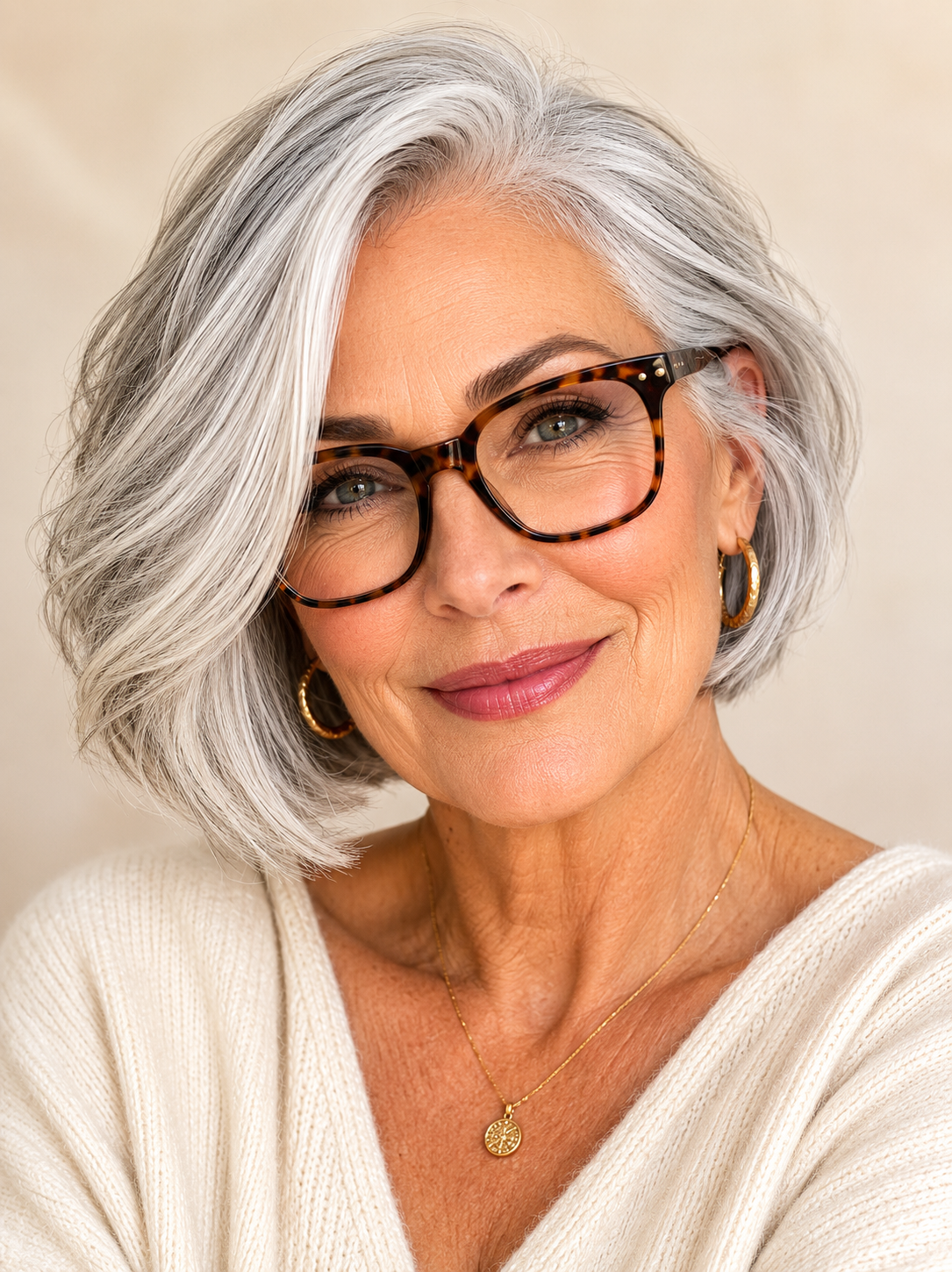
This shorter bob sits right at the earlobe, with a deep side part that adds instant volume at the crown.
Most stylists will cut the layers slightly longer on the side with more hair, balancing the asymmetry.
The deep part lifts the roots on one side and creates a soft wave across the forehead. This works particularly well with glasses, the shape stays out of the frames.
A root-lifting spray at the part line, then a quick blow-dry with your fingers, is all the styling required.
Layered Bob with Curtain Bangs
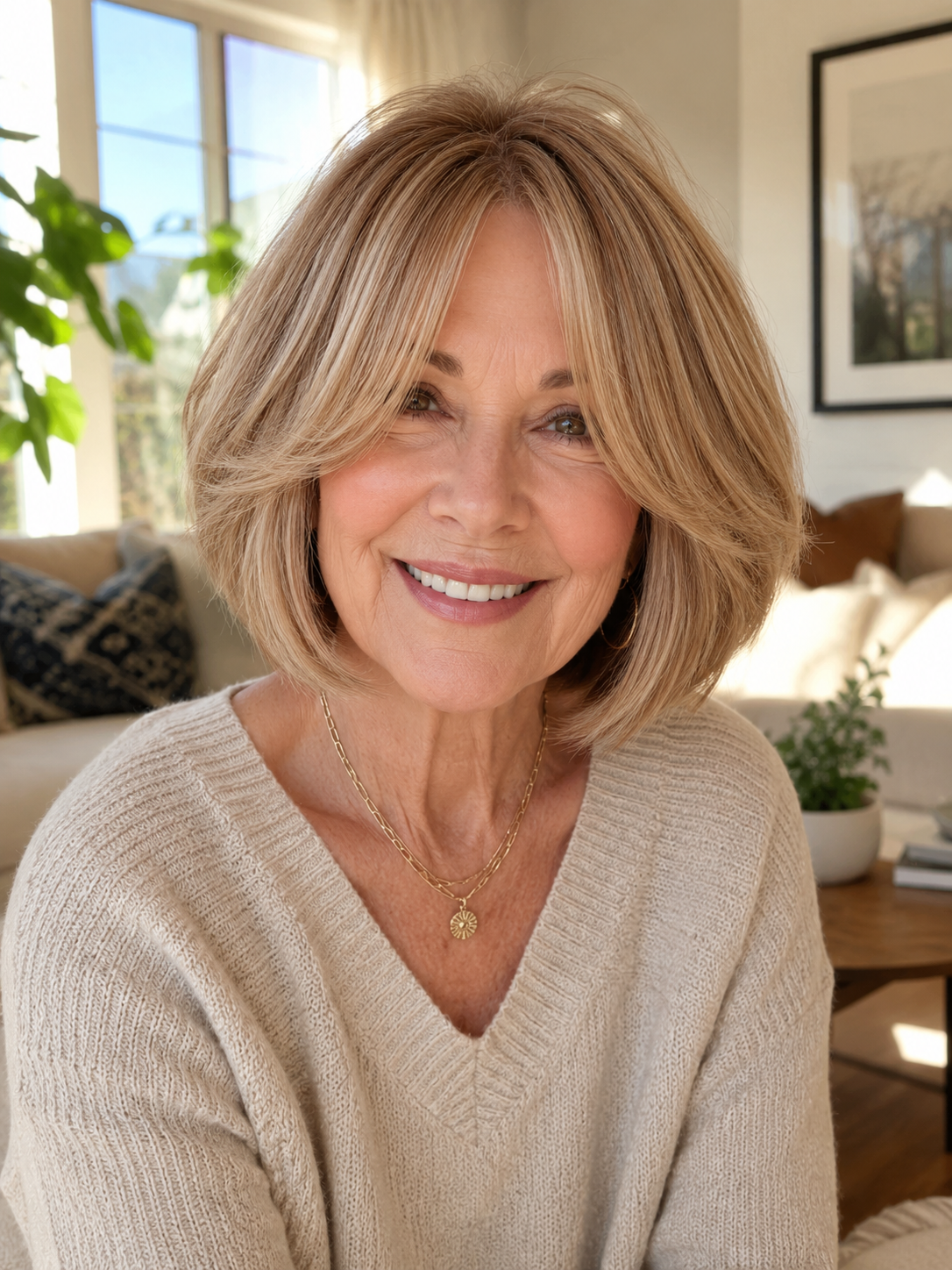
Curtain bangs are the gentler alternative to a full fringe, and they pair naturally with a layered bob.
Ask for bangs cut on a slight angle, parted in the middle, falling to about the cheekbone.
The layers in the bob should blend into the bangs so the cut reads as one shape. This style softens a high forehead and draws attention to the eyes.
Style by blow-drying the bangs forward first, then splitting them down the middle with a flat brush.
Wispy Bob for Fine Hair
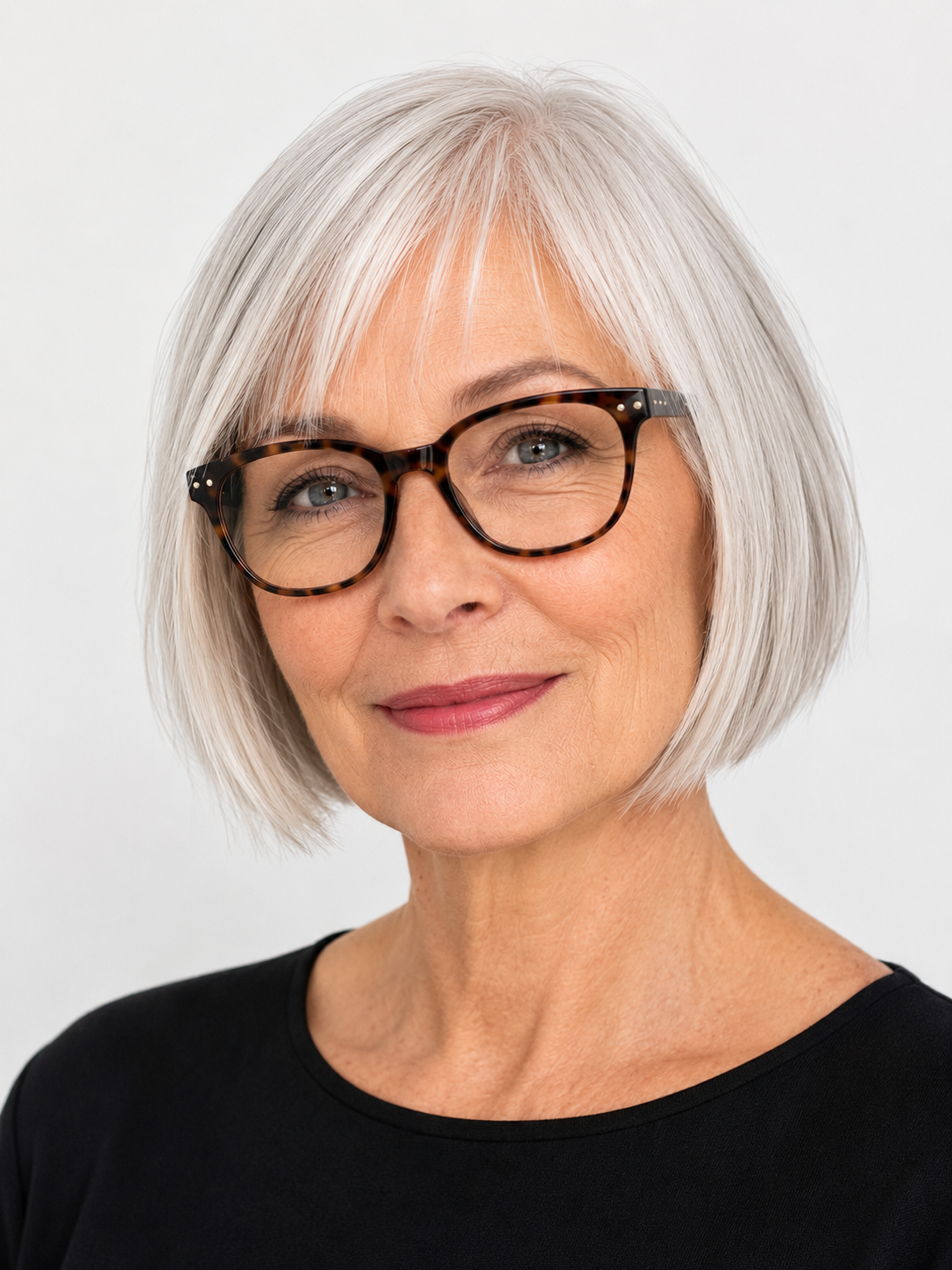
For fine hair, the cut needs to add structure without removing density.
Ask for a chin-length bob with very light internal texturizing and a strong, blunt perimeter.
The wispy effect should come from point cutting at the ends, not from thinning shears, which can leave fine hair looking sparse.
A volumizing shampoo like Kérastase Densifique builds body over time. Skip conditioner at the roots and apply it only from the ears down. A small amount of mousse on damp hair gives the cut its lift.
Graduated Bob in Warm Auburn
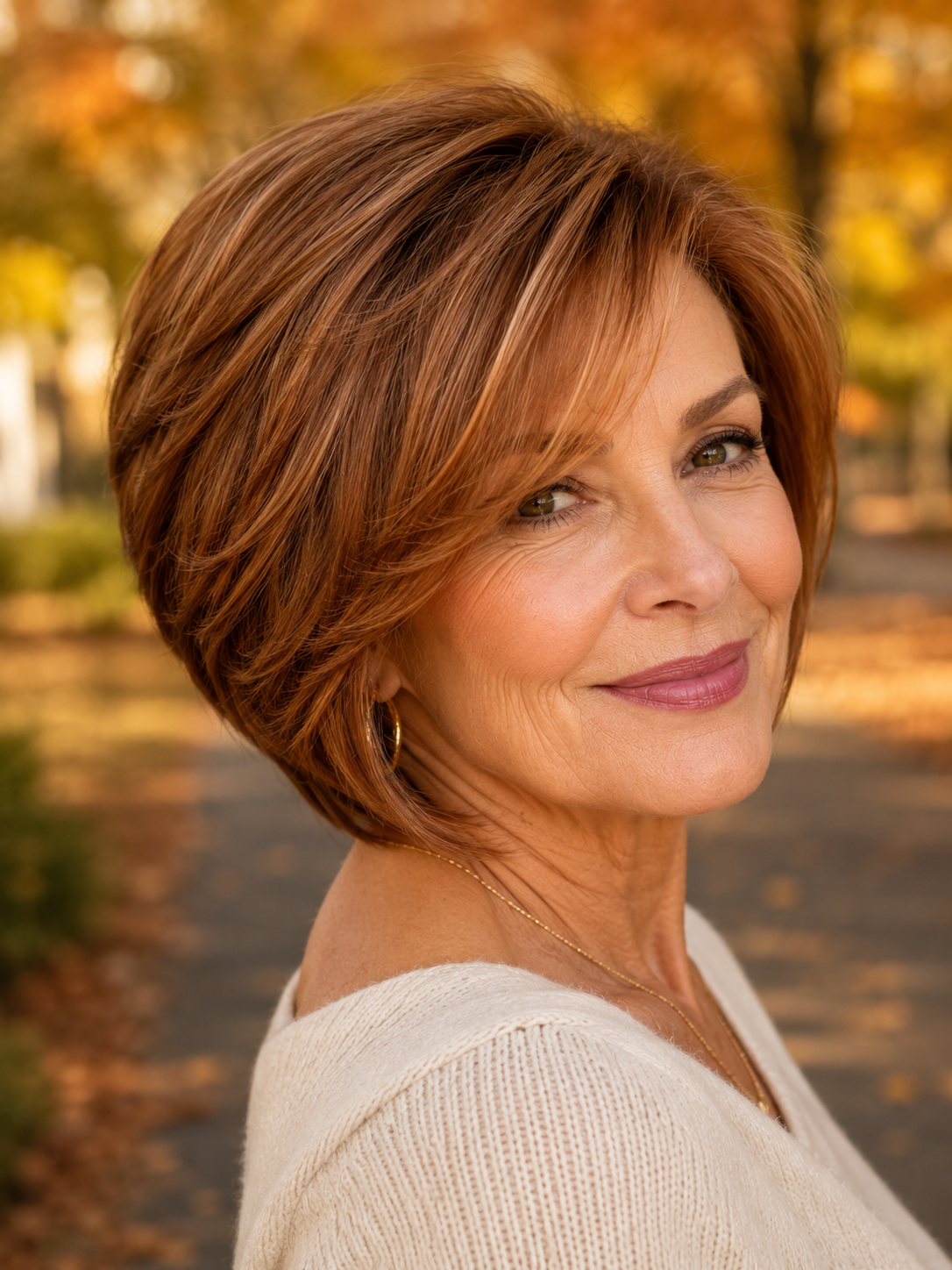
Warm auburn tones soften features and bring out skin warmth, which can fade with age.
Ask for a graduated bob, slightly shorter at the back, longer at the front, with layers stacking toward the crown.
The color does some of the visual work, the cut does the rest. Blow-dry with a round brush rolled under at the back to maintain the graduation.
A drop of lightweight serum on the mid-lengths adds shine without weight, important for fine or color-treated hair.
Sleek Inverted Bob
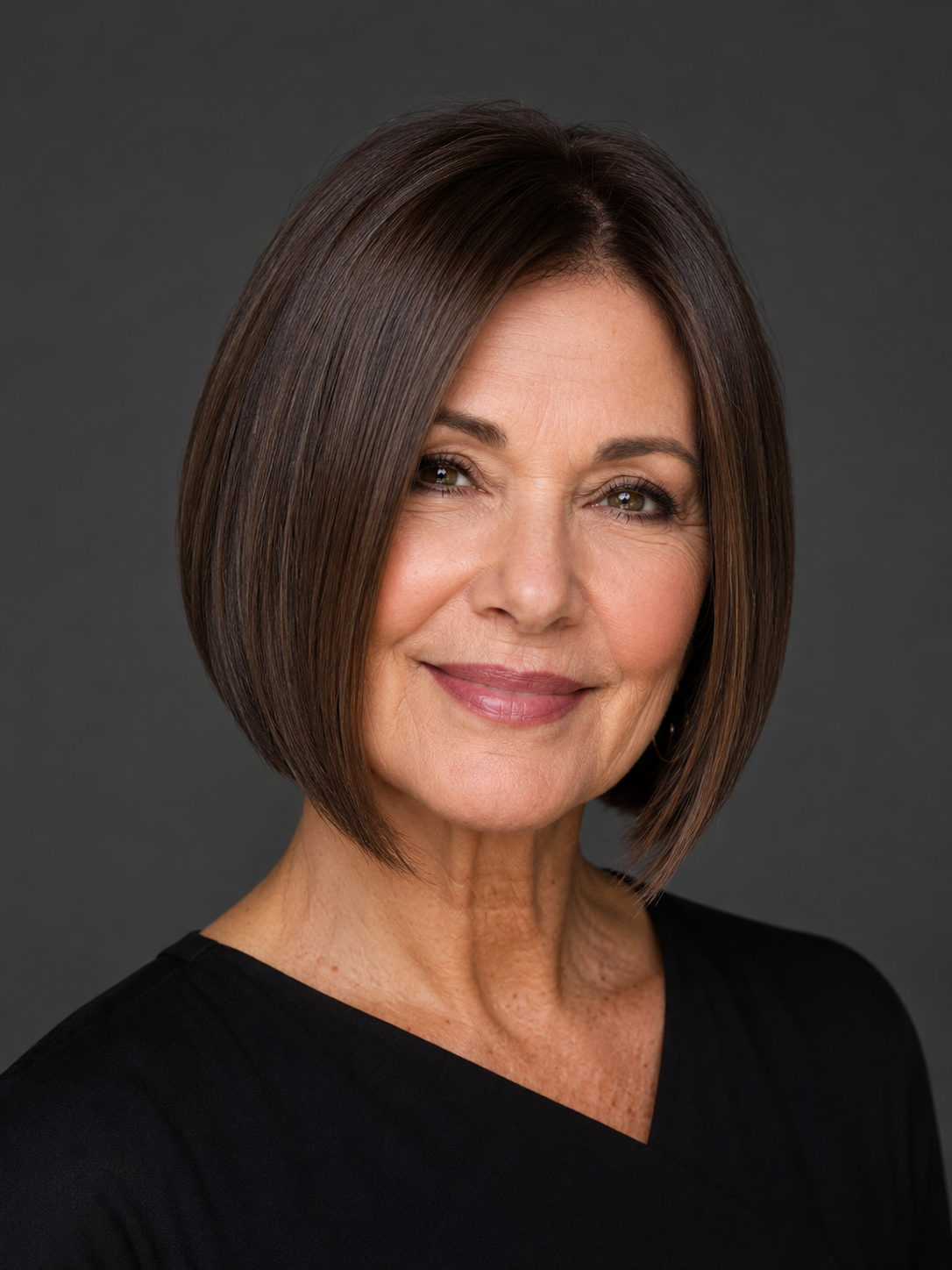
The inverted bob is shorter at the back and angles down toward the chin in front.
Ask for a clean, blunt perimeter and minimal internal layering, this style relies on its shape, not its texture.
The inverted angle elongates the neck and creates a strong, polished silhouette. A flat iron passed through once on dry hair gives the bob its signature sheen.
Finish with a few drops of argan oil rubbed between your palms and smoothed over the lengths, avoiding the roots.
Shaggy Bob with Razored Ends
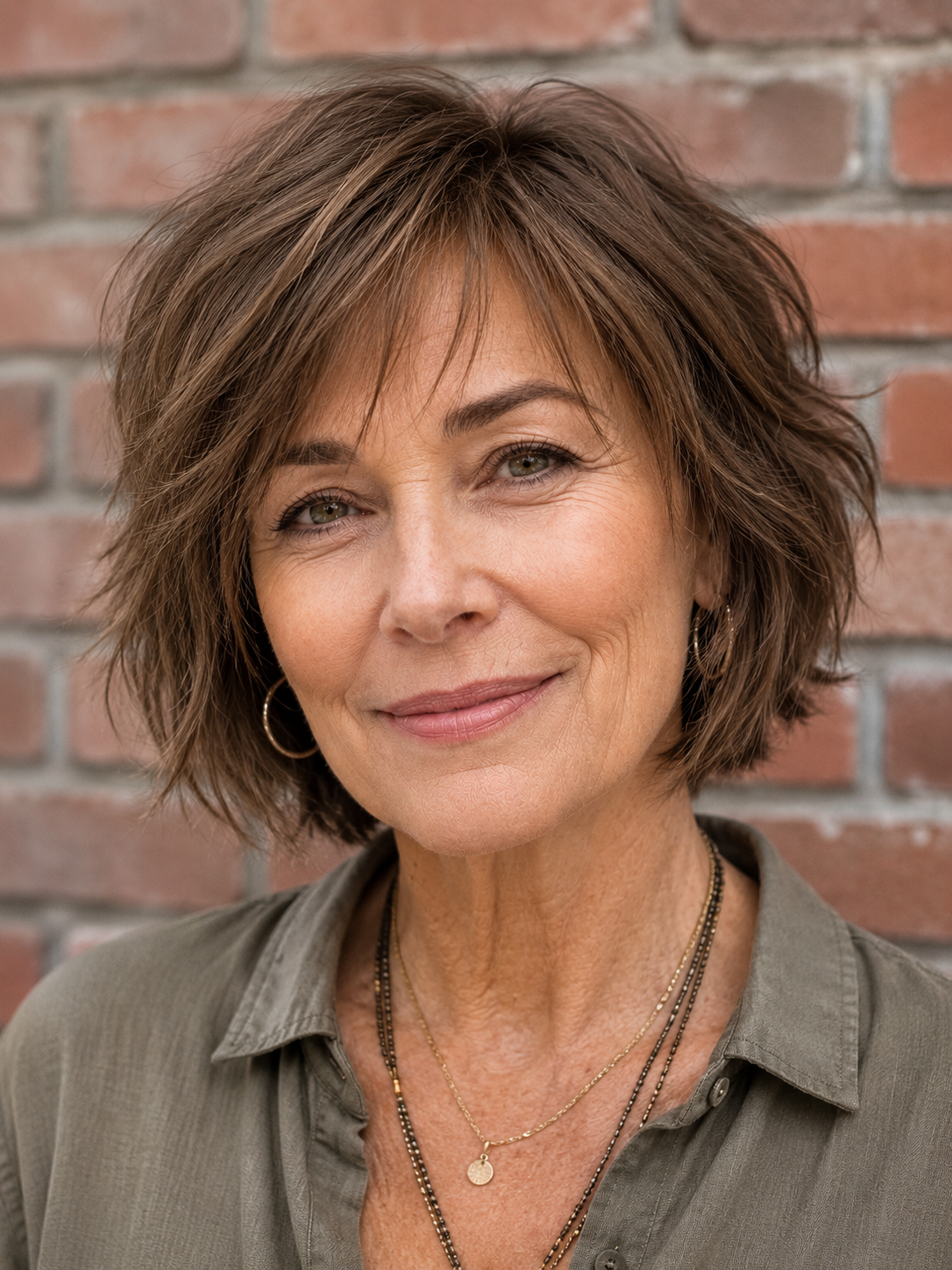
The shaggy bob brings movement to hair that feels limp or one-dimensional.
Ask for razored ends rather than point-cut ones, the razor creates softer, more feathered tips.
The layers should start short at the crown and blend down through the lengths. This works best on medium hair, fine hair can look thin with too much razoring.
A texturizing spray scrunched into damp hair, then air-dried, gives the cut its lived-in finish. Skip the round brush, you want imperfection here.
Classic Chin Bob with Soft Bangs
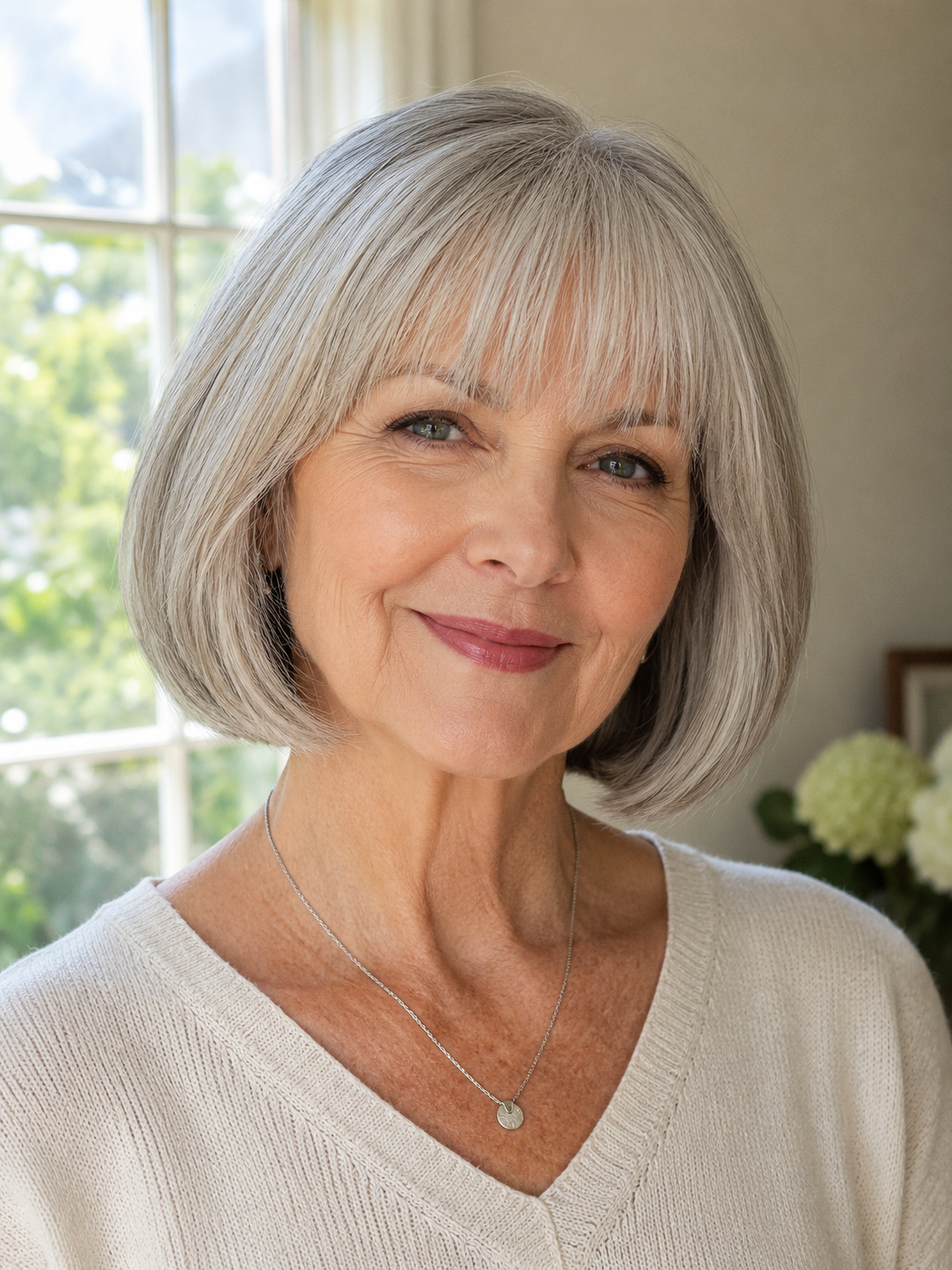
Sometimes the classic version is the right version.
Ask for a chin-length bob with a clean perimeter and soft, brow-skimming bangs cut slightly longer at the outer edges.
The shape is balanced, the bangs frame the eyes, and the cut sits cleanly without much fuss. Style with a flat paddle brush and a blow dryer, drying the bangs first to keep them from cowlicking.
A finishing spray with light hold, not stiff, keeps the shape through the day without making the hair look lacquered.
Side-Parted Bob with Soft Waves
A deep side part on a chin or jaw-length bob creates instant volume on the fuller side and a soft sweep across the forehead.
Ask for layers cut at a slight angle so the waves fall naturally without flipping out.
Use a 1-inch curling iron, wrap small sections away from the face, then run your fingers through to break up the curl. A flexible-hold hairspray finishes the look.
This style suits anyone who wants a touch of softness without a full blowout commitment.
Pixie Bob with Tapered Nape
The pixie bob, sometimes called a bixie, sits somewhere between a pixie and a bob.
The back is tapered short into the nape, the top is left longer with soft layers.
Ask for a tapered nape rather than a buzzed one, the softer transition reads as more feminine. This cut works for women transitioning from longer hair who want a real change.
Style is minimal, a small amount of cream wax through damp hair, then air-dry. The longer top can be tucked behind the ears or swept forward.
A-Line Bob with Long Front Pieces
The A-line bob shapes the hair into a soft triangle, shorter at the back and longer at the front.
Ask for a tapered nape and front pieces that fall just past the chin. The angle should be gentle, not severe.
This cut covers the ears without looking heavy and elongates the neckline. Blow-dry the back sections under with a round brush, then run the brush through the front pieces with a slight inward curve.
Hairspray at the back holds the shape if you have very fine hair.
Textured Bob with Highlights
Highlights add visual fullness to fine hair, especially when paired with a layered bob.
Ask for a chin-length cut with soft interior layers and balayage-style highlights placed around the face and through the crown.
The dimension makes the hair look thicker than a single-tone color does. Avoid foil highlights that come too close to the roots, they can emphasize thinning.
Use a purple shampoo like Olaplex No. 4P once a week if the highlights pull warm, but only when needed, since overuse can dull silver hair.
Curved Bob with Inward Bend
A curved bob is cut so the perimeter naturally curves inward, hugging the jawline.
Ask for a slight under-cut shape at the ends, with internal layers kept long. The shape gives the illusion of more hair around the face, especially flattering on round and square face shapes.
Blow-dry with a medium round brush, rolling the ends under at the perimeter. Finish with a small amount of lightweight cream smoothed over the ends. This is a polished, low-effort look that holds up well between salon visits.
Choppy Bob with Crown Lift
If your hair tends to fall flat at the crown by midday, ask for a bob with choppy layers concentrated at the top of the head.
The layers should be short enough to lift but long enough to blend into the lengths. Point cutting through the crown creates the choppy texture without removing too much density.
Spray Living Proof Full Dry Volume and Texture Spray at the roots once the hair is dry, then flip your head upside down and shake. The lift holds through the afternoon.
Soft Layered Bob with Natural Waves
For women with naturally wavy hair, fighting the texture often does more harm than good.
Ask for long internal layers starting at the chin, with the perimeter kept slightly longer at the front. The waves should be allowed to fall as they want.
Wash with a curl-friendly cleanser, scrunch a leave-in cream through wet hair, and either air-dry or use a diffuser on low heat.
Avoid touching the hair while it dries, that's what triggers frizz. The finished look is soft, lived-in, and very low-effort.
Tapered Bob with Wispy Fringe
Ask your stylist for a tapered perimeter that follows the curve of the head, with a soft, wispy fringe cut just above the brow.
The taper removes weight at the nape, which prevents the heaviness fine hair tends to develop after a few weeks of growth.
Wispy bangs work better than blunt ones because they soften forehead lines without drawing attention to them.
Style with a small round brush at the fringe and a quick pass of dry shampoo at the roots. The shape holds well between salon visits.