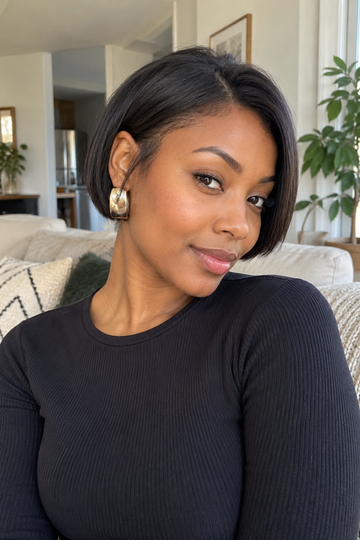
The long pixie isn't really a shorter haircut, it's a smarter one. After 40, hair changes faster than most people expect, density drops, growth slows, and the cuts that worked at 32 stop sitting the same way. The long pixie answers that quietly. There's enough length to style, enough shape to skip the salon for ten weeks, and enough room to hide the thinning at the temples that nobody talks about.
What follows are eighteen variations to bring up at your next appointment. Some lean sharp and tailored, others lean soft and undone. Don't pick by photo alone, pick by how much time you actually want to spend on your hair in the morning. The right long pixie should look better on day two than day one, because that's most of the days you'll wear it.
18 Long Pixie Haircuts Women Over 40
Classic Long Pixie
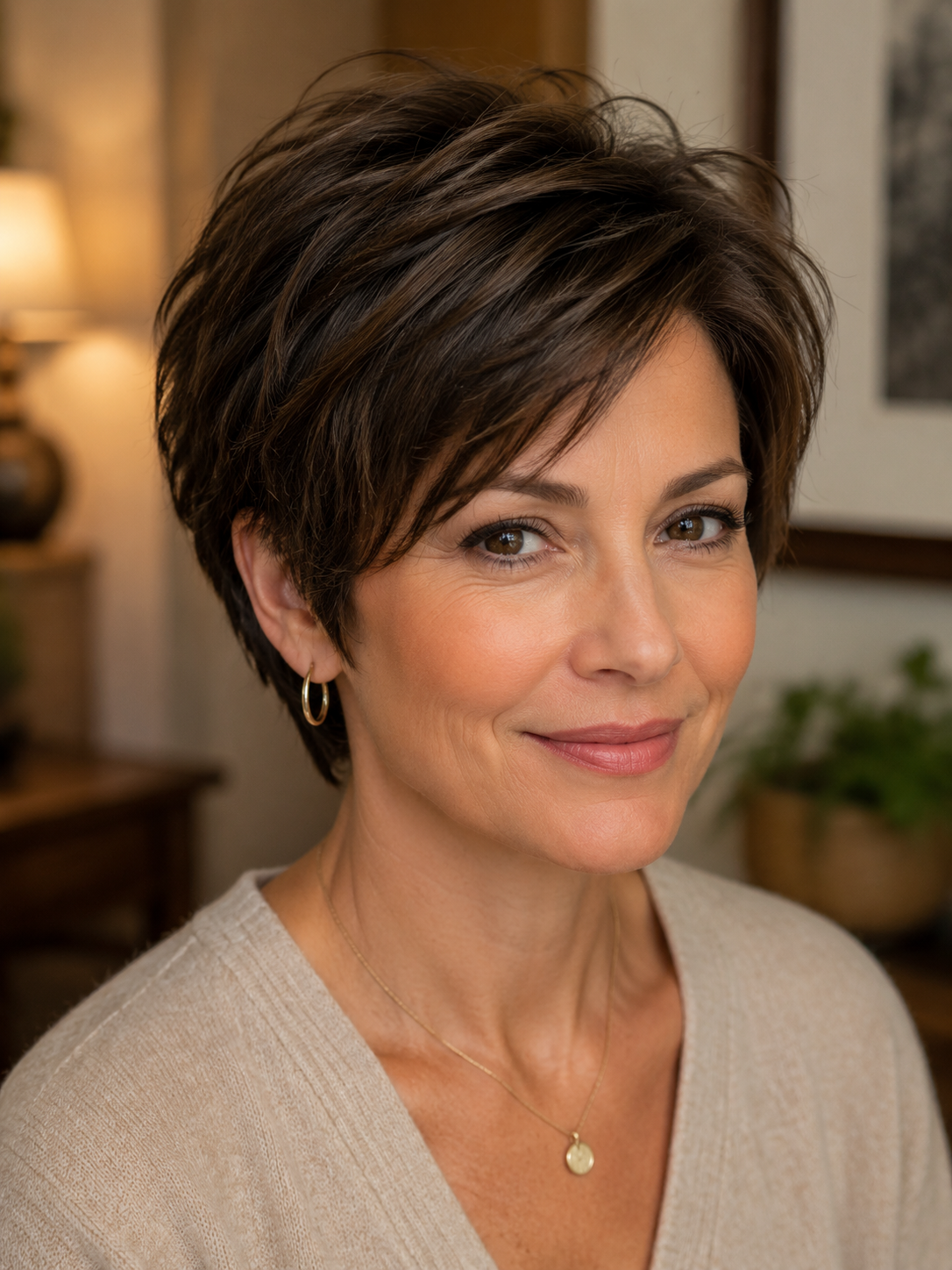
Sitting just above the ear with length kept through the crown and top, this is the version most stylists default to when you say long pixie. Ask for a graduated shape with soft layers, not blunt edges. A spritz of Color Wow Style on Steroids at the roots gives the lift that fine hair tends to lose by mid-afternoon. Style with fingers, not a brush, to keep the piecey separation that makes this cut read modern instead of helmet-like.
Long Pixie With Curtain Bangs
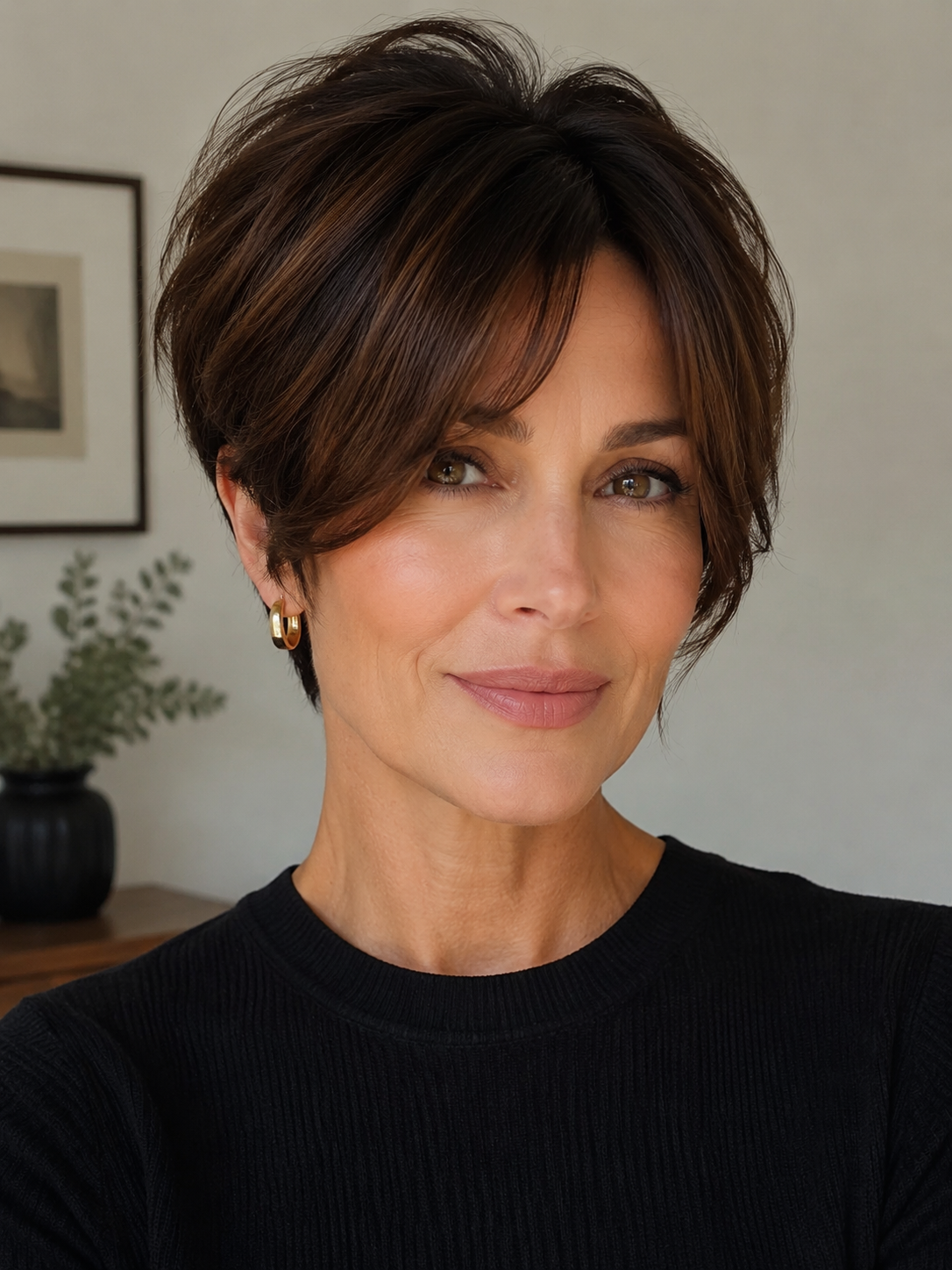
Bangs that part down the middle and frame the face, cut to sit at the cheekbone. The trick is asking your stylist to cut them dry, after the main shape is done. Wet hair behaves differently than dry, especially when there's any natural bend. A round brush blow-dry away from the face for thirty seconds is all the styling needed. This version softens a forehead without committing to the higher maintenance of a full fringe.
Tapered Long Pixie
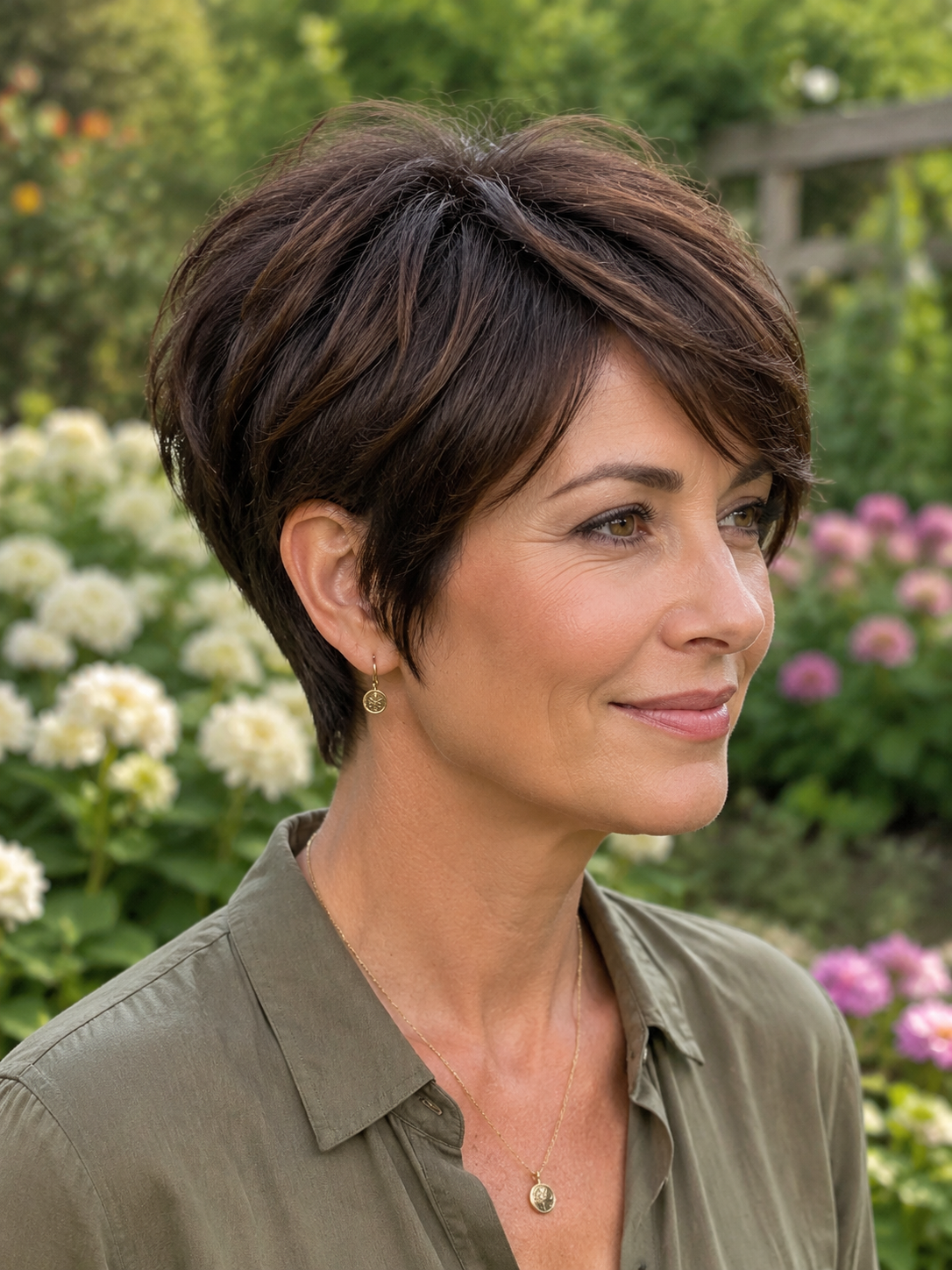
Shorter at the nape and around the ears, with length kept on top and through the crown. Tell your stylist you want a soft taper, not a sharp fade. The graduation should be cut with shears, not clippers, to keep the texture intact. This works particularly well on fine hair because the taper creates the illusion of density up top. It also grows out without needing a panicked appointment six weeks in.
Wispy Layered Long Pixie
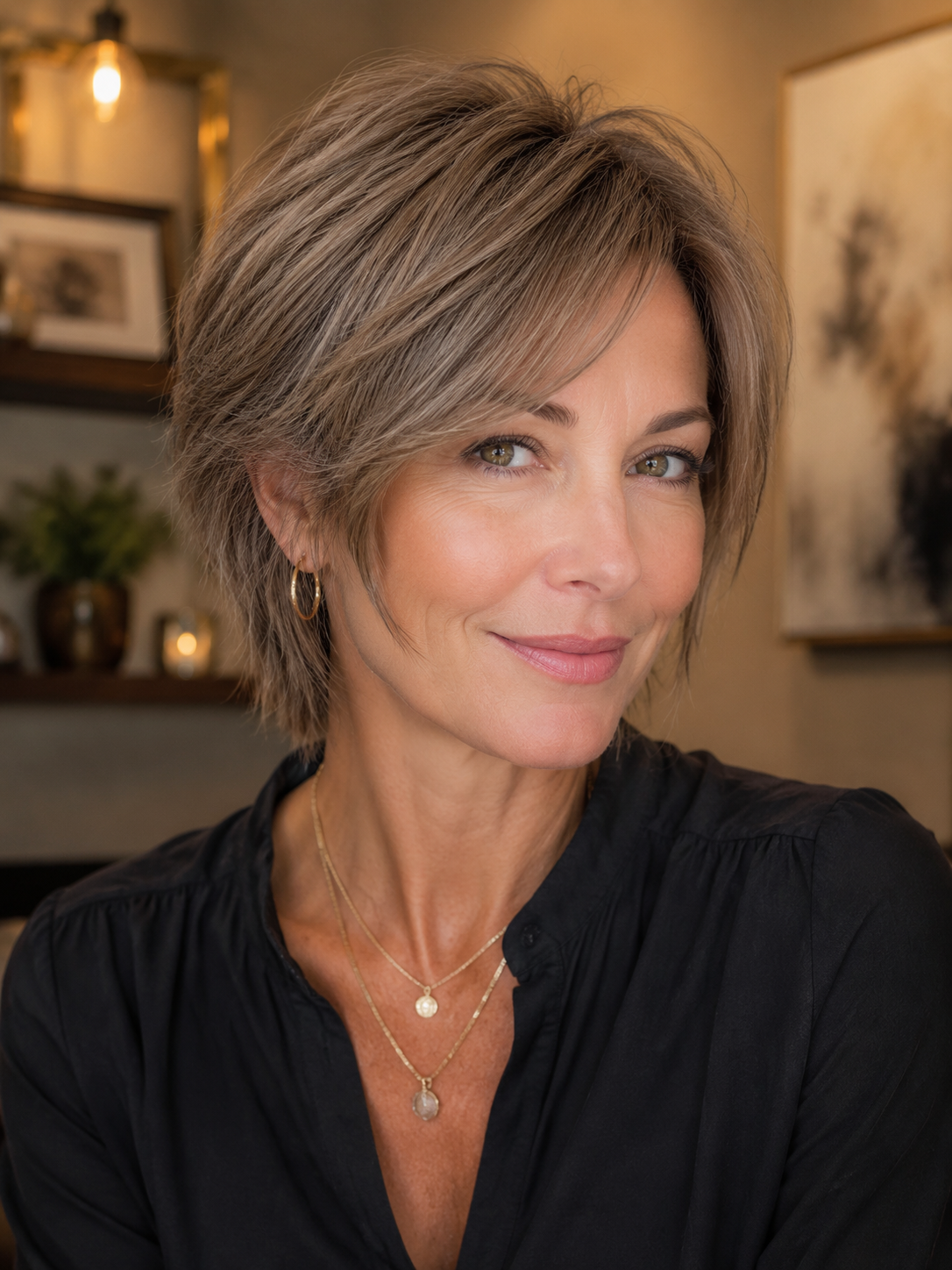
Soft internal layers throughout, with face-framing pieces left longer to skim the cheekbones. Ask for point-cutting on the ends so the layers don't read blocky. A pea-sized amount of lightweight cream worked through damp hair, then air-dried, is enough styling. This version flatters thinning hair particularly well because the wispiness reads as intentional texture rather than sparseness. It also forgives second-day hair surprisingly well.
Long Pixie With Side-Swept Bangs
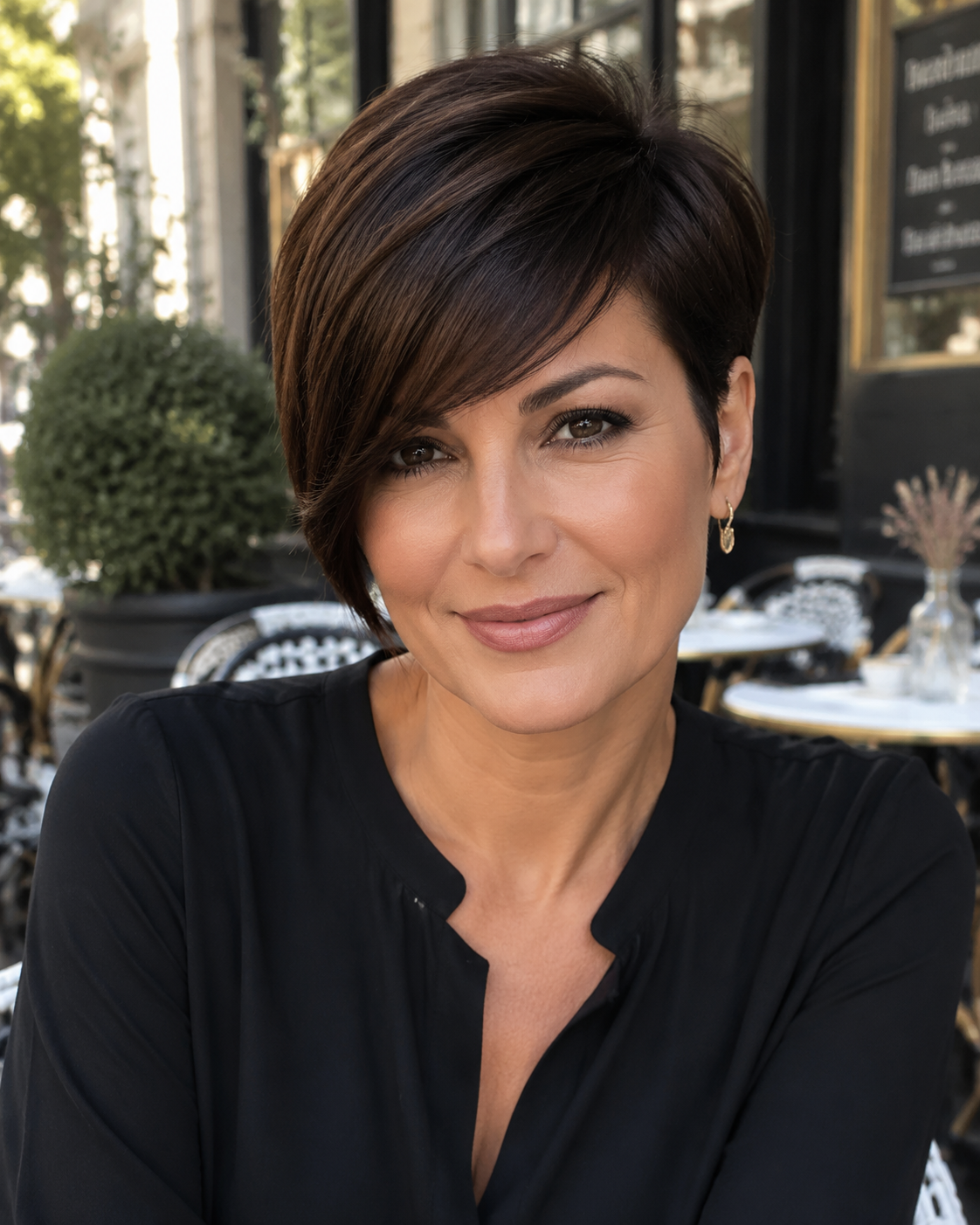
Bangs cut to fall across the forehead in a soft diagonal, starting at the corner of the eyebrow. Ask for them cut slightly longer than feels right at the appointment, they always look shorter once dry. Blow-dry with a Mason Pearson brush, finishing with a cool shot to set the sweep. This is the version that flatters most face shapes because the diagonal line draws the eye upward and across, softening any heaviness in the jawline.
Shaggy Long Pixie
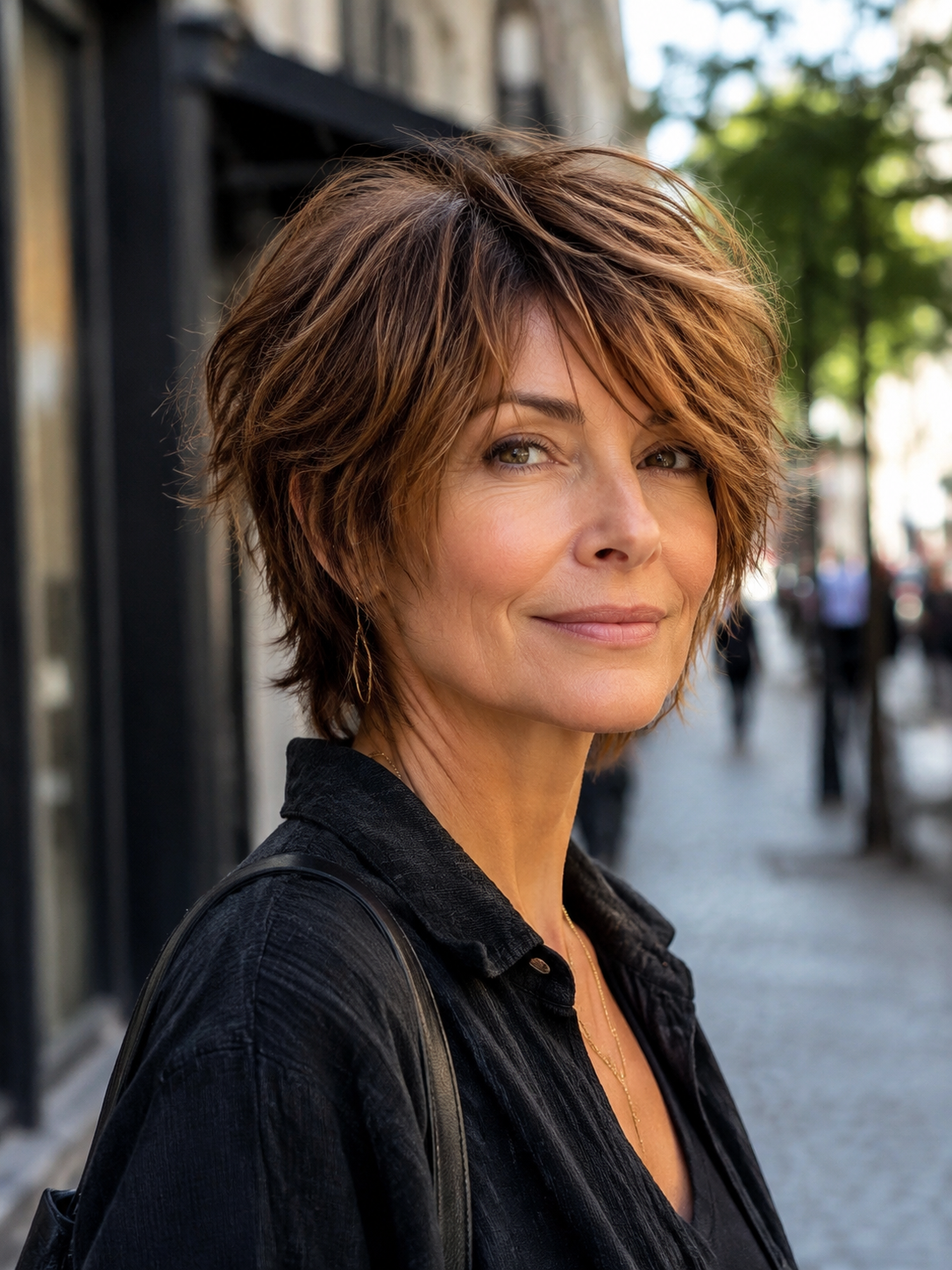
Cut with heavier internal texturizing to create undone movement throughout. Ask for choppy layers, not feathered ones, since feathering can point to dated after 40. A mist of sea salt spray on damp hair, then scrunched and air-dried, gives the lived-in finish this style needs. Skip the blow-dryer when possible. This version suits anyone who got the cut because they wanted lower maintenance, not a new styling routine. Confidence does most of the work.
Long Pixie With Highlights
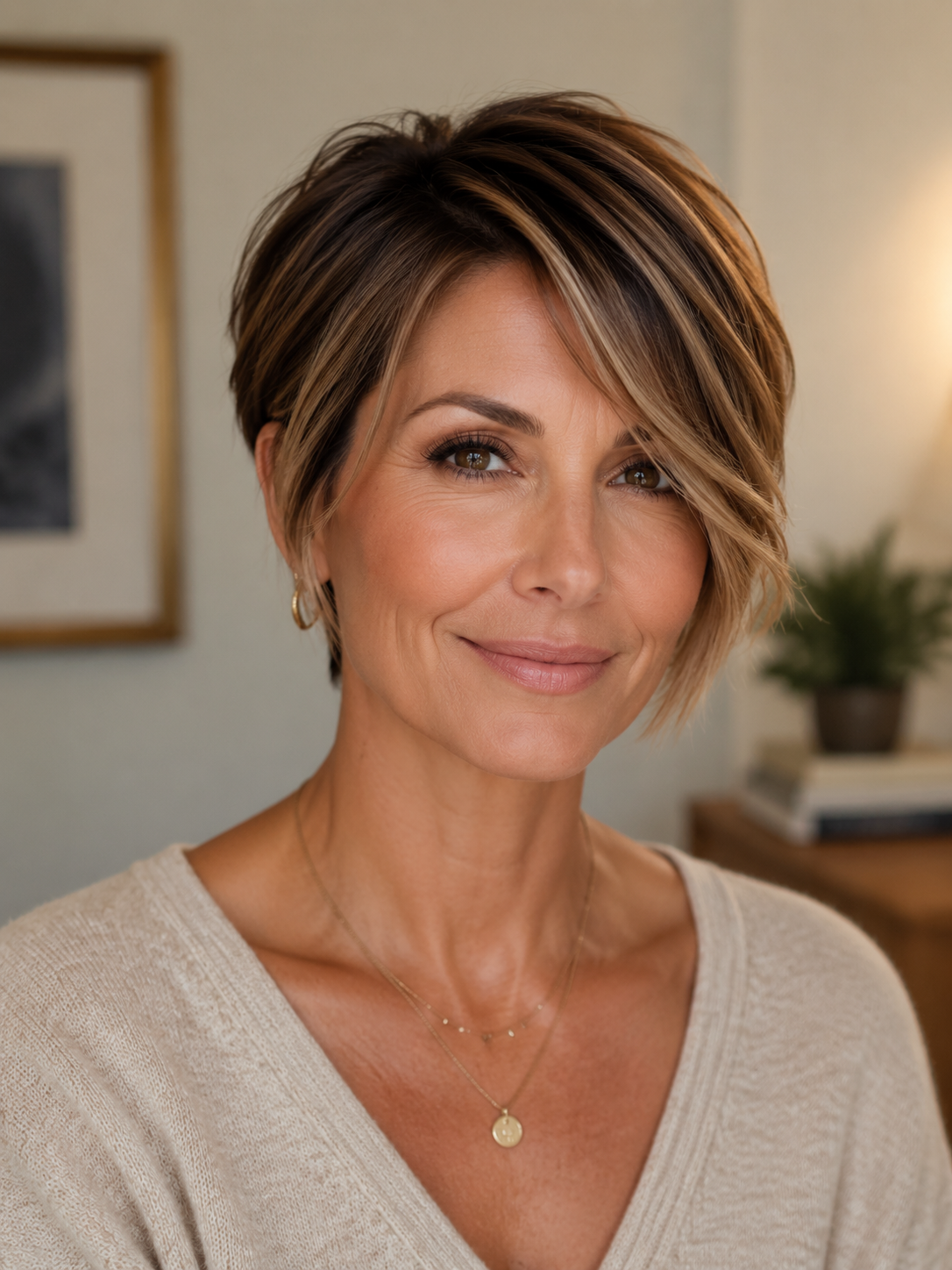
Face-framing highlights painted around the front pieces add dimension without the maintenance of full color. Ask for balayage in two shades lighter than your base, focusing on the layers around your cheekbones. This is the version that brightens the face without committing to all-over color. Use a sulfate-free purple shampoo every ten days to keep the warmth from turning brassy between salon visits. The highlights should look sun-touched, not striped.
Long Pixie With Bardot Bangs
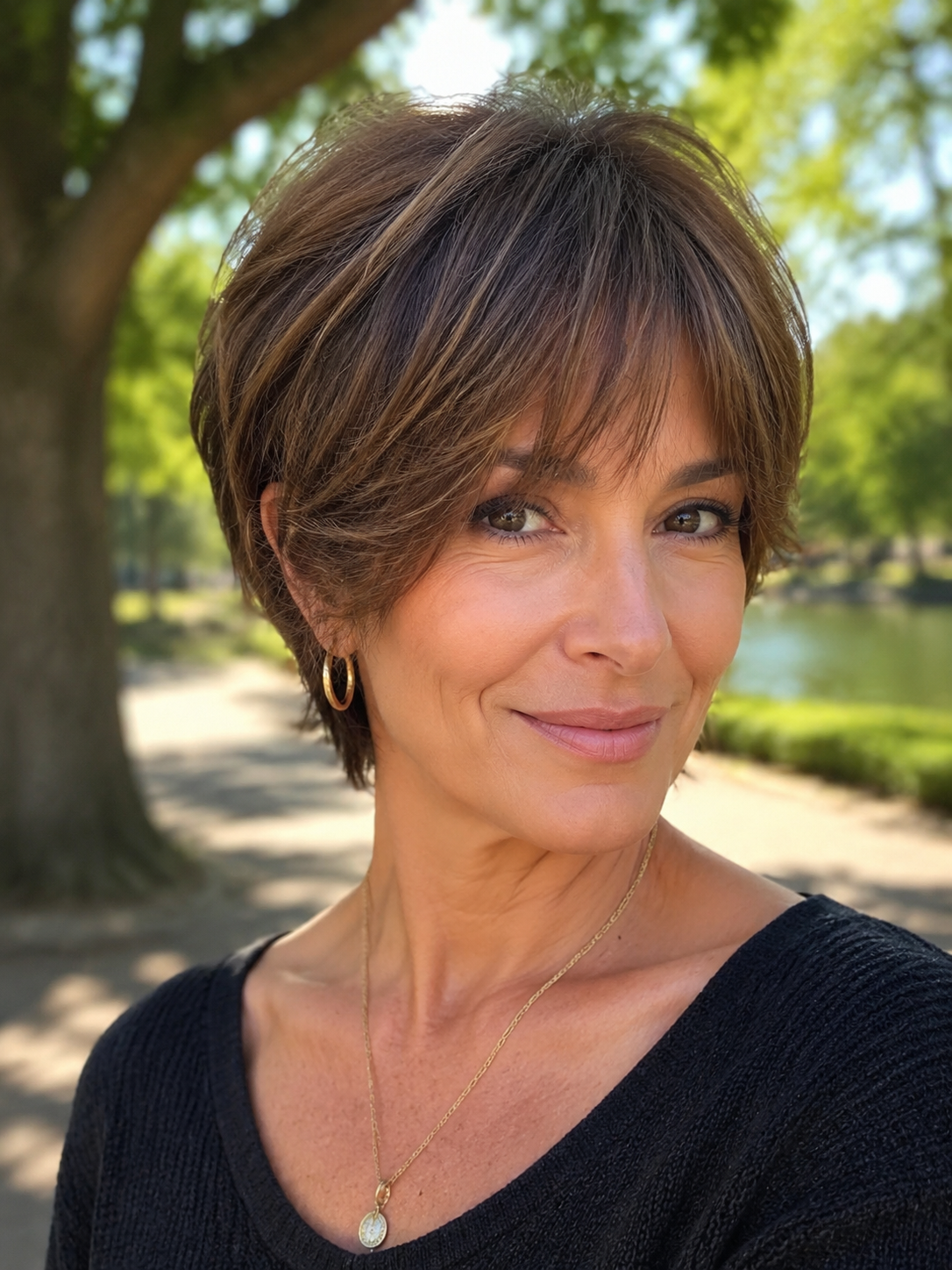
Longer, swept-aside bangs that blend into the length, named after Brigitte but borrowed enthusiastically by stylists working with mature hair. The fringe starts above the brow and feathers down to the cheekbone. Style with a small round brush and a few seconds of cool air to set the curve. This version flatters heart-shaped and oval faces particularly well, and it gives a slightly undone quality to an otherwise structured cut.
Soft Voluminous Long Pixie
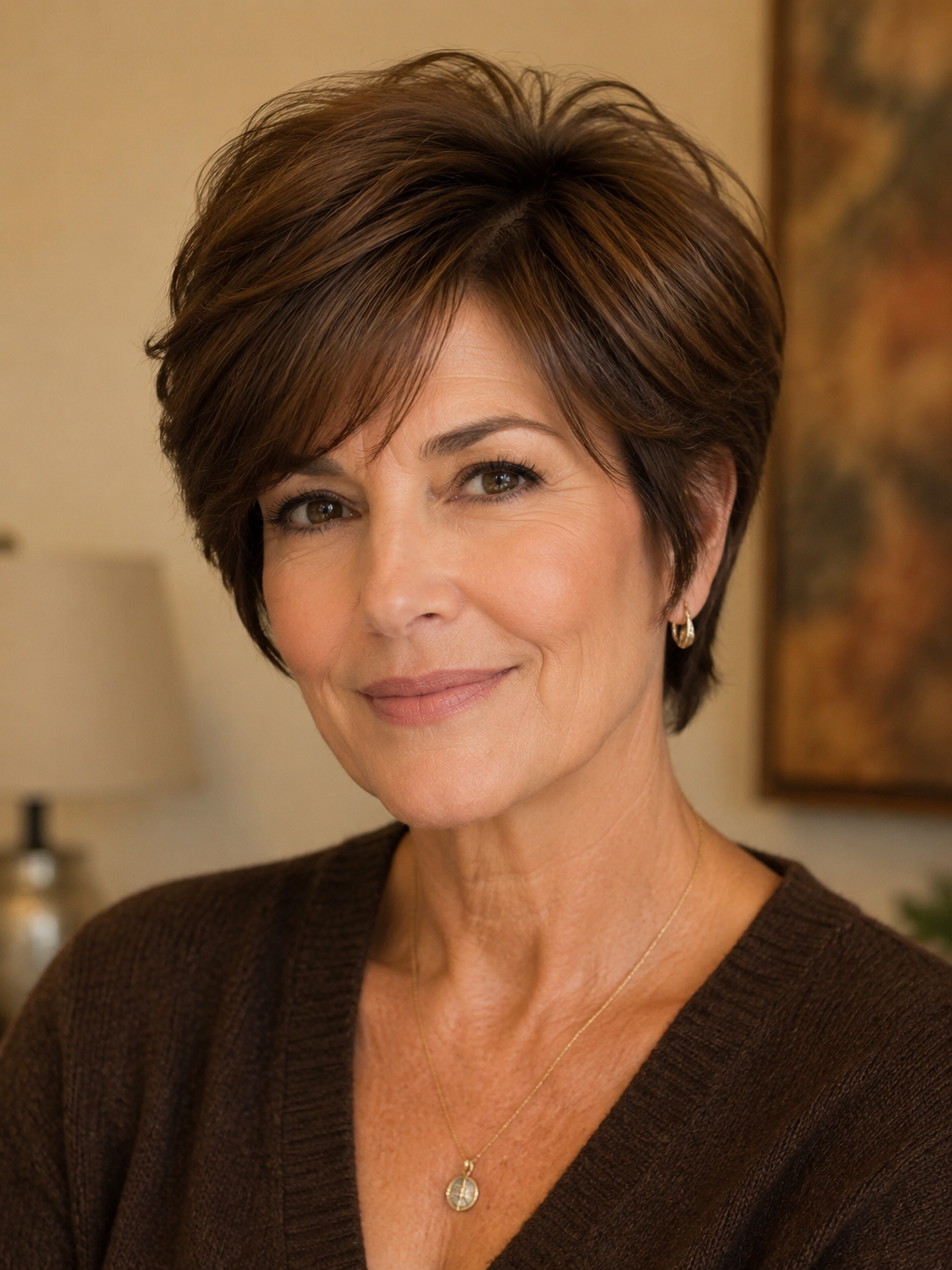
Cut with hidden internal layers to build height at the crown, where most hair flattens after 40. Ask your stylist for layers placed at the parietal ridge, where the head curves. Apply a volumizing mousse to damp roots, blow-dry upside down with fingers, then flip back. The result is the lift you used to have naturally, recreated by good cutting. Skip heavy oils, they undo everything the cut just gave you.
Long Pixie With Money Piece
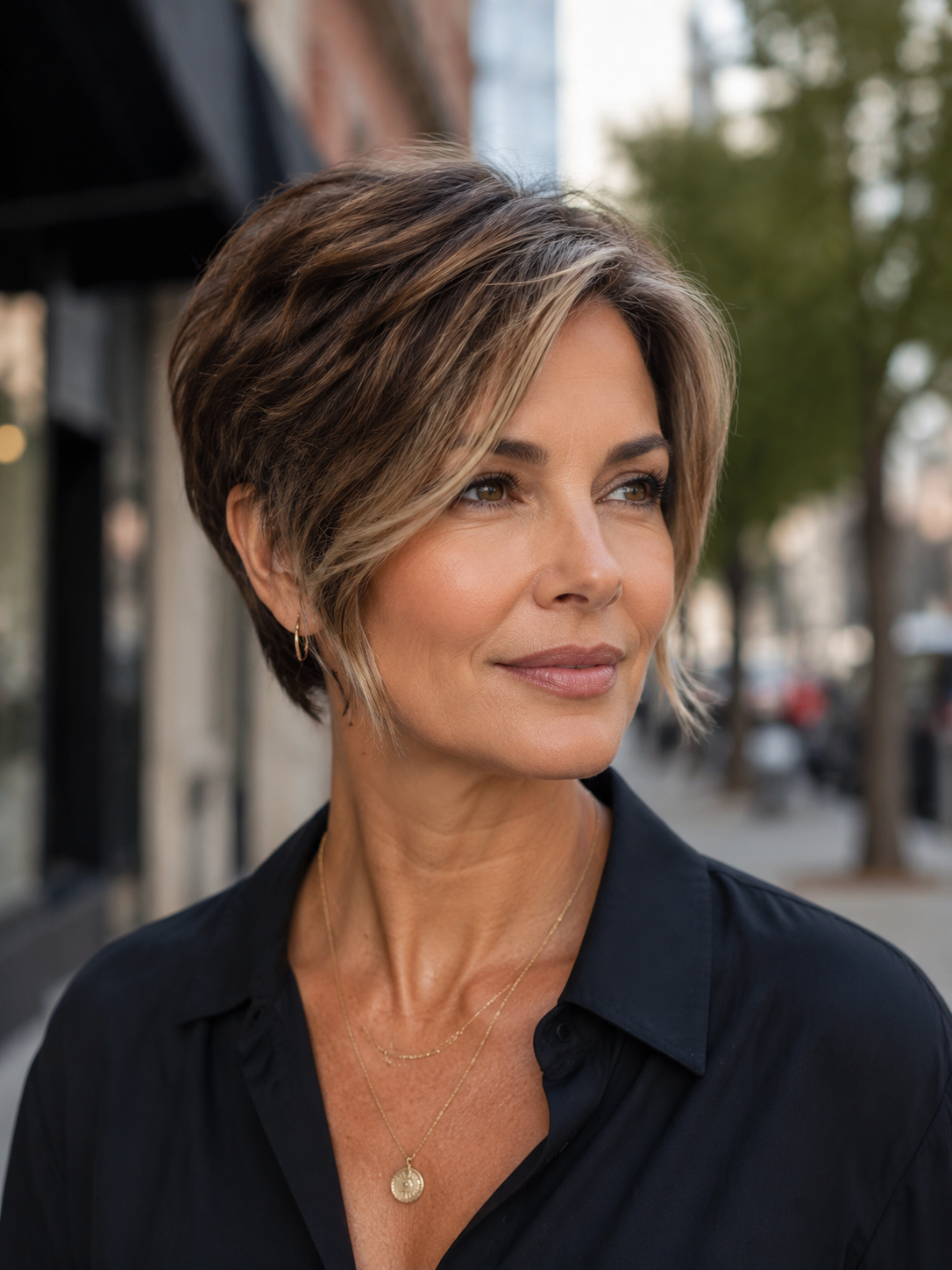
Two brighter front pieces frame the face while the rest stays your natural shade. The contrast should be soft, about three levels lighter than your base. Place the lightest sections starting at the cheekbone and softening down toward the ends. This adds movement to a cut that already has natural shape. It also brightens the complexion without committing to all-over color, which matters more as skin tone shifts with age.
Long Pixie With Inverted Back
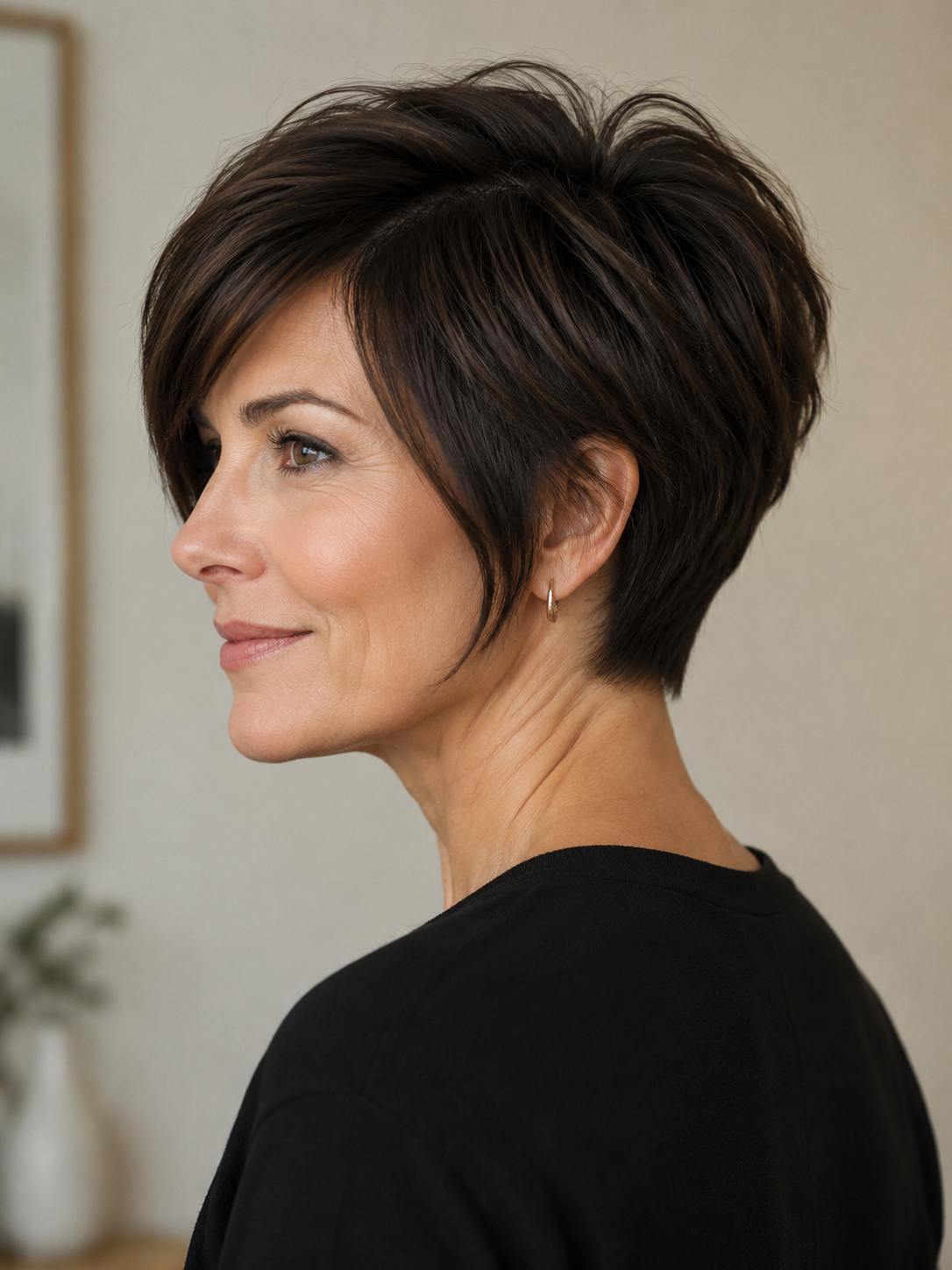
A subtle stack at the nape, with the back cut slightly shorter than the front to give the cut its characteristic forward swing. Ask for stacked layers ending at the occipital bone, not higher, anything above that line starts reading as an aughts haircut. The front stays longer, grazing the cheekbone. This works beautifully on hair that falls flat at the back of the head, building shape where most cuts go limp.
Pixie Bob Hybrid
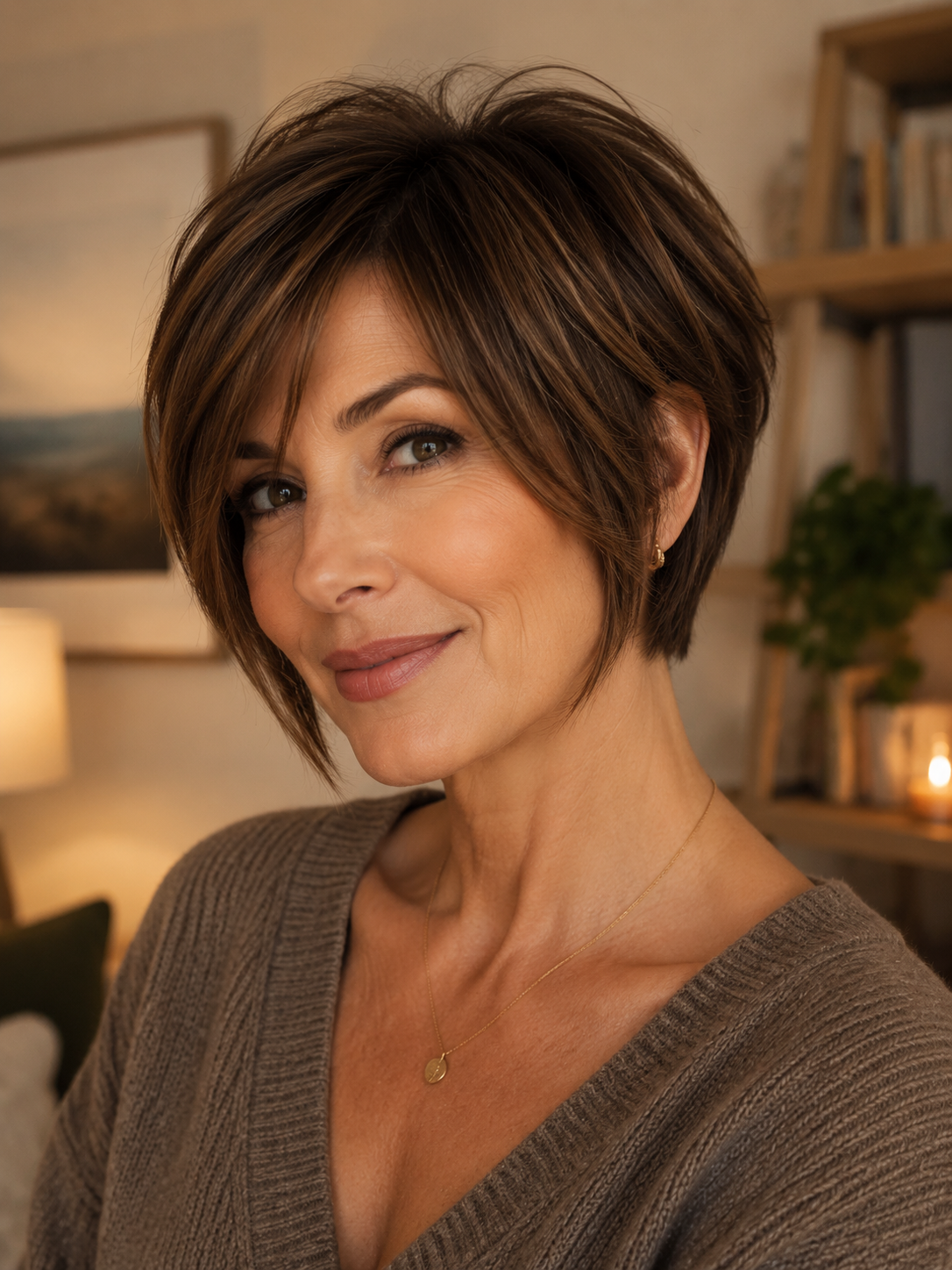
Also called a bixie in current salon language, this is the cut for anyone who loves the pixie idea but wants more length to play with. Ask for a graduated shape, shorter at the nape and longer at the front, with the longest pieces grazing the chin. It styles like a pixie but pins back like a bob on second-day hair. This is the most versatile option on the list and the easiest to live with day-to-day.
Long Pixie for Fine Hair
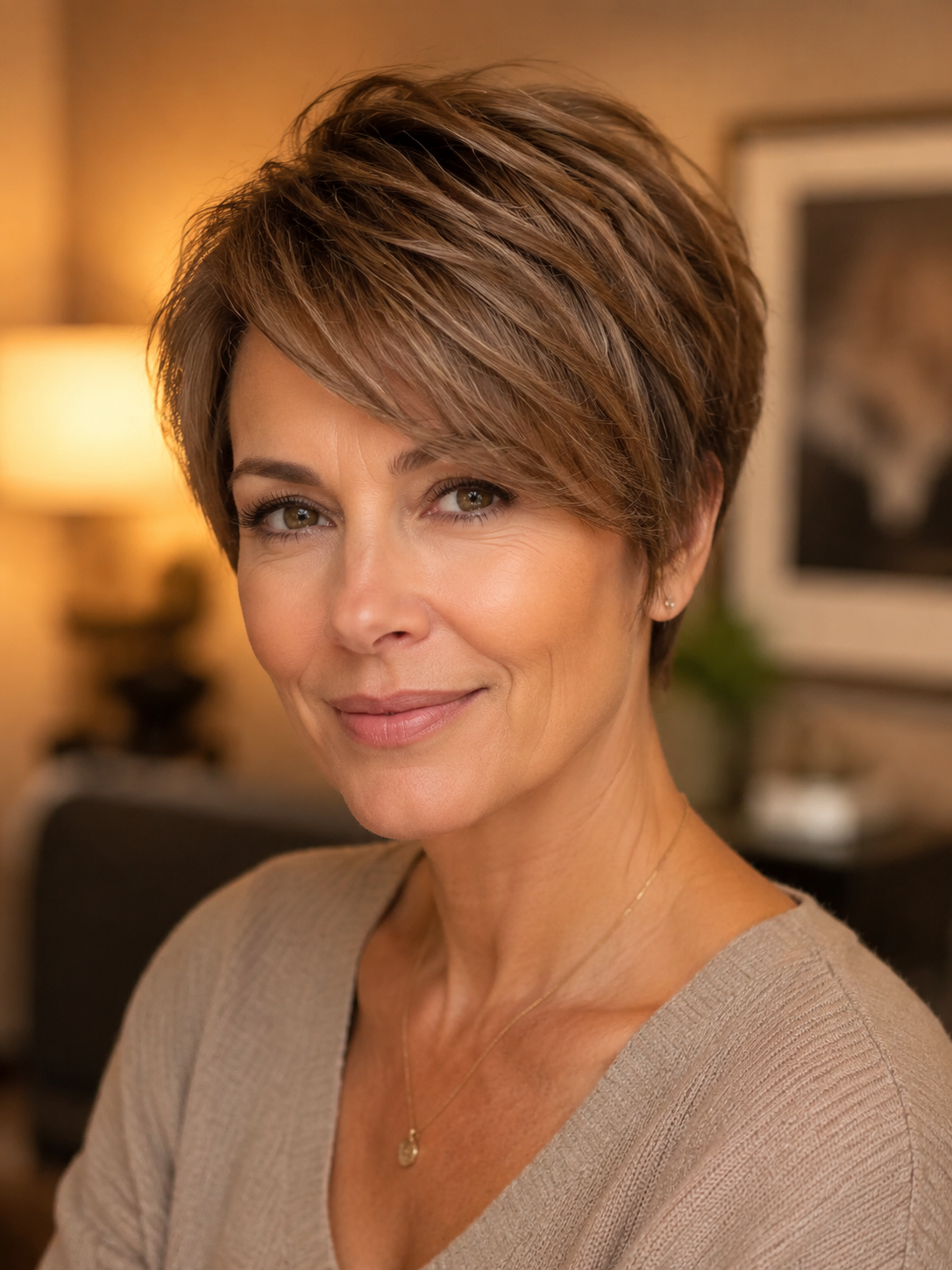
Fine hair benefits most from this cut because the layered shape creates the illusion of density. Ask for the cut done completely on dry hair, with no internal layering above the temple. Wet-cutting fine hair often removes too much weight where you need it most. Wash with a clarifying shampoo once a week to keep product buildup from flattening the roots. Avoid heavy oils, they undo the volume the cut is meant to create.
Long Pixie for Thick Hair
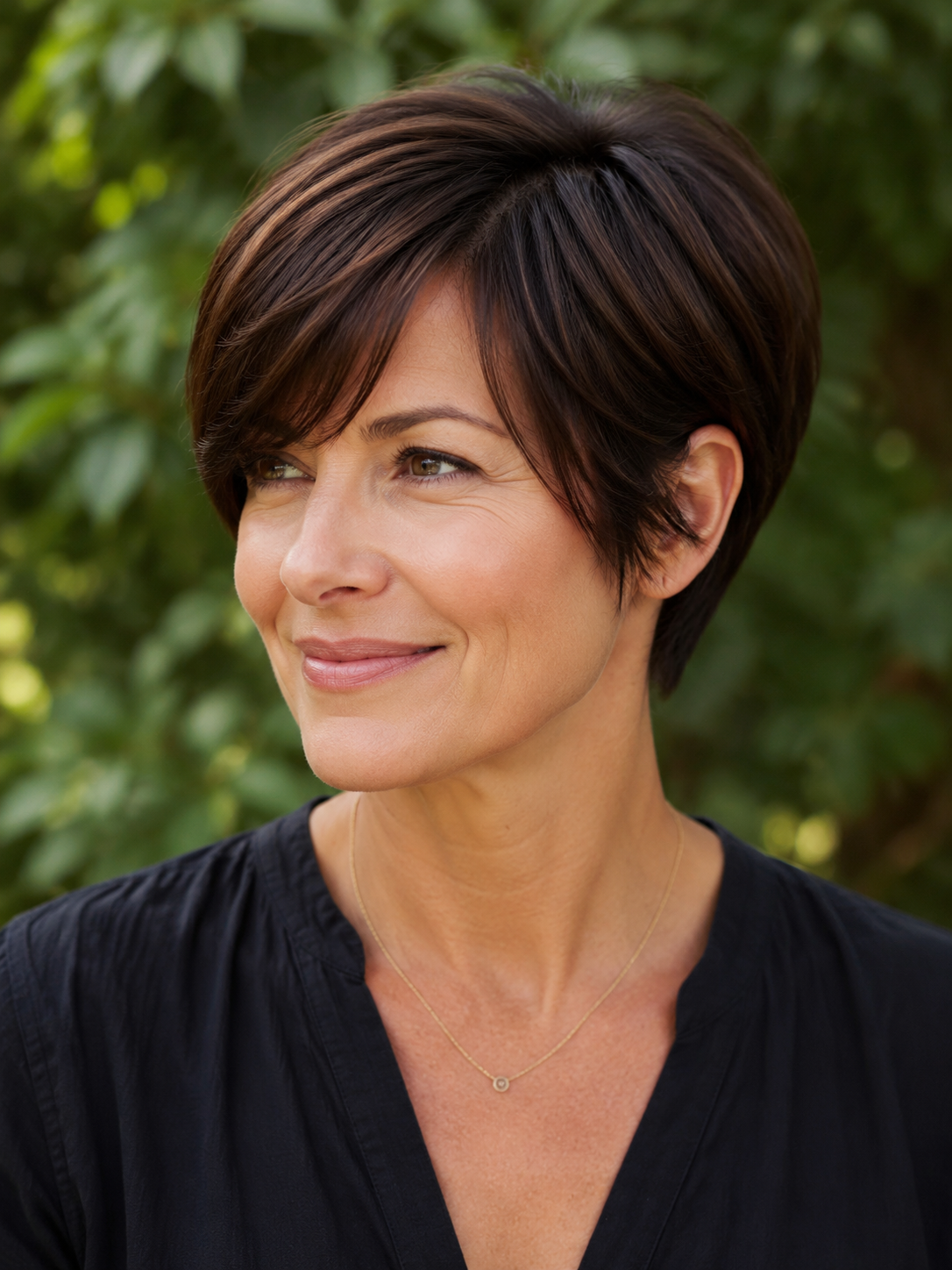
Thick hair needs the opposite approach, invisible layering throughout to keep the cut from puffing out into a triangle. Your stylist should slide-cut through the mid-shaft rather than texturizing at the ends. The perimeter stays soft, but the interior is hollowed out. Apply a leave-in cream to damp hair and air-dry. This eliminates the need for a blow-dry, which thick hair often needs to look polished but rarely has time for.
Long Pixie With Gray Blending
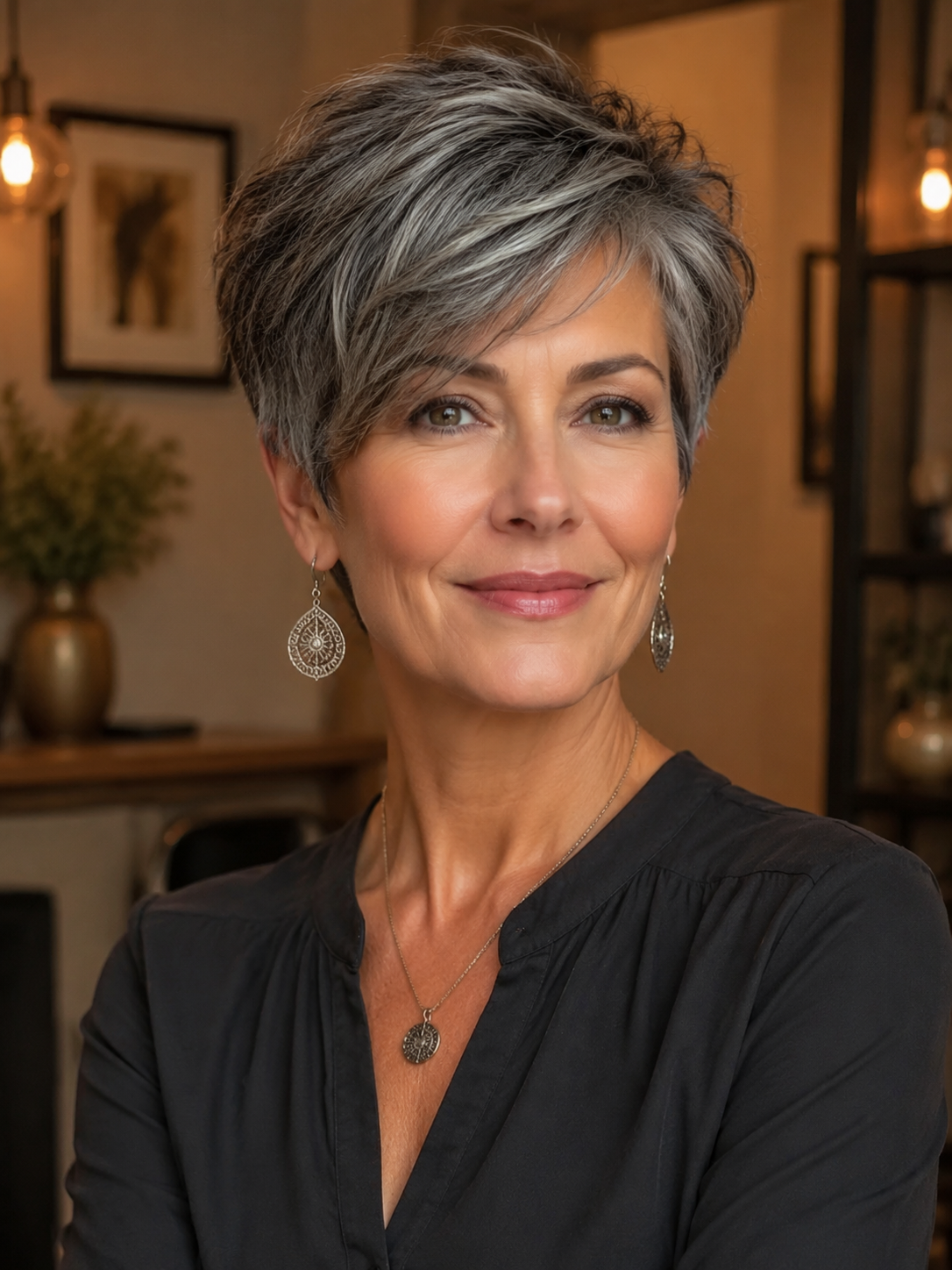
For anyone growing out color, this version uses lowlights placed against natural gray to soften the line of demarcation. Ask for a gloss treatment every six weeks to keep the gray from looking dull or yellow. The cut shape stays the same, but the color strategy makes the transition gradual instead of abrupt. This is the version stylists most often recommend for women in their 50s and beyond. It looks intentional, not in-between.
Long Pixie With Disconnected Top
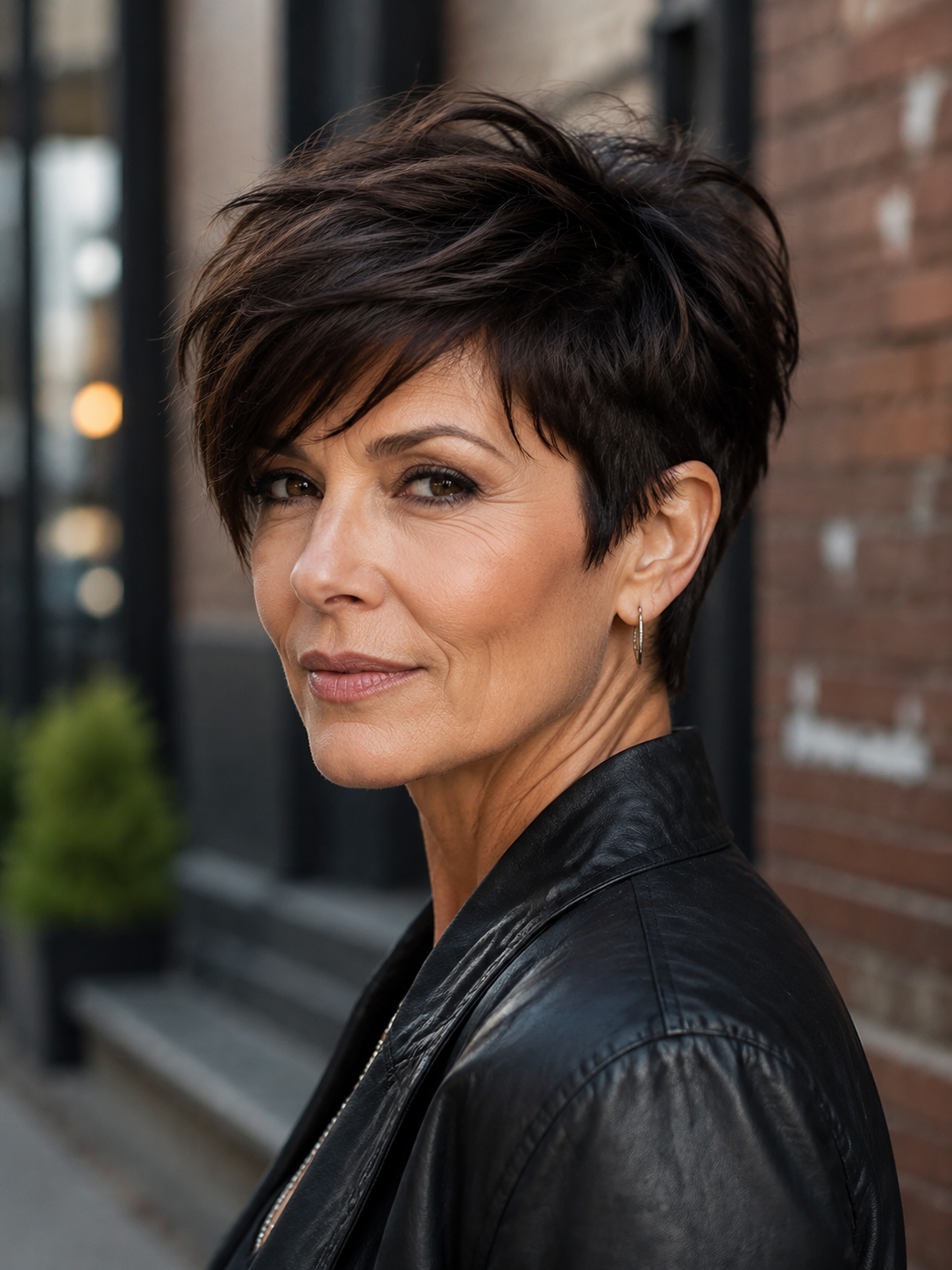
The top is left significantly longer than the sides, creating a clear visual break between sections. Ask for the disconnection at the parietal ridge, soft rather than sharp. This suits anyone wanting a long pixie with a touch more edge, without going full undercut. Style with a small amount of texture paste worked through dry hair, then pushed in the direction you want. This version reads modern without trying too hard.
Sleek Long Pixie
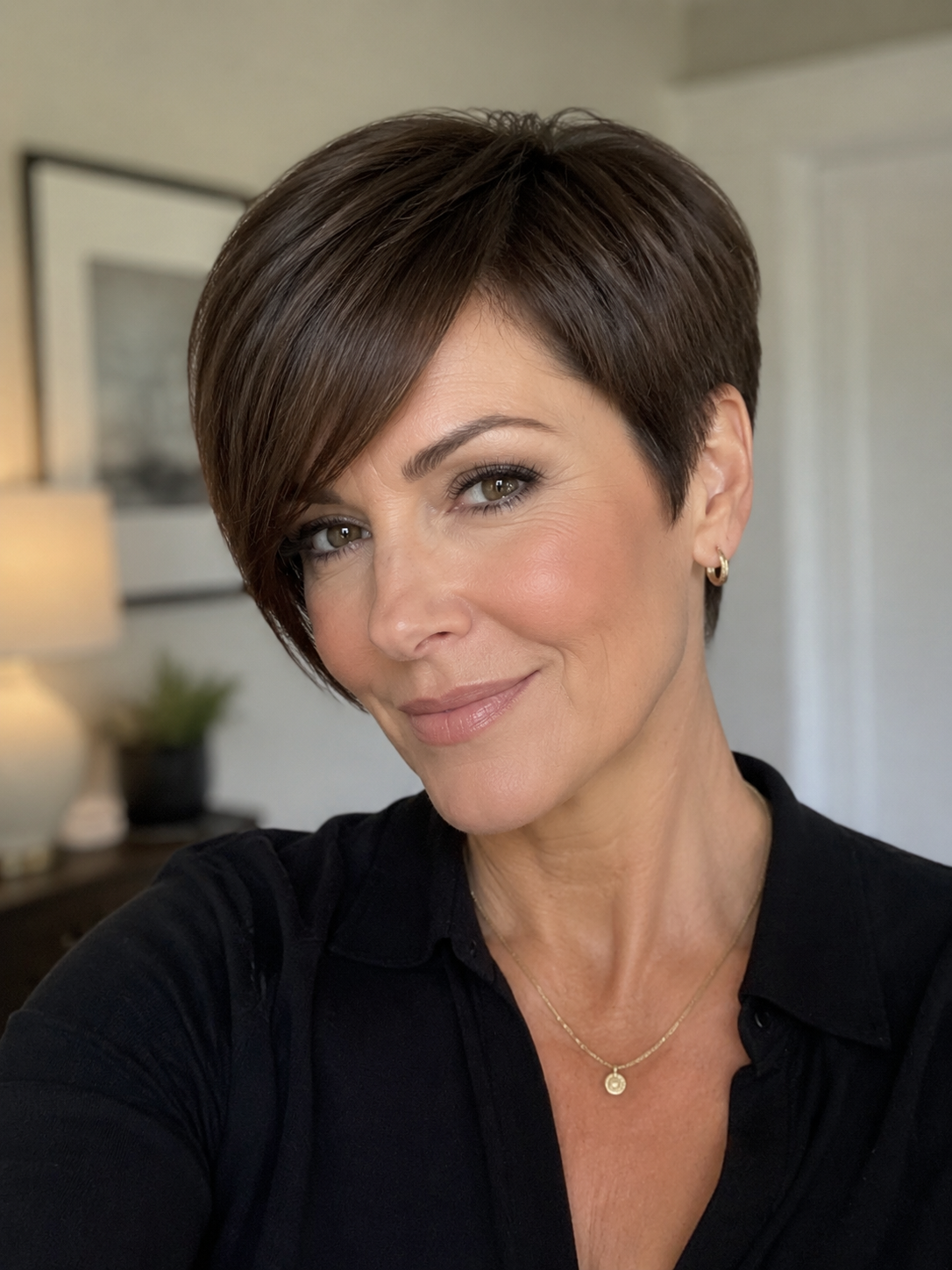
Straight, glossy, and behaving itself. Blow-dry with a paddle brush, finishing each section with a cool shot to seal the cuticle. Run a flat iron through once at a low temperature, then apply a drop of lightweight hair oil from the mid-lengths down. This is the version that looks expensive in a way that's hard to put your finger on. It also requires the most cooperation from the weather, so factor humidity into the styling decision.
Tousled Long Pixie
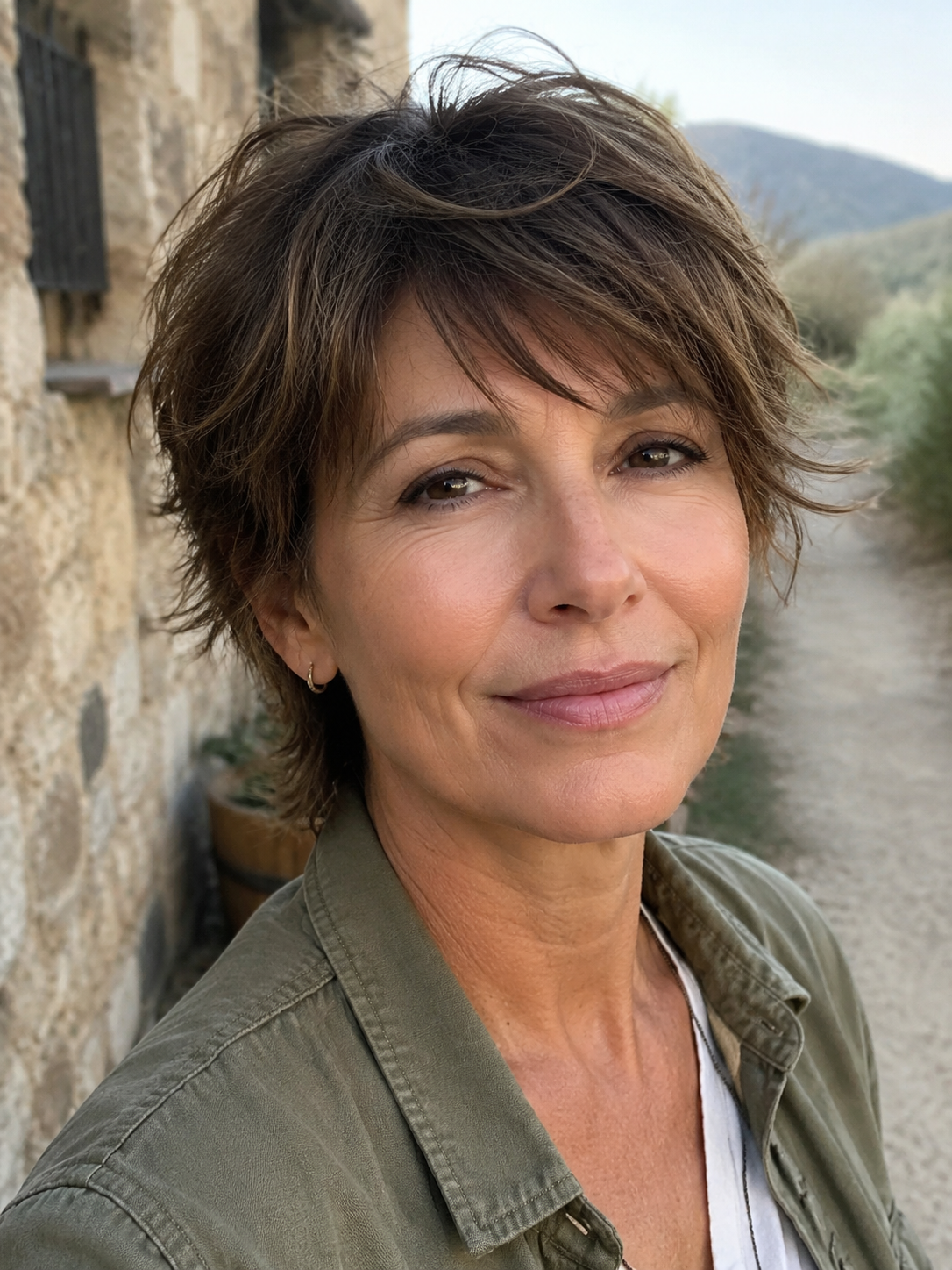
The undone cousin of the sleek version. Rough-dry upside down for three minutes, then mist with texture spray and scrunch with your hands. The point-cut ends make this work, blunt ends look frayed when tousled, while point-cut ends look intentional. This version suits anyone who wants to spend less time on their hair, not more. It also reads particularly well on days when you've slept badly, which after 40 is most of them.