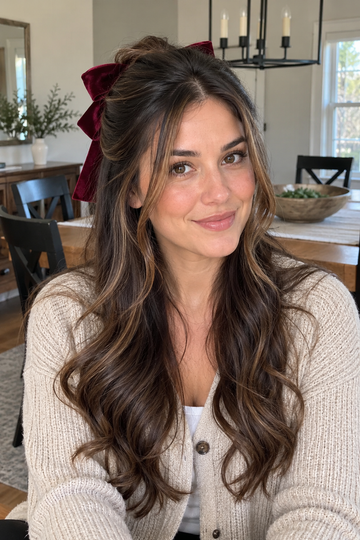
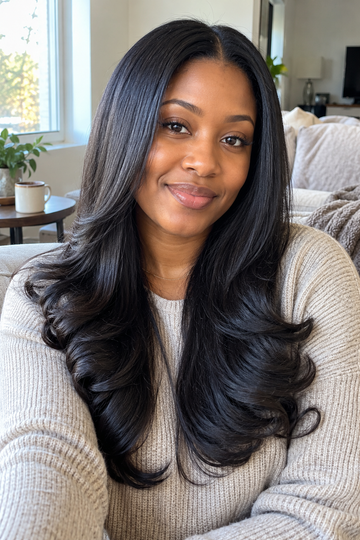
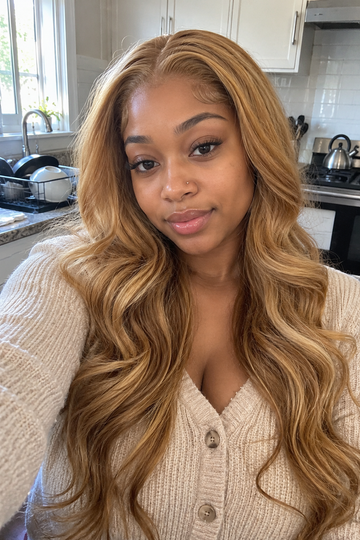
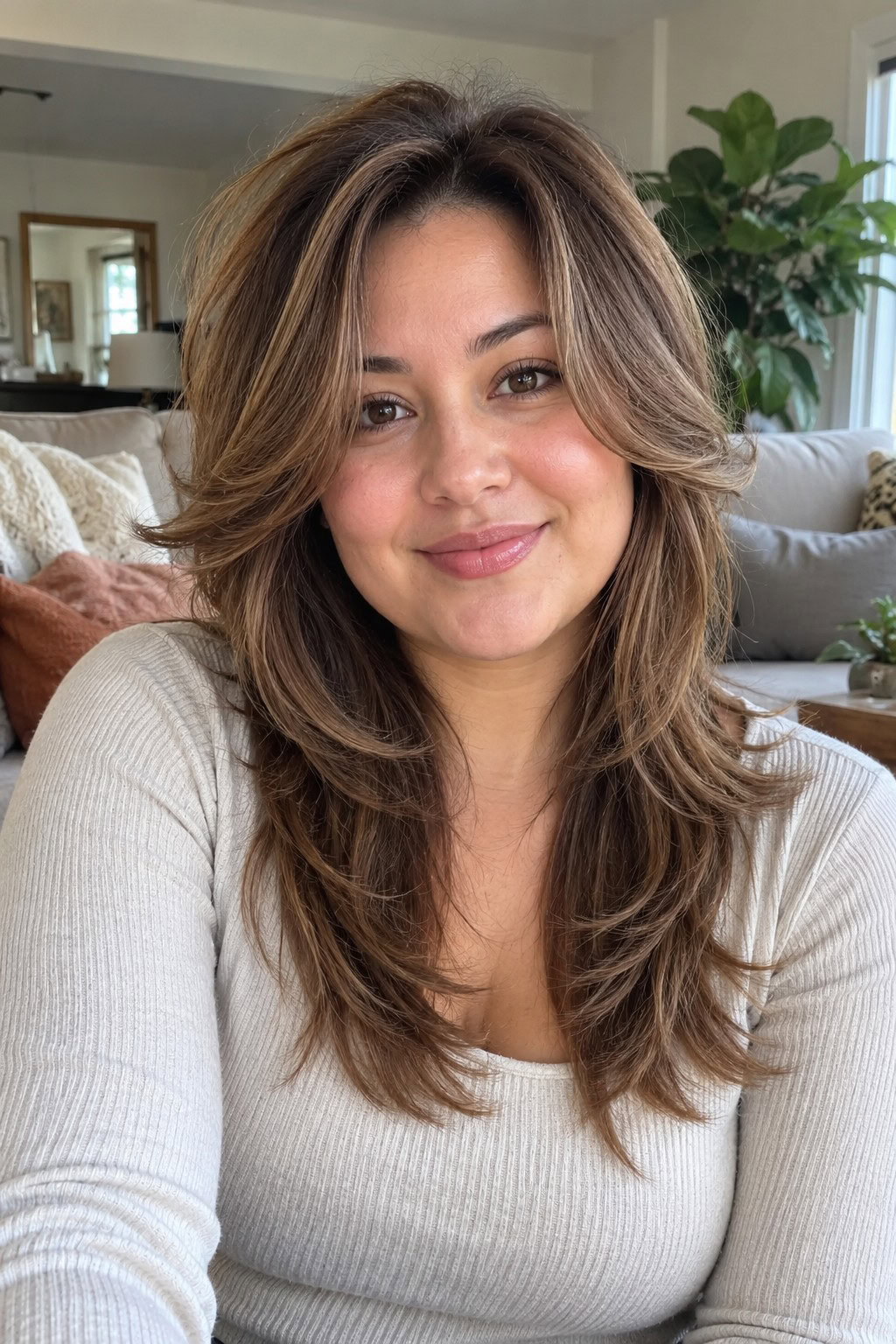
Thick hair at medium length has one complaint, and it is the pyramid.
Cut it one length and it widens at the bottom, layer it badly and it frizzes at the top, and either way it takes forty minutes to dry.
The cuts that work remove weight where it hides and keep fullness where it shows. The styles that work use the density as the point instead of fighting it.
Every entry here says where the bulk goes, which texture it suits, and how long it holds between trims or between mornings.
Jump to:
- Long Layered Lob
- Blunt Collarbone Cut
- Internal Layers
- Lob With Curtain Bangs
- Modern Shag
- Butterfly Cut
- Razor-Cut Textured Lob
- A-Line Lob
- Rounded Curly Cut
- Hidden Undercut
- Face-Framing Layers
- Feathered Layers
- Air-Dry Wavy Lob
- Sleek Middle-Part Blowout
- Claw Clip Half-Up
- Low Twisted Bun
- Thick Side Braid
- Blunt Bangs With a Shoulder-Length Cut
- Heavy Side-Swept Bangs
- U-Shaped Cut
- Coily Layered Cut
- C-Curl Lob
- Sleek Low Ponytail
- 90s Bouncy Blowout
Long Layered Lob
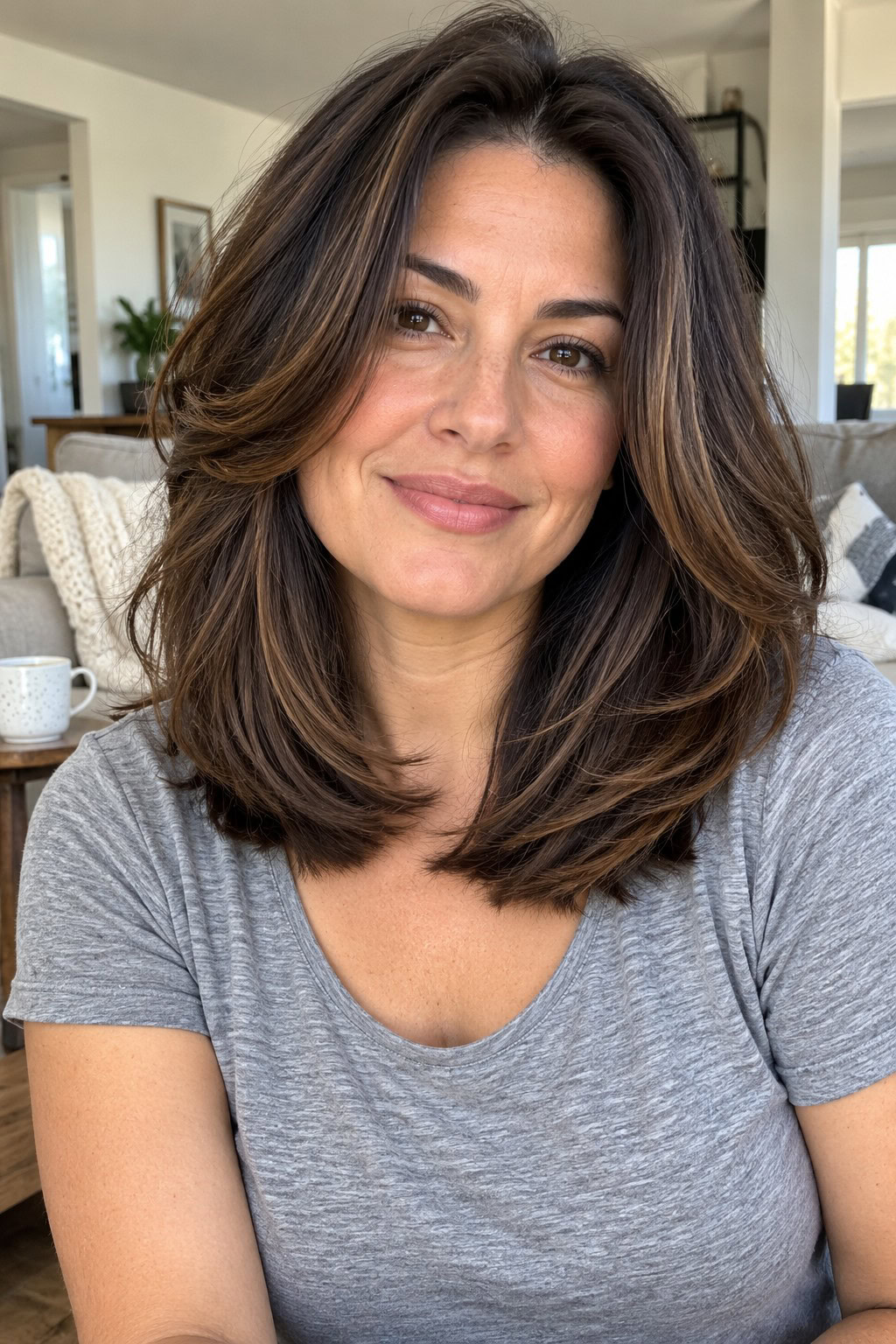
This is the cut that makes thick hair swing instead of hang.
Long layers start below the chin and blend through a collarbone-length lob, removing just enough weight to add movement while keeping the fullness.
Straight and wavy hair that goes flat under its own weight gets the most from it.
Blow dry with a round brush when there is time, or air dry with a light cream when there is not. Trims every ten weeks keep the layers blended.
Blunt Collarbone Cut
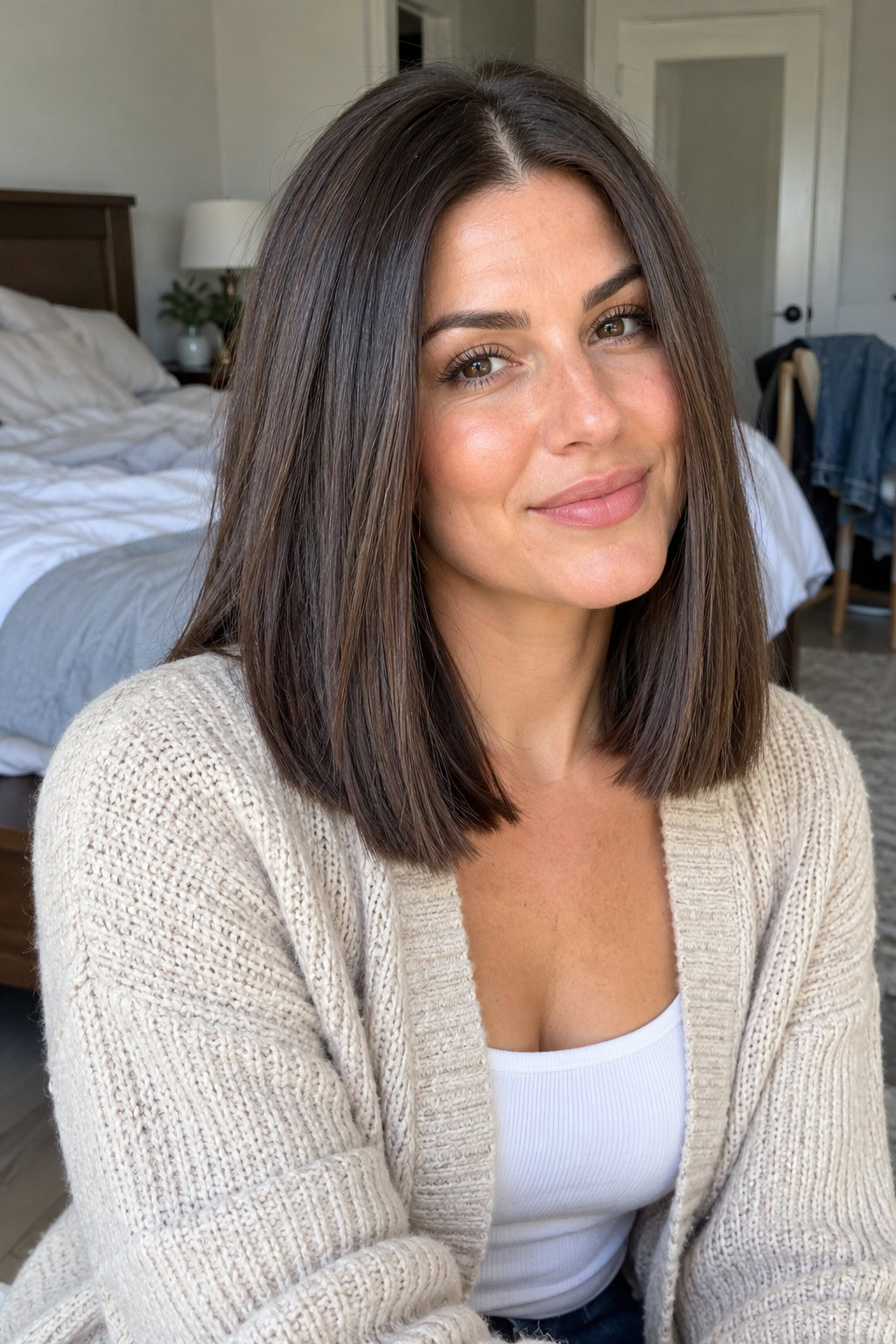
Thick hair in one clean, heavy line looks polished with almost no effort.
Every strand is cut to the same length, so the ends sit full and glossy and the density does the work.
Curls will puff at a blunt edge, which makes this one a straight or lightly wavy hair cut.
Blow dry smooth with a flat brush, finish with serum, and part it down the middle. Trim every eight weeks to keep the line sharp.
Internal Layers

The hair looks exactly as full as before, and it dries in half the time.
Internal layers are cut into the underneath sections of a shoulder-length cut, so bulk comes out where nobody sees it and the outline stays blunt.
Coarse hair that balloons in humidity calms down. Dense hair that needs forty minutes under a dryer needs twenty.
Air dry with a smoothing cream. Regrowth never shows, which is why trims can wait twelve weeks.
Lob With Curtain Bangs
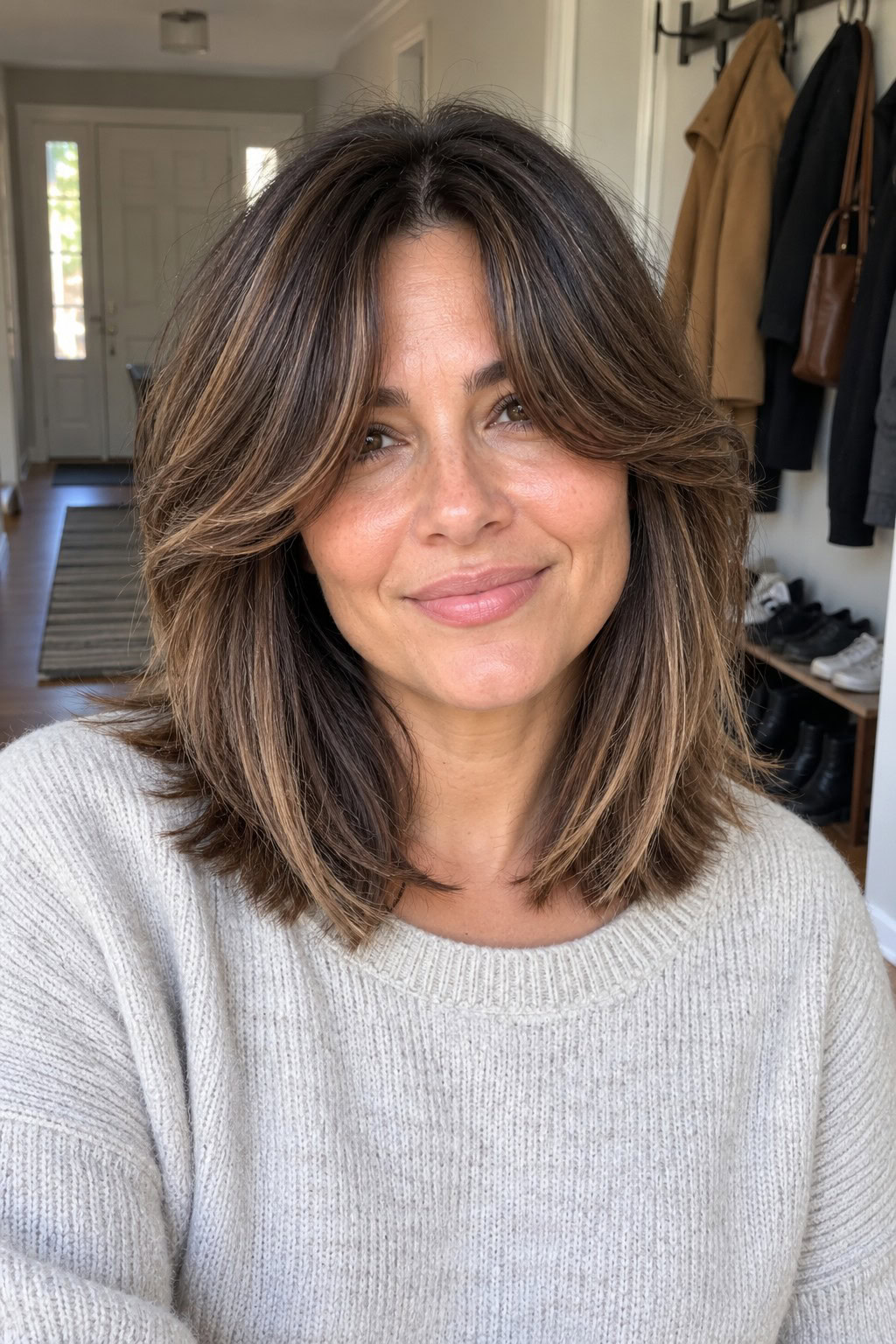
A heavy front section finally has a job to do.
Curtain bangs on thick hair are cut deep and full, parted in the middle, and swept toward the cheekbones, and the density keeps them from going wispy. Behind them the collarbone-length lob stays simple with light ends.
A round brush on the bangs is the only daily step. Trim the bangs every six weeks. When you stop trimming, they grow into face-framing pieces without an awkward phase.
Modern Shag

Thick hair with real lift at the crown instead of weight pulling it down.
The modern shag layers a shoulder-length cut heavily on top with wispy, lighter ends, and a soft fringe is optional. Wavy hair wears it best because the texture does the styling.
Air dry with a texture spray and scrunch, no brush required. The cut looks better slightly grown out, so trims can wait ten to twelve weeks.
Butterfly Cut
The top looks like a fresh blowout and the back stays long, with no round brush involved.
The butterfly cut layers a shoulder-length length in two tiers, short pieces at the face and crown and longer pieces through the back.
On thick hair the short tier removes weight exactly where it piles up. Wavy hair air dries with bounce.
Straight hair needs one quick flip of the top layer. Trims every ten weeks keep the two levels defined.
Razor-Cut Textured Lob
Soft, piecey ends replace the heavy straight line thick hair usually ends in.
A razor shaves the lob into shape so the perimeter is feathered and light without obvious layers.
One warning before booking it, very coarse or frizz-prone hair can fray under a razor, so this works best on thick hair with a smooth cuticle.
Scrunch with a texture spray and air dry. The ends stay soft as they grow. Trims every eight to ten weeks.
A-Line Lob
The weight comes off the nape, where thick hair is heaviest, and the front keeps its length.
The A-line lob sits at the collarbone in front and runs an inch or two shorter at the back, which gives dense hair movement and keeps it off the neck. Straight hair shows the angle cleanly. Wavy hair softens it.
Blow dry smooth with a flat brush or air dry with cream. The angle relaxes as it grows, so trim every eight to ten weeks.
Rounded Curly Cut
Thick curls sit in a soft circle at the shoulders instead of widening into a triangle.
The cut is done dry, one curl at a time, with weight removed from the inside so the outline curves evenly and shrinkage is already accounted for.
Anything from 3A to 3C takes the shape well. Wash and go with a leave-in and gel, nothing else. Because the curls stack, the shape holds as it grows. Book every twelve weeks.
Hidden Undercut
From the front it is a full, normal lob, and only the wearer knows the nape underneath is buzzed.
A section is removed under the top layers, which takes out more bulk than any layering can. Thick hair dries faster, sits closer to the head, and makes a lighter ponytail. With the hair down, nothing shows.
The undercut needs a buzz every six to eight weeks, five minutes at most. The lob above it grows for months without losing shape.
Face-Framing Layers
Two softer pieces frame the cheekbones while the thick lengths behind them stay full.
This is the cut for someone who wants softness around the face without thinning the whole head. The front pieces tuck behind the ear, fall forward, or pull loose from a ponytail.
Air dry everything and bend the two front pieces with a flat iron if they need it. The layers blend as they grow. Trim every ten weeks.
Feathered Layers
The layers flick back and away from the face, so the weight lifts instead of hanging.
They are cut at an angle through a shoulder-length cut so the ends fan outward on their own.
On thick hair the feathering thins the perimeter and adds swing. Straight and wavy textures both carry the flick.
Blow dry once with the brush rolling back, or air dry and flip with fingers. The layers blend softly as they grow. Trim every ten weeks.
Air-Dry Wavy Lob
The waves fall right out of the shower and actually hold, because thick hair has the weight to keep them.
The lob is cut on dry hair following the natural wave pattern, with layers placed to stop the ends from puffing. A leave-in and a scrunch are the whole routine.
If you have a natural bend and have been fighting it with a flat iron, this gives the mornings back. It looks lived-in at every stage. Trim every ten weeks.
Sleek Middle-Part Blowout
Smooth, heavy, and swinging in one glossy sheet, which only thick hair can do.
Smooth a collarbone-length cut flat with a round brush, then take a flat iron through thin sections with a heat protectant.
The density gives the finish a weight that reflects light.
A shine serum at the end seals it. It holds three or four days in dry weather on straight or wavy hair, longer with a silk pillowcase.
Claw Clip Half-Up
Half the weight comes off the neck in ten seconds and the rest stays down.
Gather the top section, twist it, and clamp a large clip over the twist. Thick hair needs the biggest clip size or it springs open. Pull two pieces loose at the front.
No dents, so it can be redone all day. It works on a lob or shoulder-length layers, and tortoiseshell or matte neutrals disappear into dark hair.
Low Twisted Bun
A full, round bun at the nape that fine hair would need a padding insert to fake.
Gather thick hair at the nape, twist the length, wrap it, and pin with large bobby pins or a claw clip. Leave two pieces out at the front.
A satin scrunchie underneath gives grip. It keeps the weight off the neck and holds all day, on anything from the collarbone down.
Thick Side Braid
One wide braid over the shoulder that looks like it took an hour and took three minutes.
Gather shoulder-length hair to one side and braid loosely from behind the ear. Pull it gently apart for fullness. Dense hair gives the braid width with no extensions involved.
Leave a few pieces loose at the front and tie the end with a clear elastic. It holds all day and undoes into soft waves the next morning.
Blunt Bangs With a Shoulder-Length Cut
A heavy fringe cut straight across sits full and solid on thick hair, with no gaps showing.
The bangs are the focus, so the shoulder-length cut behind them stays one length or lightly layered. Straight and lightly wavy hair hold the line cleanly.
Blow dry the fringe forward with a flat brush. A shine serum keeps it glossy. Trim every four weeks, since a quarter inch of growth changes the whole look.
Heavy Side-Swept Bangs
A deep, full fringe swept across the forehead is something only thick hair can pull off without looking thin.
The bangs are cut long and heavy and parted deep on one side. Worn forward they frame the eye. On lazy days they tuck behind the ear and disappear.
The collarbone-length cut behind them stays simple. A round brush sets the sweep as it dries. Trim every six weeks, or let them grow into long layers.
U-Shaped Cut
Full, rounded ends that curve gently at the back, and thick hair gives the curve real presence.
The perimeter is trimmed in a soft arc, longer in the center back and slightly shorter at the sides, so the density stays at the ends while the curve adds shape.
Straight and wavy hair both wear it. If the bulk is still too much, pair it with internal layers. Air dry or blow dry flat. Trims stretch to twelve weeks.
Coily Layered Cut
Dense coils at shoulder length hold a full, even shape that stays round between wash days.
The cut is done on stretched or dry hair so the layers account for shrinkage, with longer layers at the sides and crown to keep the top from going flat.
Thick 4A to 4C hair in wash and gos, twist outs, or stretched styles all take the shape. Styling is whatever the weekly routine already is. Trim every twelve weeks.
C-Curl Lob
The ends turn inward toward the collarbone, so the fullness frames the face instead of flaring out.
A slight bevel in the cut makes the bottom curve under, and thick hair holds that curve for days once it is set with a round brush or a flat iron bend. Straight and lightly wavy textures take the bevel best.
The shape frames the jaw and grows out as a soft, rounded lob. Trim every eight to ten weeks.
Sleek Low Ponytail
The tail is so full it looks like an extension was added, and none was.
Brush shoulder-length hair back with a smoothing cream, gather at the nape, and wrap a section around the elastic to hide it. A middle part keeps it polished.
Use a covered elastic or a satin scrunchie so the weight does not cause breakage. Five minutes, and the bulk is off the neck for the day.
90s Bouncy Blowout
Big, bouncy, flipped-out layers that thick hair can hold for days.
Roll a layered collarbone-length cut up and back with a large round brush, set it with velcro rollers while you do makeup, then brush out for a soft, full finish.
The density keeps the bounce without hairspray. It lasts two or three days on layered straight or wavy hair. Refresh with a quick roller set at the crown.