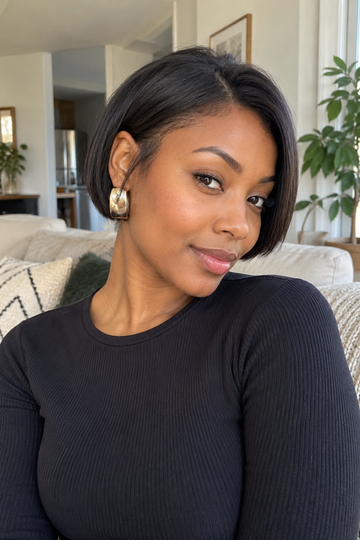
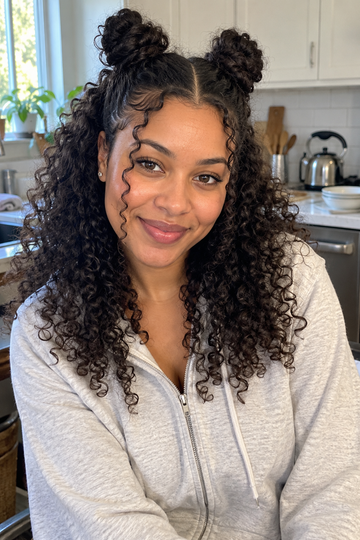
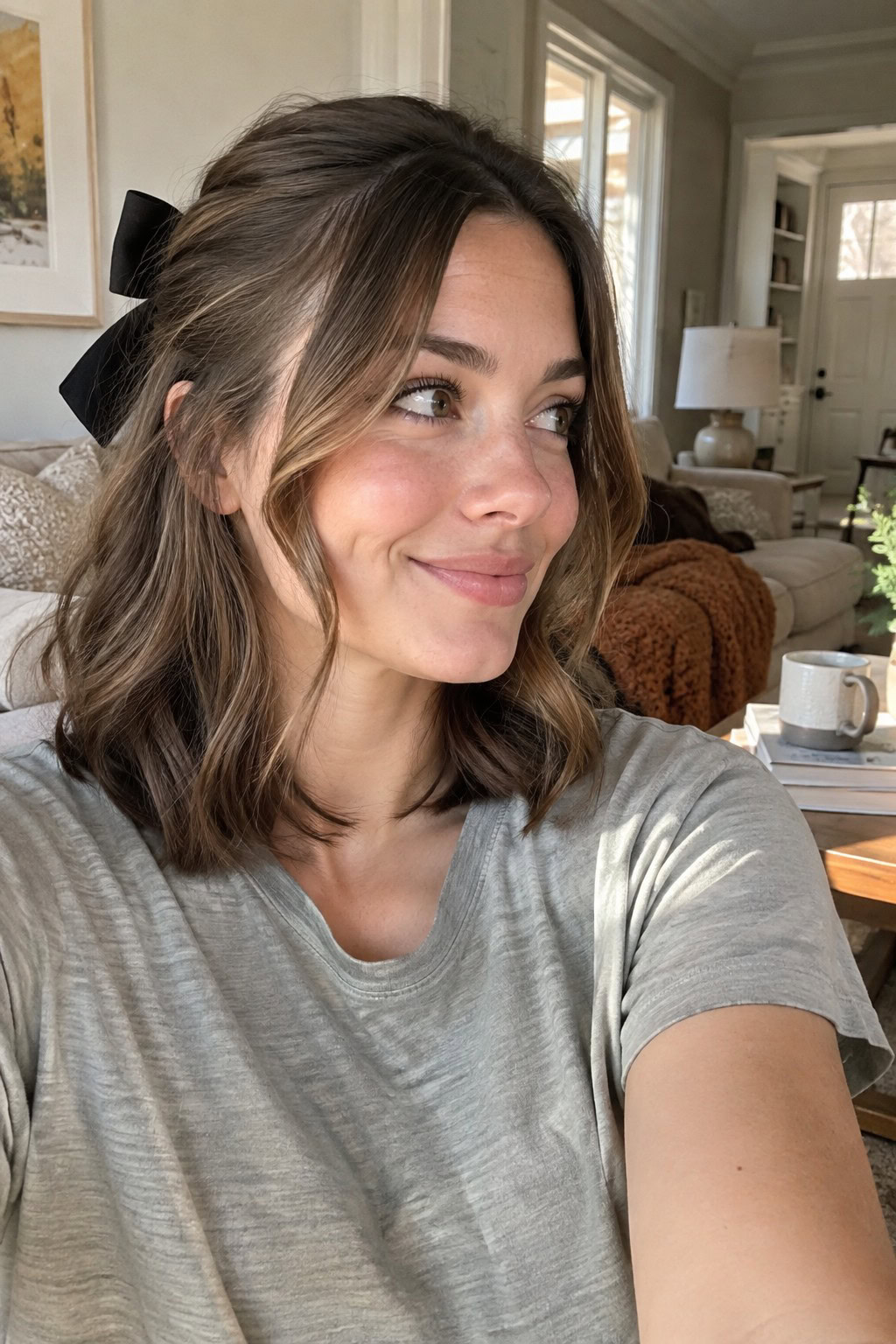
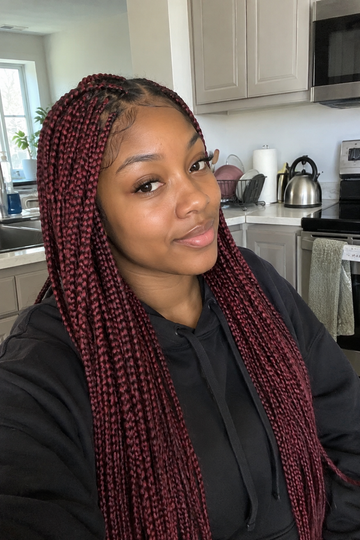
The shag started as a 1970s rock-and-roll cut and has been reinvented every decade since, which is part of why it never feels dated. The combination that makes it work is consistent across every version, choppy layers, crown volume, and bangs that frame the face without sitting heavy. The bangs are doing most of the work, since the right fringe softens the cut and gives the layers somewhere to lead the eye.
The 19 shags below cover every length, texture, and bang style worth considering. Each one includes the cutting technique and what to use at home, because shags need texture to read correctly and the wrong product can flatten the whole shape. Bring photos that match your hair density and texture, since a shag on fine hair looks completely different from a shag on thick hair, regardless of the reference.
19 Shag Haircuts with Bangs
Classic 70s Shag with Curtain Bangs
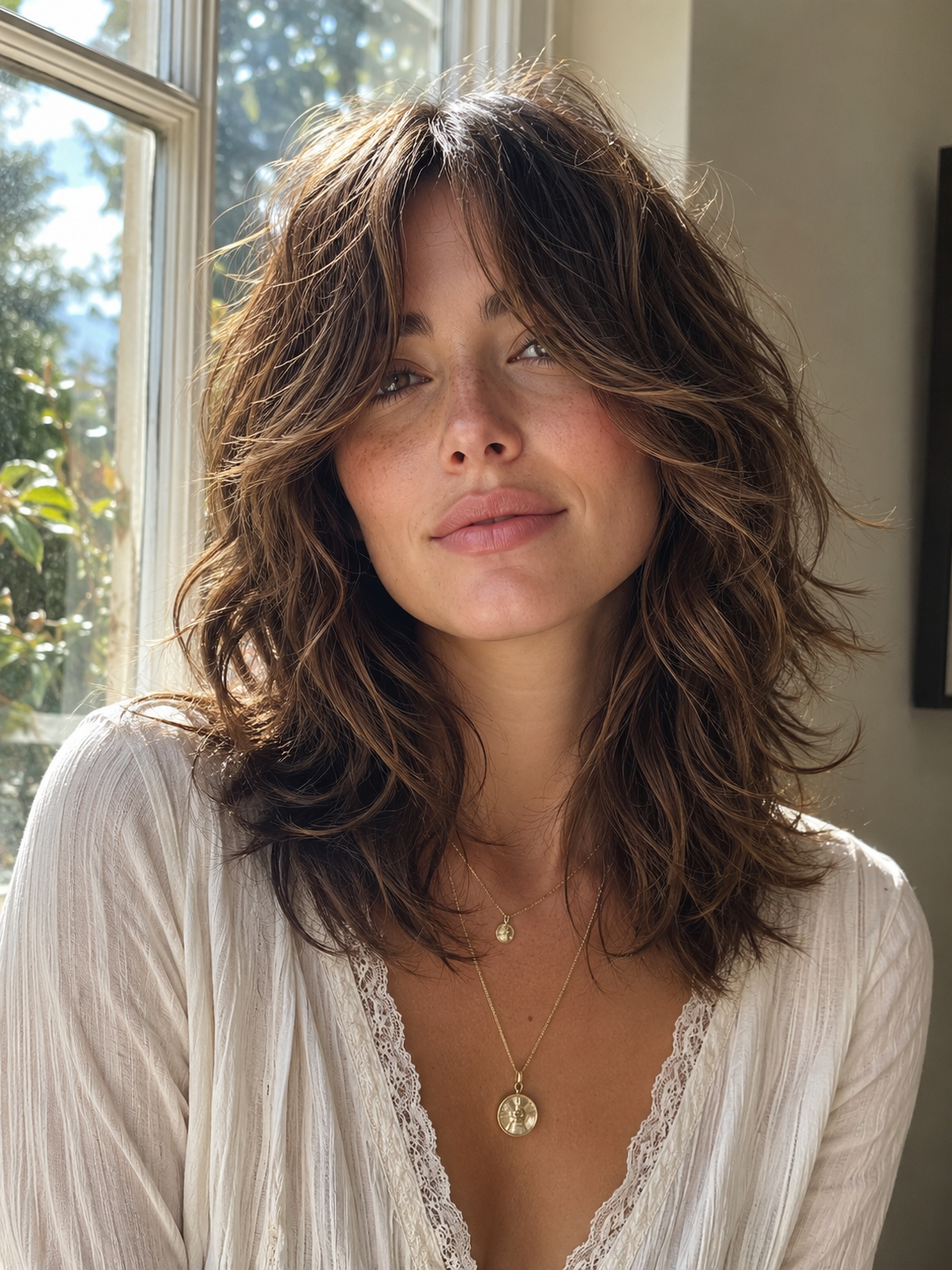
The original shag has heavy layers throughout, with the shortest layers at the crown and the longest at the perimeter. Curtain bangs parted in the middle and falling to the cheekbones complete the look. The cut needs a razor or point-cut shears to soften the layer transitions, since blunt layers make a shag look choppy in the wrong way. Style with a sea salt spray scrunched into damp hair, then air-dry or use a diffuser on low. The bangs benefit from a quick blow-dry with a small round brush.
Long Shag with Wispy Bangs
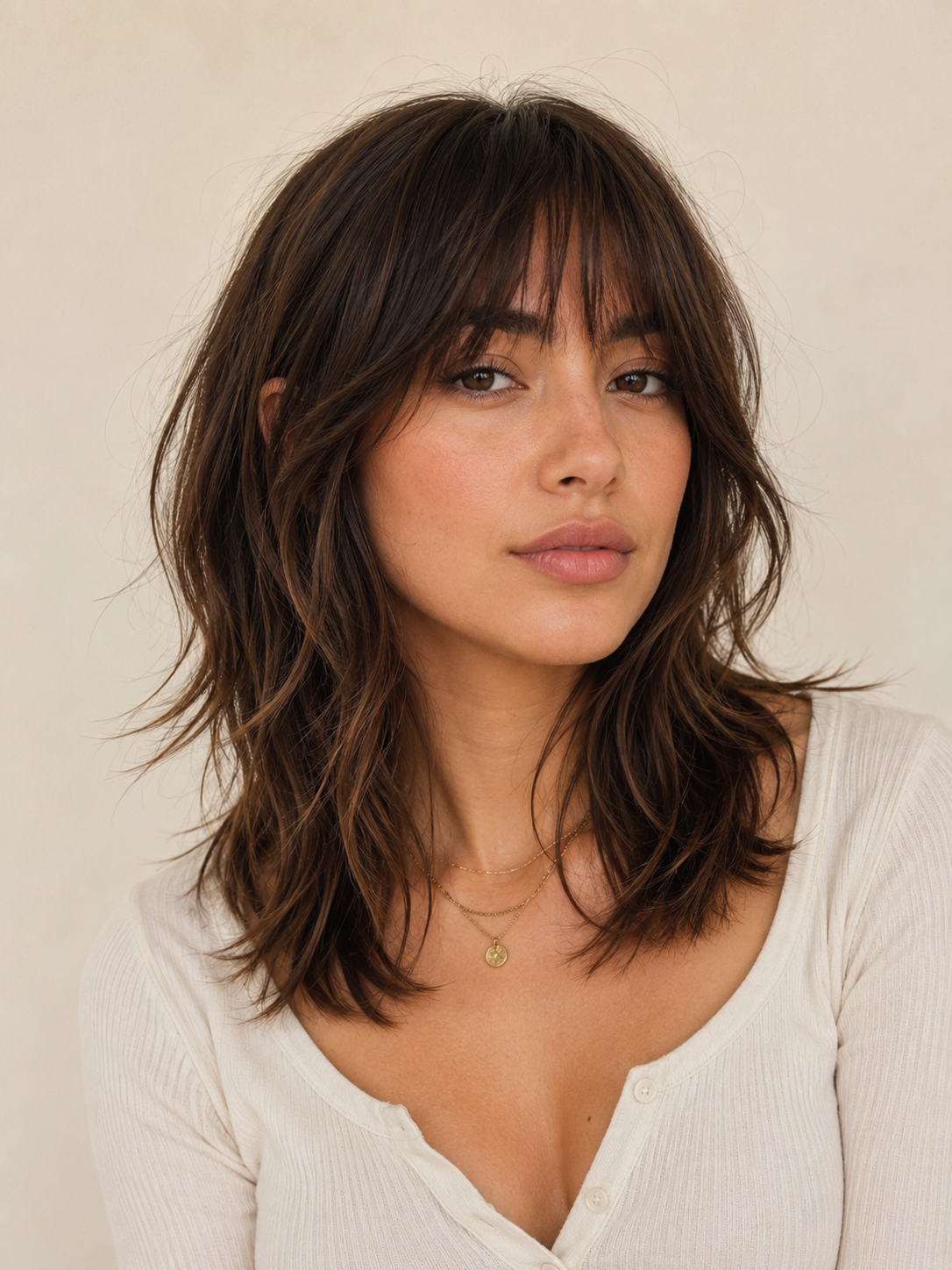
For anyone reluctant to lose length, the long shag keeps the perimeter at the collarbone or longer. Tell your stylist you want long layers starting at the chin, with wispy bangs cut on dry hair to land just above the brow. The wispy texture comes from point cutting the bang ends. Style with a leave-in spray and a 1-inch curling iron used sparingly on the face-framing pieces. A texturizing spray finishes the look. This shag suits straight to slightly wavy textures best.
Shaggy Lob with Side-Swept Bangs
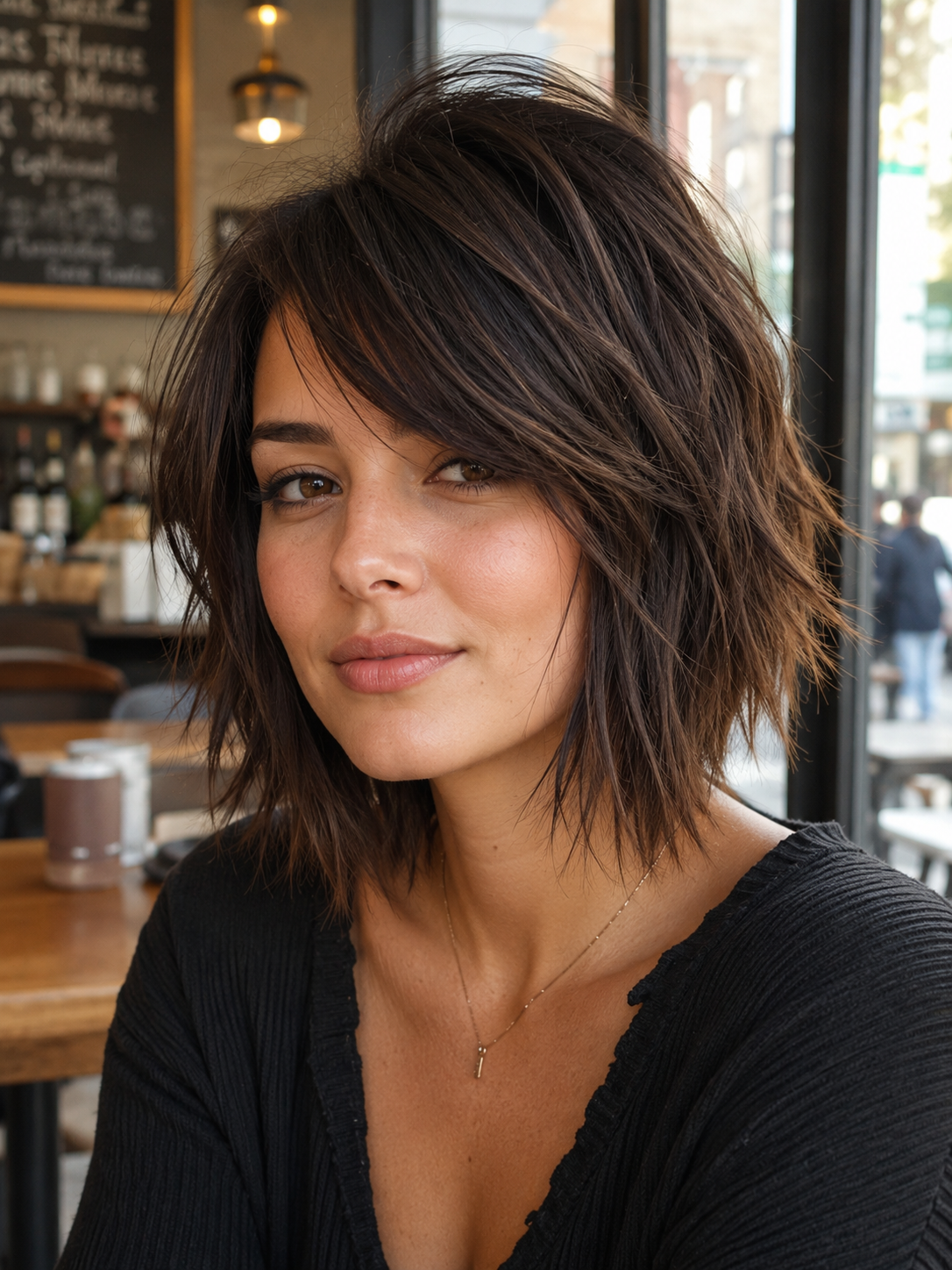
The shaggy lob combines the blunt shape of a bob with choppy layers of a shag. Pair it with side-swept bangs for a softer face frame. Ask for a shoulder-length cut with point-cut ends, layers starting at the chin, and bangs cut slightly longer at one side. Style by spritzing Redken Guts 10 at the roots before blow-drying, which gives the cut its signature lift. Finish with a texturizing spray to define the layers. The shape works for fine and medium hair where extra volume is welcome.
Wolf Cut with Curtain Bangs
The wolf cut is the modern shag-mullet hybrid, with short crown layers and longer back length for a dramatic contrast. Curtain bangs blend into the face-framing layers and soften the disconnect. Your stylist should dry-cut the layers so you can see the natural fall before any length is removed. Style with a curl mousse on damp hair, then diffuse upside down for crown volume. The cut suits 2B to 3B textures especially well, since natural movement amplifies the layer contrast.
Choppy Shag with Baby Bangs
Baby bangs sit high on the forehead, an inch or two above the brow, and contrast sharply with a heavily layered shag. The combination reads bold and editorial. Ask your stylist for a chin-to-shoulder shag with crown layers, choppy ends, and baby bangs cut blunt across the forehead. The bangs need a stylist with a steady hand, since the placement is precise. Trim the baby bangs every three to four weeks to keep the length intentional. Style with a curl cream and a texturizing spray.
Short Shag with Brow-Skimming Bangs
A short shag with brow-skimming bangs is the most low-maintenance version of the cut. The bangs sit just above or at the brow, framing the eyes without overwhelming the face. Ask for chin-length layers with point-cut ends and bangs cut to fall right at the brow. This shag works for fine hair where weight removal is a problem, since the heavy layering can make thin hair look sparse. Style with a small amount of texture spray scrunched in, then air-dry. Skip heavy oils that flatten the crown.
Heavy Layered Shag with Bottleneck Bangs
Bottleneck bangs are heavier in the center and lighter at the sides, like the shape of a bottleneck. The shape opens the face and pairs beautifully with a heavily layered shag. Your stylist should cut the bangs dry, leaving them longer than you think you want, then refining once the layers are set. The cut suits 2B to 3A textures with consistent patterns. Style with a curl cream and diffuse, focusing on the crown for volume. Trim every six weeks to maintain the bottleneck shape.
Wavy Shag with Center-Parted Curtain Bangs
For naturally wavy hair, a wavy shag with center-parted curtain bangs lets the texture do most of the work. Ask for long layers starting at the chin, with curtain bangs that fall to the cheekbones and part down the middle. The waves should be allowed to fall as they want. Style with a leave-in conditioner and a curl mousse, scrunched through damp hair. Air-dry or diffuse on low. The shape is soft and lived-in, which is part of the appeal.
Curly Shag with Wispy Bangs
The curly shag has heavy layers at the crown, tapered ends, and bangs that work with curl shrinkage rather than against it. The bangs should be cut dry, since wet curls spring up 30 to 50 percent shorter when they dry. Ask for wispy bangs that hit around the bridge of the nose when wet, knowing they'll bounce up once dry. Style with a curl cream scrunched into damp hair and diffuse on low heat. The cut works best on 2C to 3B textures.
Razor-Cut Shag with Feathered Bangs
Philipp Haug's signature shag relies on a hair-cutting razor to remove weight and add texture, which gives the cut its lived-in feel. Pair the technique with feathered bangs tapered at the ends. Ask for razor-cut layers throughout, with feathered bangs that fall just past the brow. The razor works best on medium to thick hair, since fine hair can look stringy after too much razoring. Style with a sea salt spray and air-dry. The finished look is intentionally undone.
Pixie Shag with Side-Swept Fringe
The pixie shag combines the short ease of a pixie with the textured layers of a shag. Pair it with a side-swept fringe that sweeps across the forehead and frames one eye. Tell your stylist you want a shaggy pixie with tapered sides, layered length on top, and a fringe cut to fall across the forehead. The cut requires precision, so find someone trained in short hair specifically. Style with a small amount of cream wax through damp hair, then air-dry. Trim every four to six weeks.
Shoulder-Length Shag with Piecey Bangs
Piecey bangs separate into distinct strands rather than hanging as one piece, which adds texture to a heavier shag. Ask for shoulder-length layers with crown volume and piecey bangs cut with deliberate separations. The separation comes from point cutting the bangs, then twisting small sections with a styling cream once dry. Style the body of the shag with a texturizing spray and a 1.25-inch curling iron used sparingly. The finished look should feel lived-in, not over-styled.
Modern Shag with Soft Curtain Bangs
The modern shag is softer than the 1970s version and less androgynous. Pair it with soft curtain bangs that blend into face-framing layers. Tell your stylist you want a chin-to-shoulder shag with sliced ends, soft bangs, and a lived-in finish. The cut should have crown volume without feeling teased. Style with a curl cream on damp hair, then a quick blow-dry with a round brush at the bangs. A texturizing spray finishes the look without weighing the layers down.
Mid-Length Shag with Arched Bangs
Arched bangs are slightly longer at the sides than the center, creating an inverted curve that draws attention to the eyes. The shape suits a mid-length shag with shoulder-grazing length. Ask for layers starting at the chin and arched bangs cut on dry hair, with the center hitting just below the brow. Style with a curl mousse and diffuse, then finger-comb the bangs into the arched shape. Clip the bangs while they dry if they want to flatten. Trim every five to six weeks.
Disconnected Shag with Blunt Fringe
A disconnected shag has a heavy, contrasting fringe that doesn't blend into the layered cut. The contrast reads modern and editorial. Ask for a chin-length shag with crown layers and a blunt fringe cut straight across at the brow. The fringe should not have any softening, since the contrast is the point. Style the layers with a texture spray and the bangs separately with a flat iron on a low setting. The cut suits straight to slightly wavy hair best.
Italian Shag with Soft Brow Bangs
The Italian shag is a softer, more polished version of the cut, with less choppiness and more roundness. Soft brow-skimming bangs complete the look. Tell your stylist you want chin-to-shoulder layers with crown volume and brow bangs cut to land just at the brow. The cut should have movement but not jagged edges. Style with a leave-in cream and a round brush blow-dry, finishing with a few drops of lightweight oil through the ends. The bangs sit cleanly without too much styling.
Layered Shag with Long Side-Swept Bangs
Long side-swept bangs sweep across the forehead and blend into the longer layers of the shag, creating a face-framing effect. Ask for a shoulder-length shag with layers starting at the cheekbones and bangs cut long enough to reach past the eyebrow. The bangs grow out invisibly, which makes this a low-maintenance option. Style with a round brush blow-dry, directing the bangs across the forehead. A flexible-hold hairspray keeps the shape through the day without making the hair feel stiff.
Voluminous Shag with Heavy Fringe
For thin hair that needs structure, ask for a voluminous shag with crown-concentrated layers and a heavy fringe cut to fall just below the brow. The fringe adds visual weight where thin hair often loses it. Style with a volumizing mousse at the roots and a round brush blow-dry, lifting at the crown. A dry shampoo at the roots between washes maintains the lift. The heavy fringe needs a trim every four weeks to keep the shape intentional, since growing-out fringe loses its structure fast.
Two-Tone Shag with Peek-a-Boo Fringe
A two-tone shag uses contrasting color, either subtle or bold, with a peek-a-boo fringe that reveals hidden color underneath. The look is playful and unexpected. Tell your colorist you want a base color with a peek-a-boo panel placed underneath the top layer, visible only when the hair moves. The cut should be a chin-to-shoulder shag with layered fringe long enough to flick aside. Style with a texturizing spray and finger-style the layers so the hidden color catches the light. Refresh the peek-a-boo color every six to eight weeks.