Black hair after a certain age does more than change color, it shifts in density, texture, and how it responds to heat and chemicals. Years of relaxers, color, or tension styling can leave the hairline thinner, the ends more fragile, and the natural curl pattern looser than it used to be. A good short cut works with those changes instead of fighting them, protecting fragile sections while letting the rest of the hair breathe.
Short hair also reduces the daily styling toll on aging strands. Less heat, less manipulation, less tension on the edges. The 18 cuts and styles below cover natural hair, locs, relaxed hair, and color-treated hair, with notes on what each one actually does for hair that's been through decades of styling.
Classic Short Afro
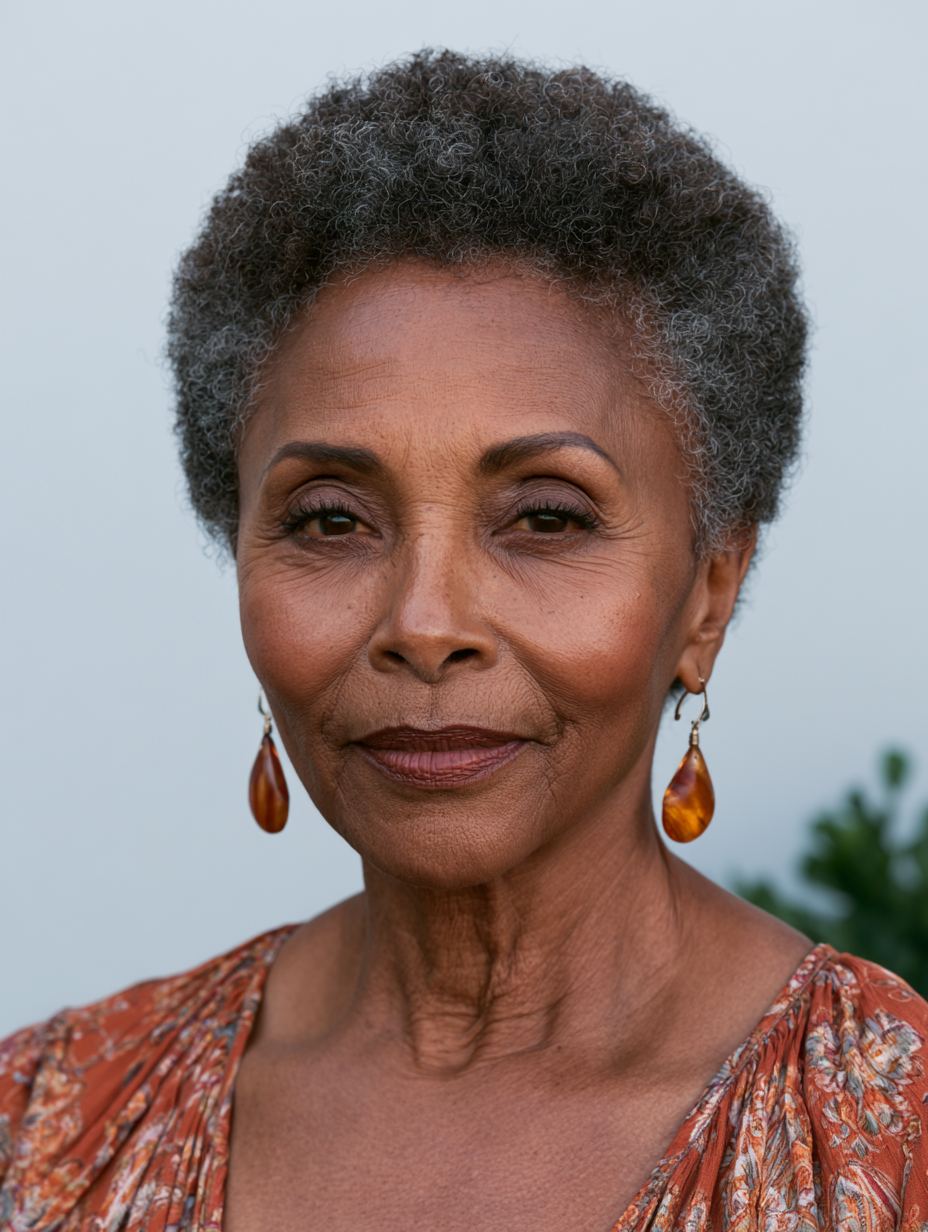
The natural cut Black women have worn for generations.
Length stays uniform throughout, usually two to three inches, picked out into a rounded shape.
This style honors Black hair tradition and requires minimal daily styling, just a leave-in spray and a pick. A regular trim keeps the shape even.
The afro looks timeless and confident, especially on women who've embraced their natural texture later in life. Pair with bold earrings and a strong lip for full effect.
Short TWA
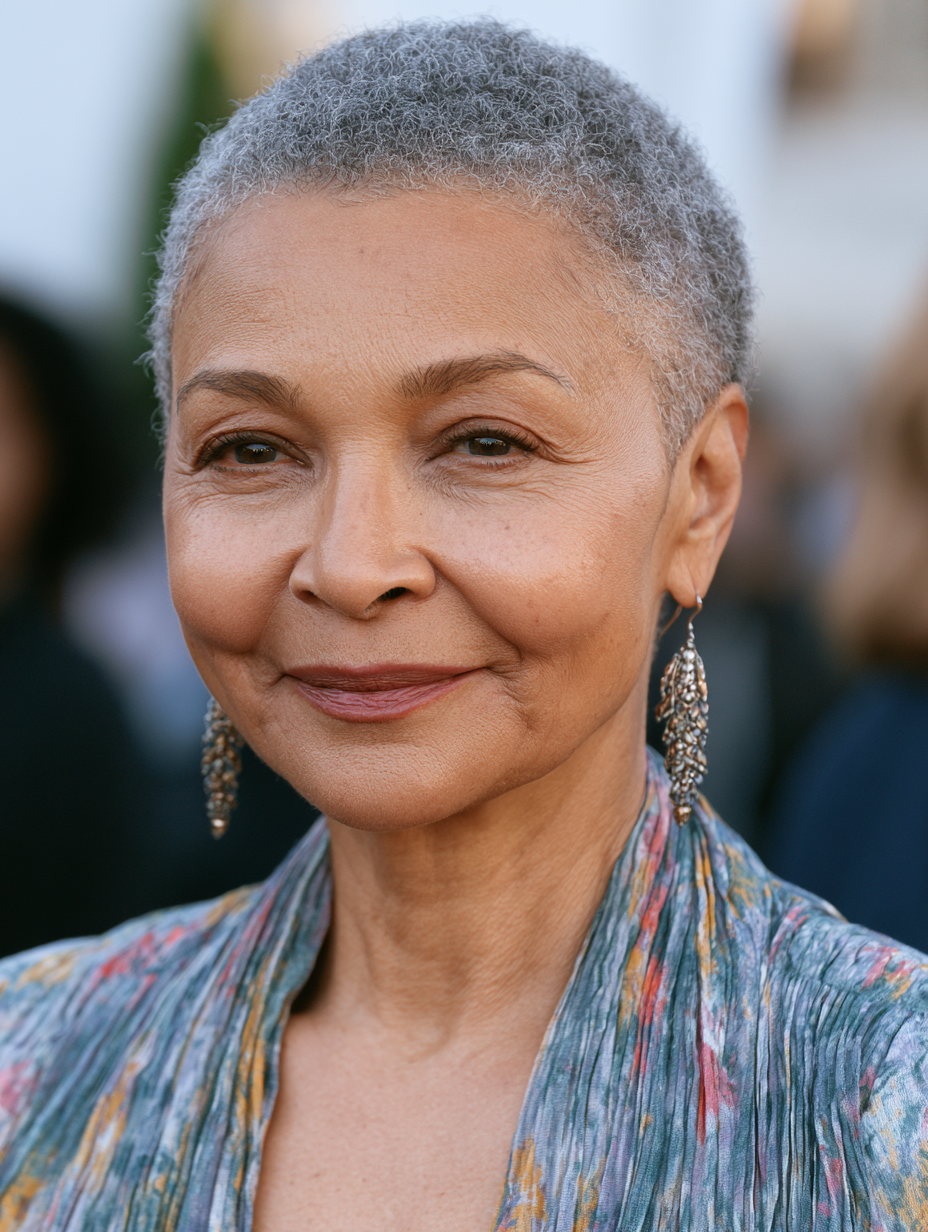
A teeny weeny afro, cut close to the scalp at half an inch to an inch.
This style suits women growing out a big chop or starting their natural hair journey later in life.
The cut requires almost no styling time, just a leave-in spray and a light oil for shine. It also lets you see and treat your scalp directly, which matters more after 50 when scalp health affects new growth.
The TWA flatters strong features and bold accessories especially well.
Short Tapered Locs
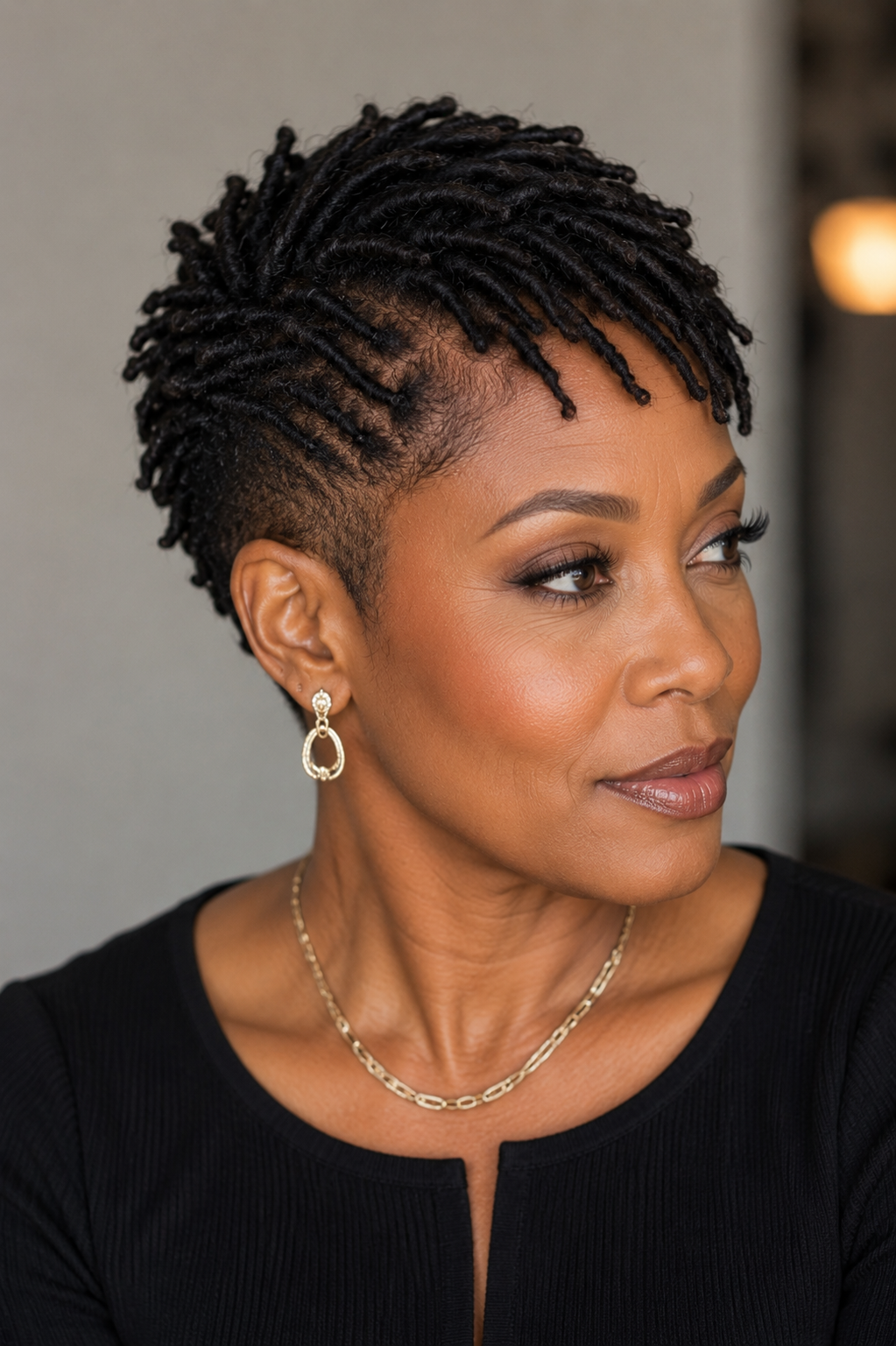
Mature locs cut short with a tapered back and sides. Length sits between three and five inches on top, with the perimeter tapered close to the head.
This style suits women with established locs who want a fresh shape without starting over.
Ask a loctician for the cut, since locs need specific handling to keep them from unraveling at the ends. Retwist roots every four to six weeks.
The taper sharpens features and lightens the visual weight of longer locs.
Short Loc Bob
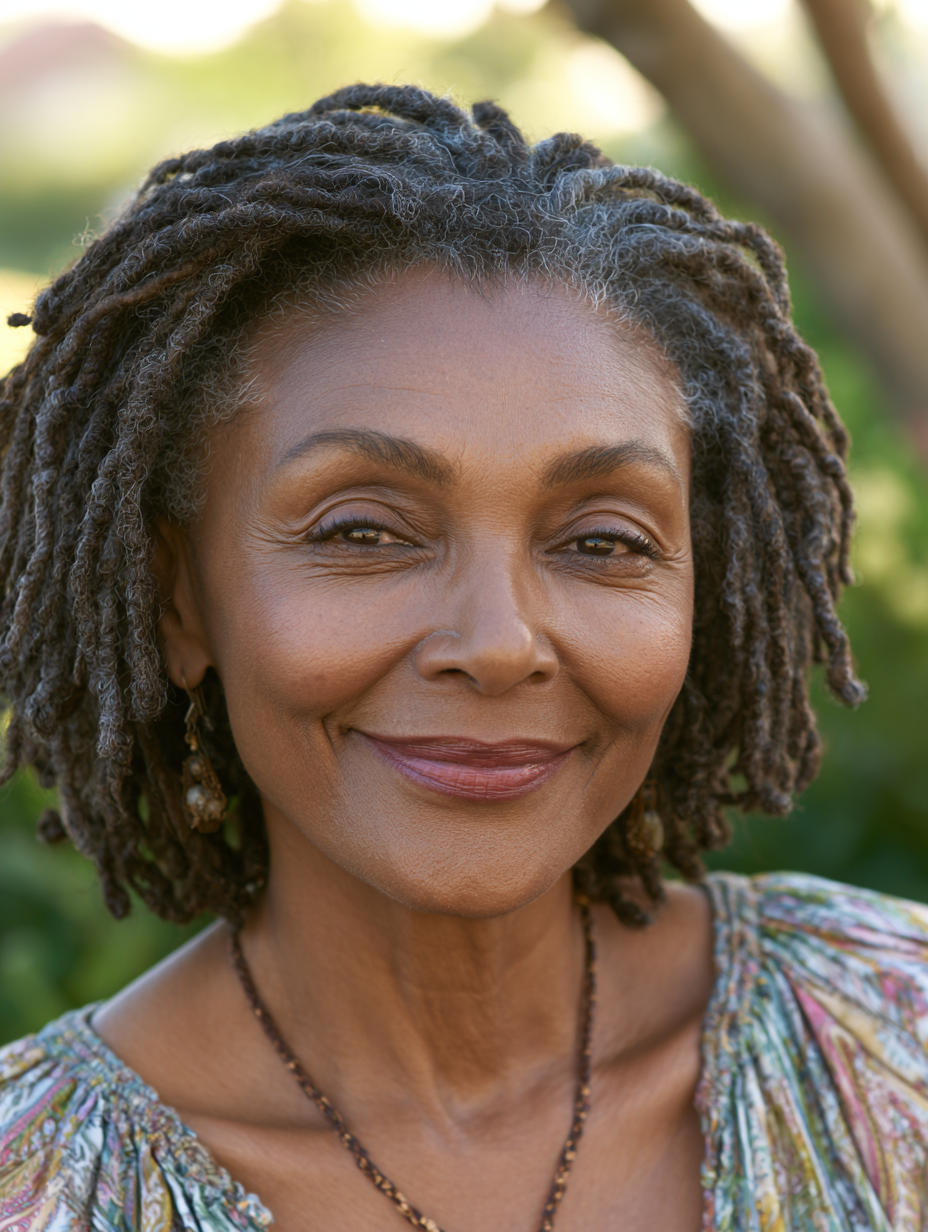
Locs cut to a chin-length bob shape, one length throughout.
The blunt line at the bottom creates structure and weight, which keeps the locs hanging cleanly rather than fanning out.
This style suits women transitioning from longer locs who want a fresher silhouette. Style by parting on the side or down the middle. Use a light loc spray to keep the strands moisturized and the scalp healthy.
The cut grows out evenly, which means less frequent salon visits than shorter loc styles.
Short Loc Pixie
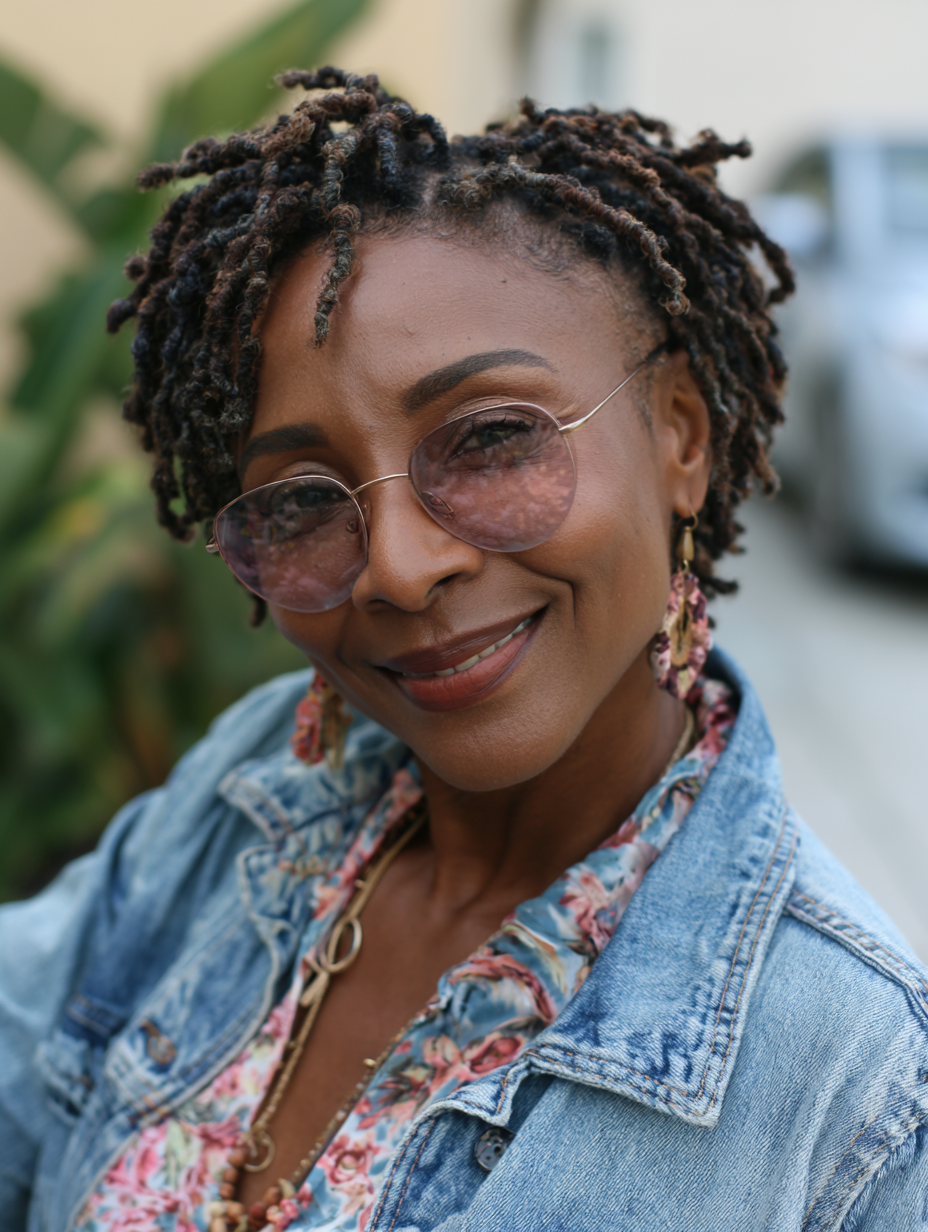
Locs cut to true pixie length, around two to three inches throughout.
This works for women with mature, established locs who want a dramatic short shape. The cut requires a loctician familiar with how to finish loc ends so they don't unravel.
Style by brushing or twisting locs in different directions for visual interest. Retwist roots every few weeks.
The pixie length keeps locs lightweight, which matters as hair density and scalp sensitivity shift with age.
Tapered Natural Pixie
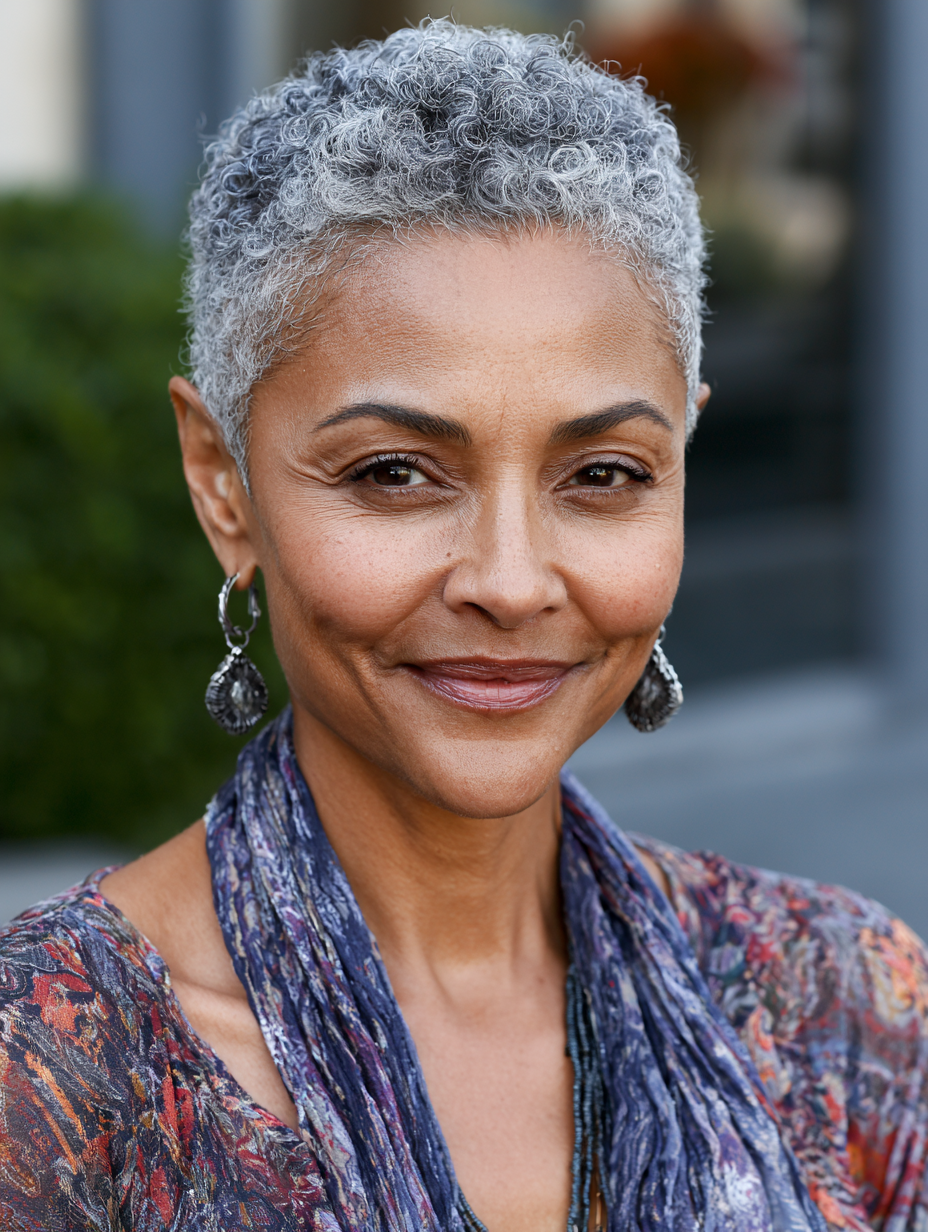
The sides and back taper close while the top stays full of natural curl or coil.
The taper handles density at the roots without bulk, and the longer top section shows off your texture.
Ask your stylist to dry-cut the top, curl by curl, so the shape falls naturally. Apply a curl cream on damp hair and let it air-dry.
The cut protects fragile edges by keeping the perimeter short, while the top length lets you style or pick out as you like.
Silver Curly Pixie
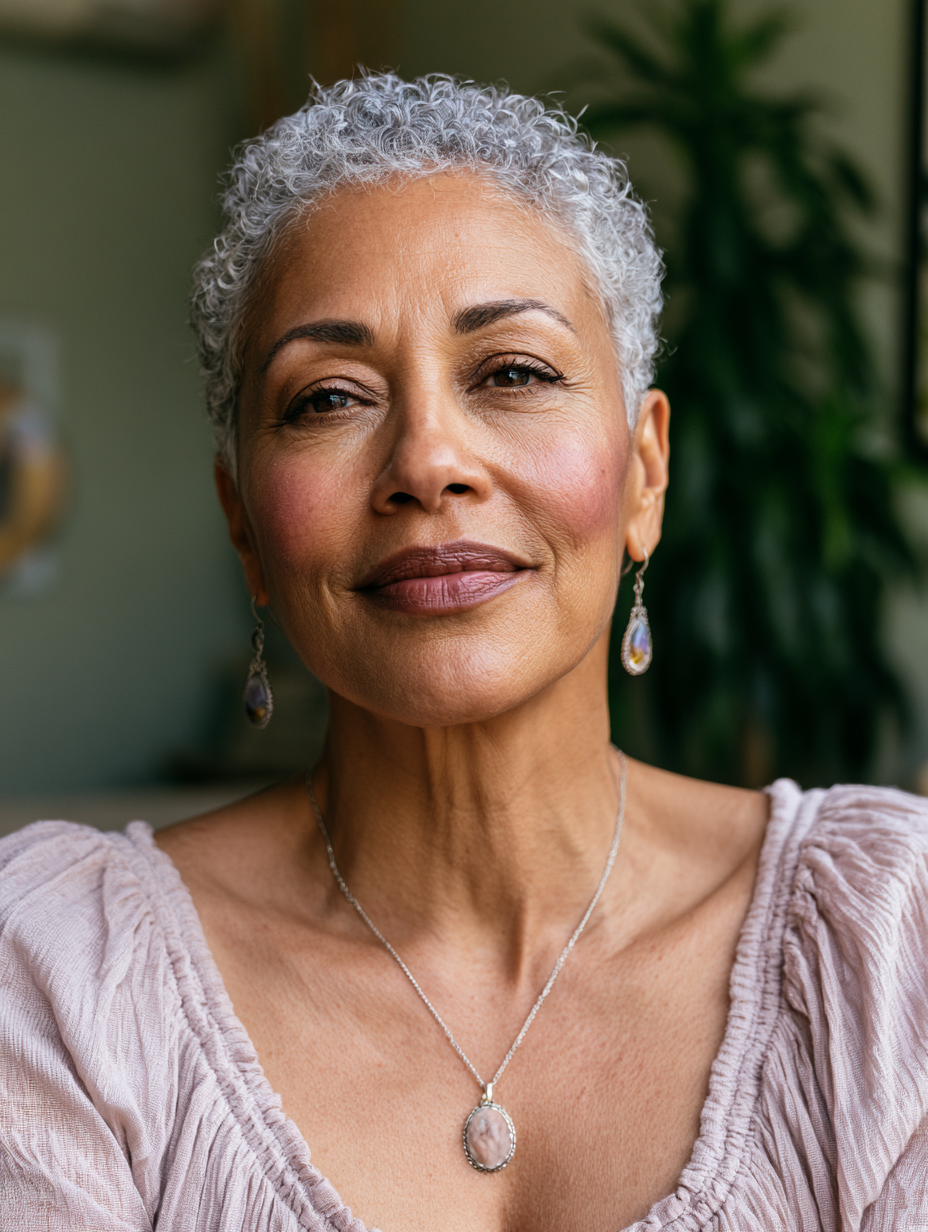
The cut stays a standard short curly pixie while embraced silver or gray hair carries the visual interest.
Gray strands often grow in coarser than colored hair, so the cut needs to account for that change in texture.
Use a purple shampoo weekly to keep silver tones bright against melanated skin. A leave-in conditioner adds the moisture gray hair loses faster than younger hair.
This style suits women who've stopped coloring and want to honor their natural shade.
Salt and Pepper Tapered Cut
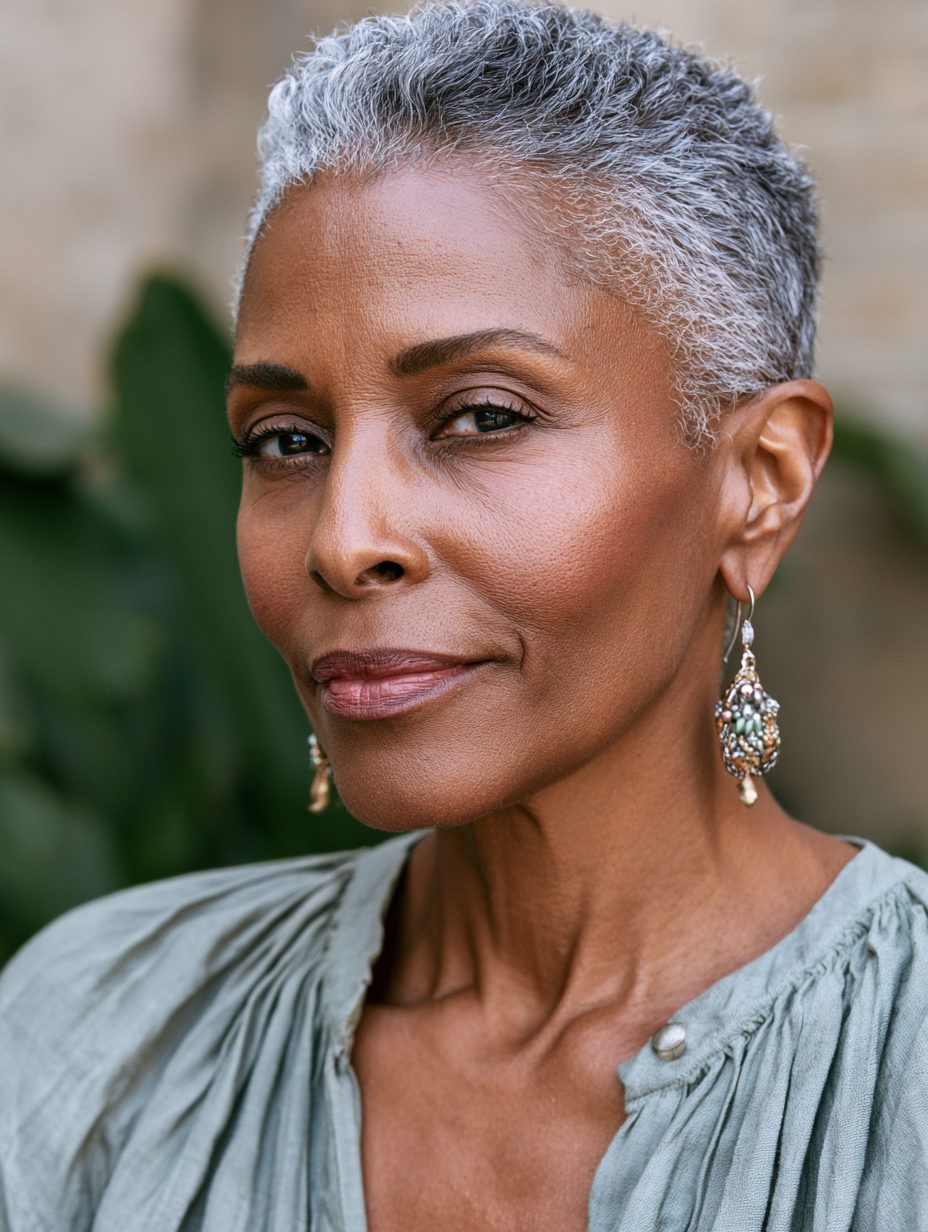
The cut works with the natural mix of dark and silver strands rather than covering them.
The mix creates dimension without any color processing, which protects already-fragile hair.
Ask your stylist for a low taper that fades into longer length on top. The contrast between dark and silver strands shows up beautifully on a layered shape.
Use a clarifying shampoo monthly to keep the silver bright, and a gloss treatment every few weeks for shine.
Short Curly Afro
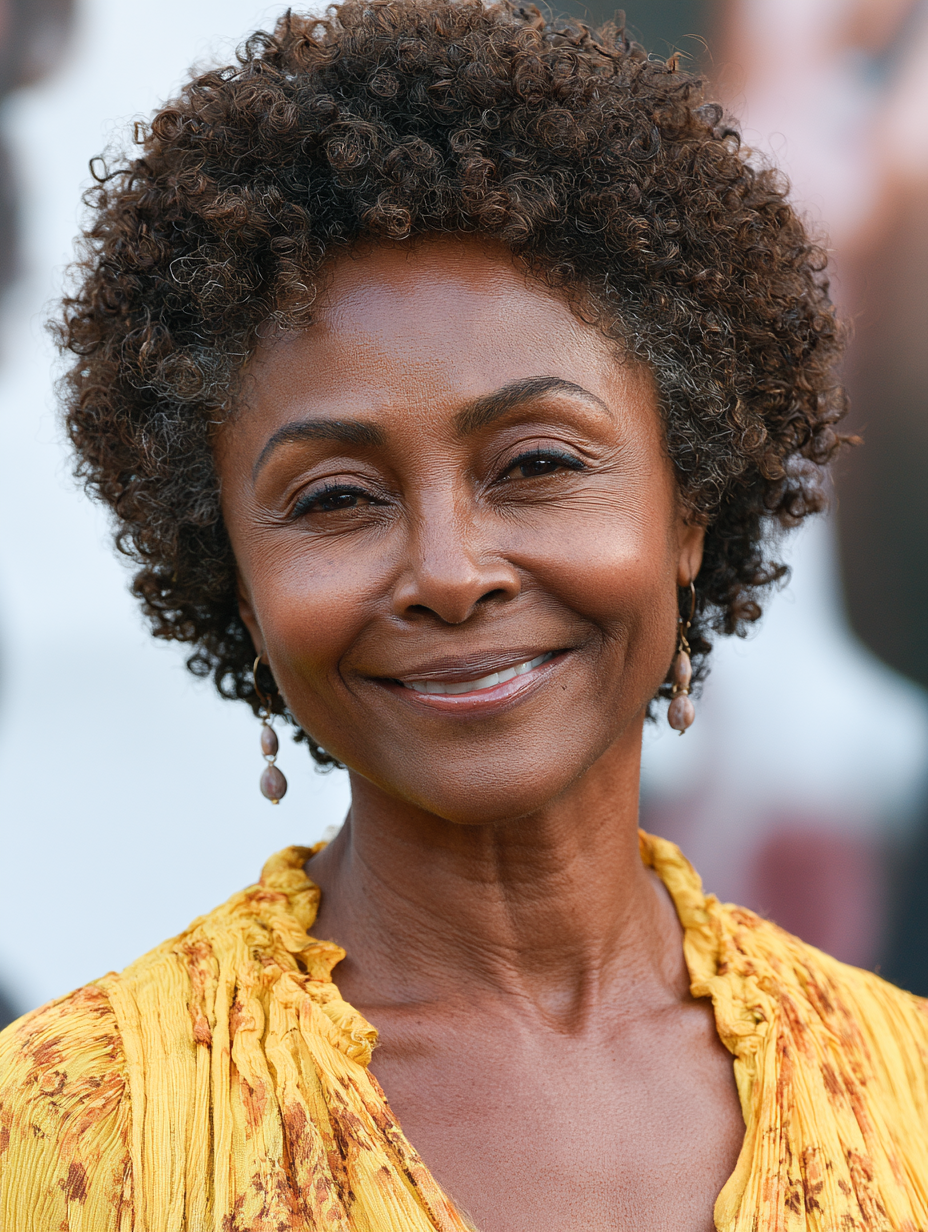
Different from the classic afro picked into a rounded shape, this version lets the natural curl pattern fall as it grows.
Length stays between two and three inches throughout, with no specific picking or shaping.
The cut suits 3C and 4A textures especially well, where curls form on their own without much encouragement. Apply a curl cream on damp hair and let it air-dry.
The shape sits closer to the head than a traditional afro, which works for women wanting an easier daily routine.
Relaxed Pixie with Side Part
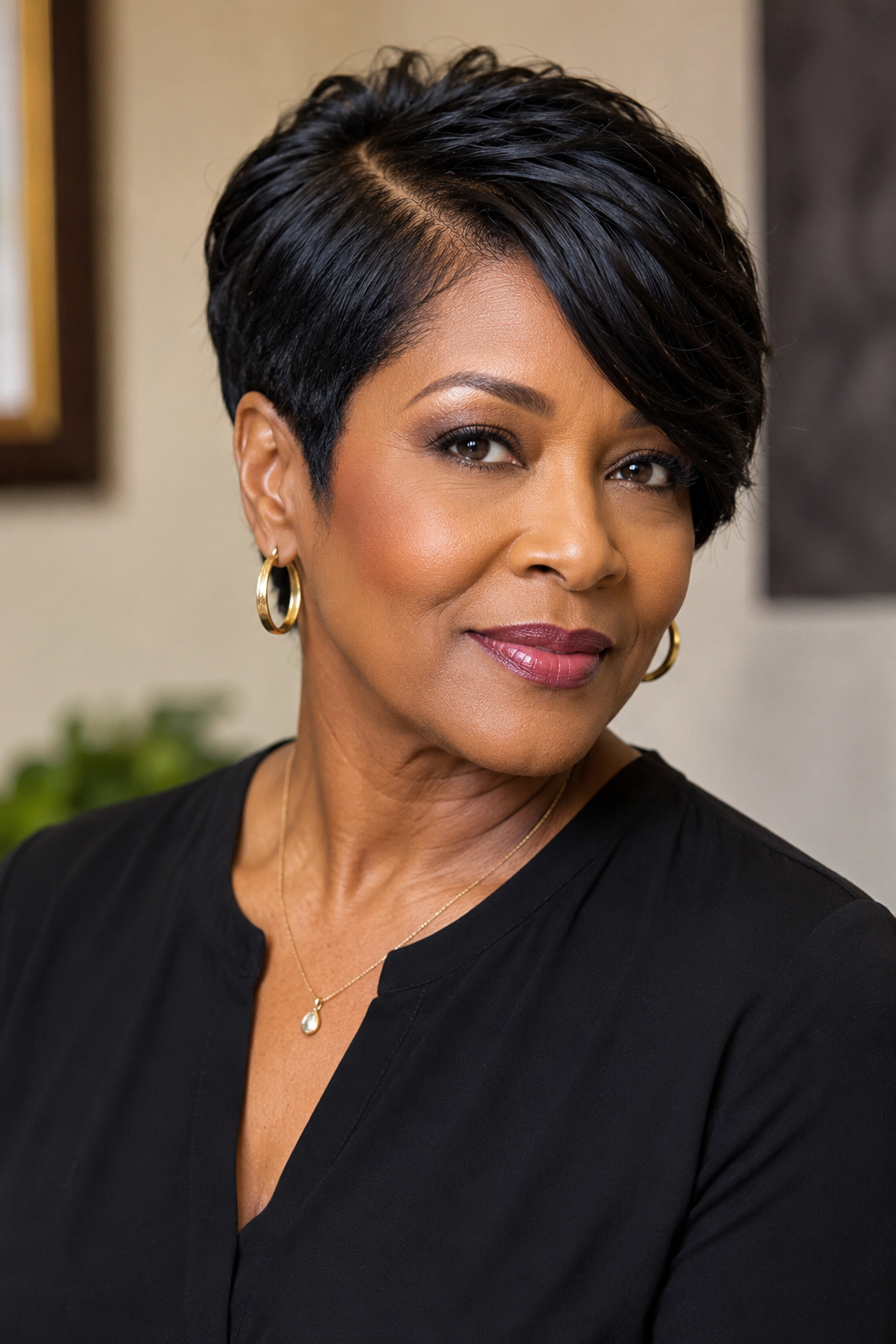
A deep side part adds polish to a short relaxed pixie.
Length sits between two and four inches, with the longer section sweeping across the forehead. The part itself creates an optical line that elongates round faces.
Use a light pomade along the part for shine without crunch. This style suits women who've relaxed their hair for years and prefer the smooth finish.
Schedule relaxer touch-ups carefully, since aging hair handles chemical processing less well than younger hair.
Pixie with Laid Edges
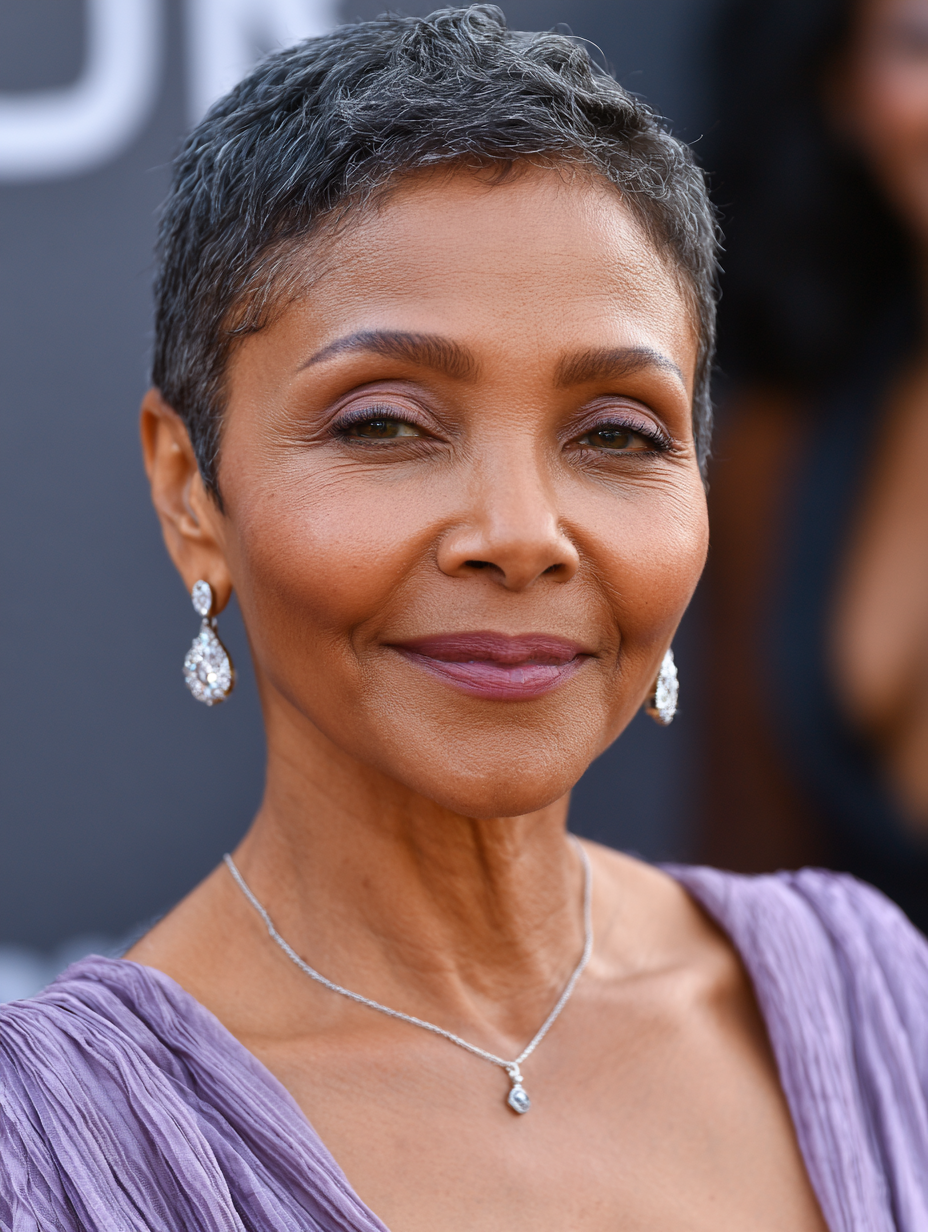
The cut itself stays a simple short pixie, but the baby hairs do extra work.
Lay edges with a fine-tooth toothbrush and a small amount of edge control. Create swirls, swoops, or a clean line depending on your mood.
This styling tradition runs deep in Black hair culture and adds polish across decades.
Be gentle with edges that may have thinned over time. Wrap a silk scarf around the edges for a few minutes to set them in place.
Short Curly Crown
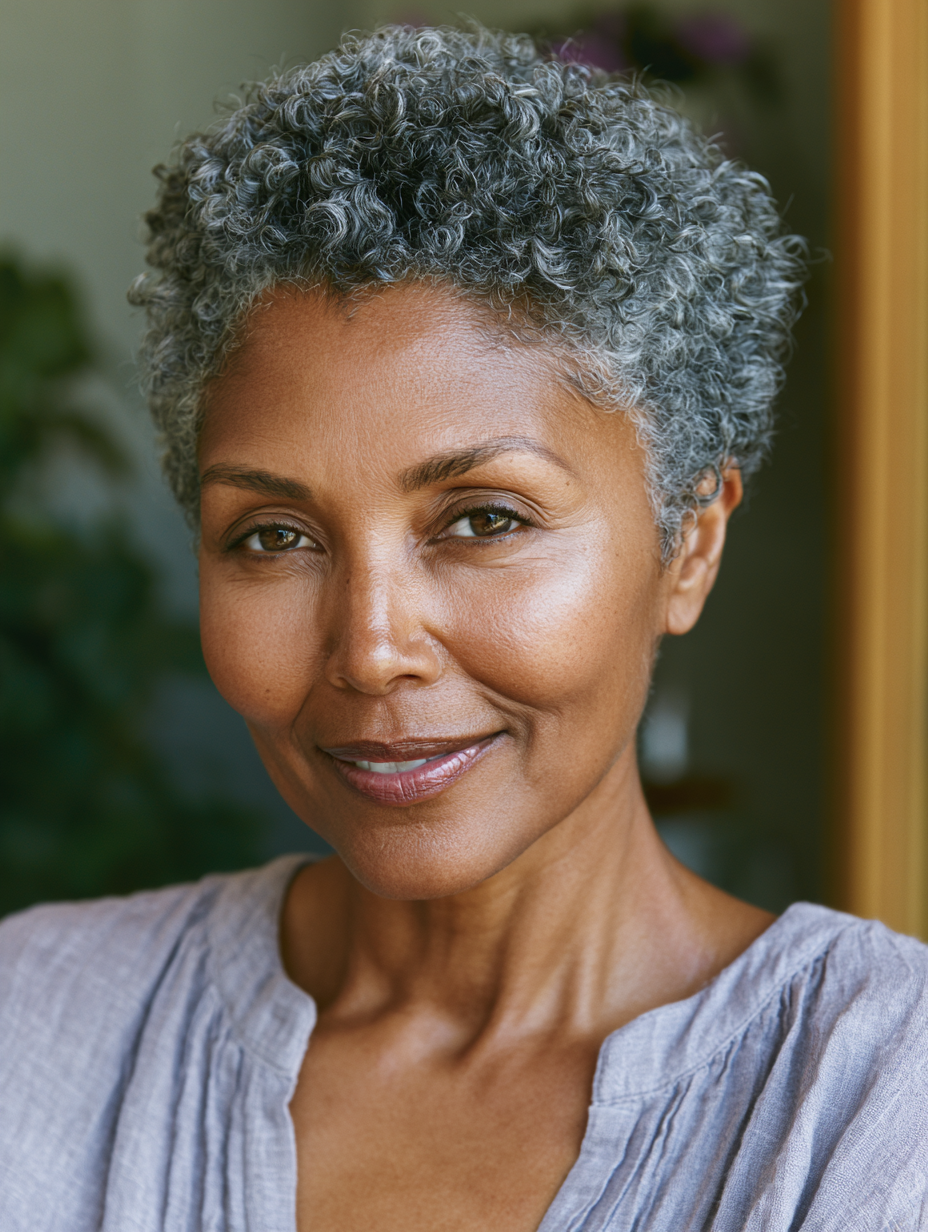
Length concentrates at the crown with shorter, tapered sides.
The cut adds height where round and heart-shaped faces benefit from it. Style the crown with a curl custard on damp hair, then pick out gently with an afro pick for volume.
This style suits 4A and 4B textures especially well. The shape softens jawlines and adds visual lift to features that may have softened with age.
Keep the perimeter trimmed every few weeks to maintain the silhouette.
Finger Wave Pixie
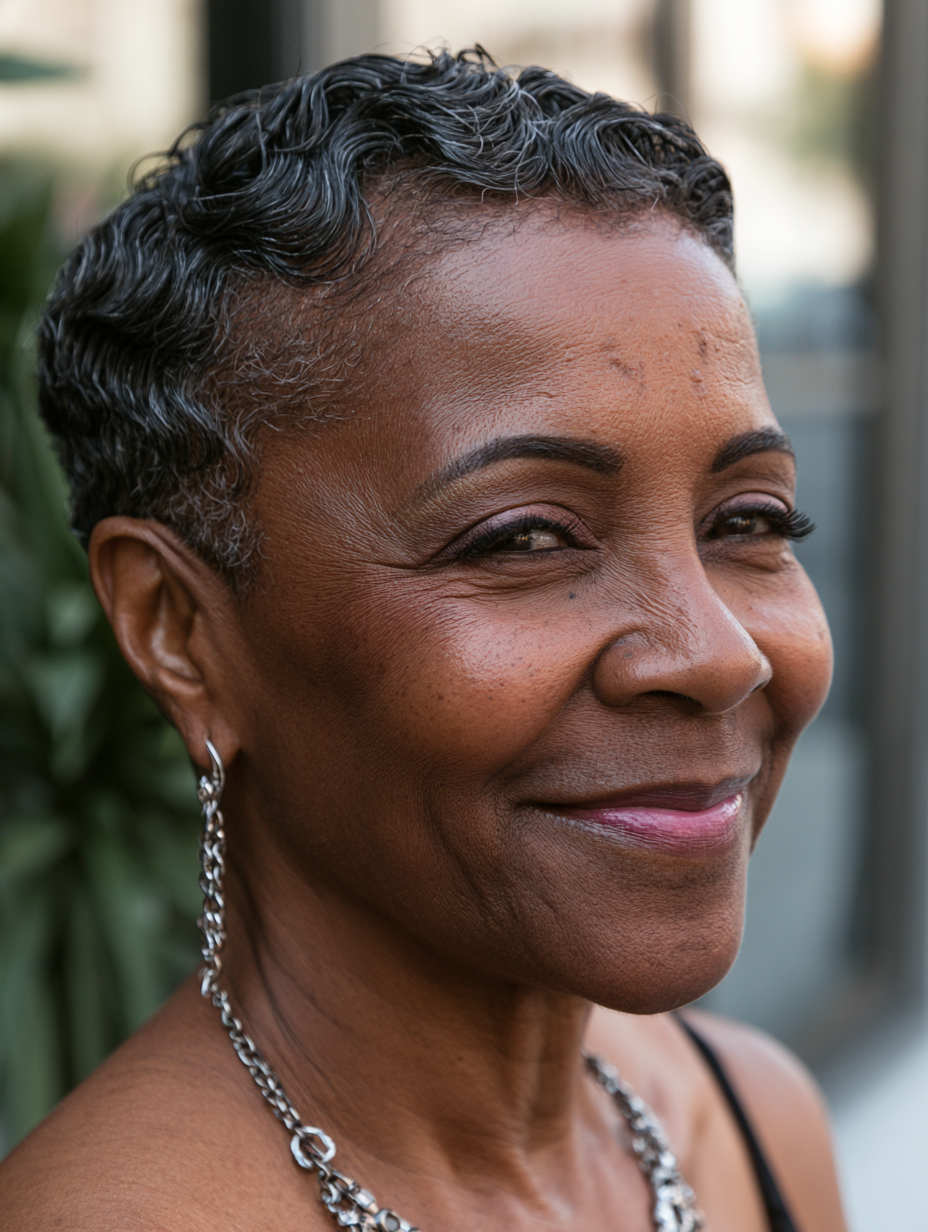
A styling tradition with roots in the 1920s, still worn today on shorter cuts.
The hair sits cropped at the nape with extra length on top, usually three to four inches. Stylists set the waves with a strong-hold gel and a fine-tooth comb, then dry under a hooded dryer.
Best executed on relaxed or silk-pressed hair where the strands lie flat. The finished look photographs beautifully and works for church, weddings, and special occasions.
It also remains a salon favorite for women who grew up with the style.
Caesar Cut
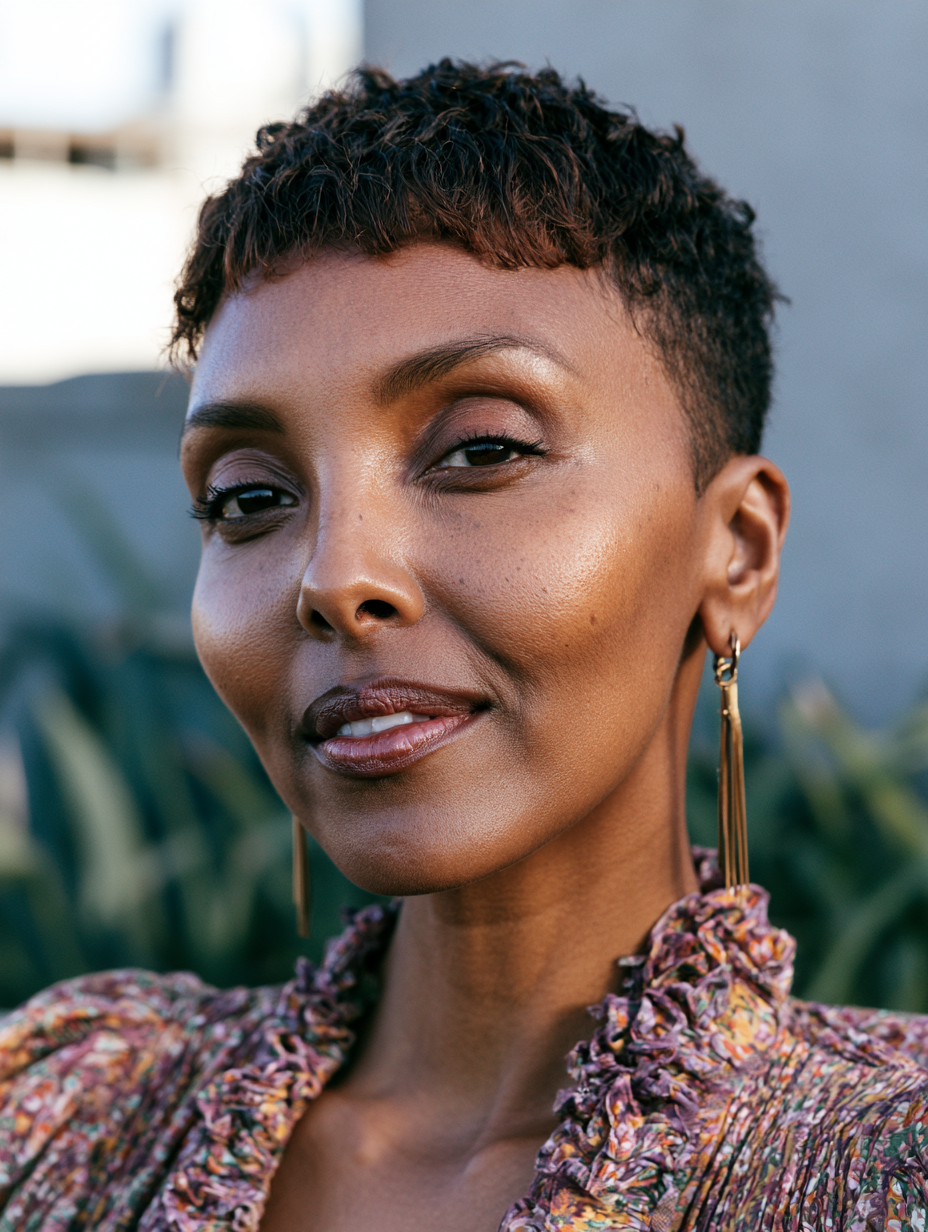
Borrowed from men's barbering and worn by Black women for decades.
The Caesar features a straight, low fringe across the forehead with the rest cut to a uniform short length. On coily hair, the texture gives the fringe natural softness.
Visit a barber who works with textured hair, since precision matters here. Apply a light oil to keep the scalp from drying out.
The cut suits oval and square faces particularly well and requires minimal daily styling.
Frohawk
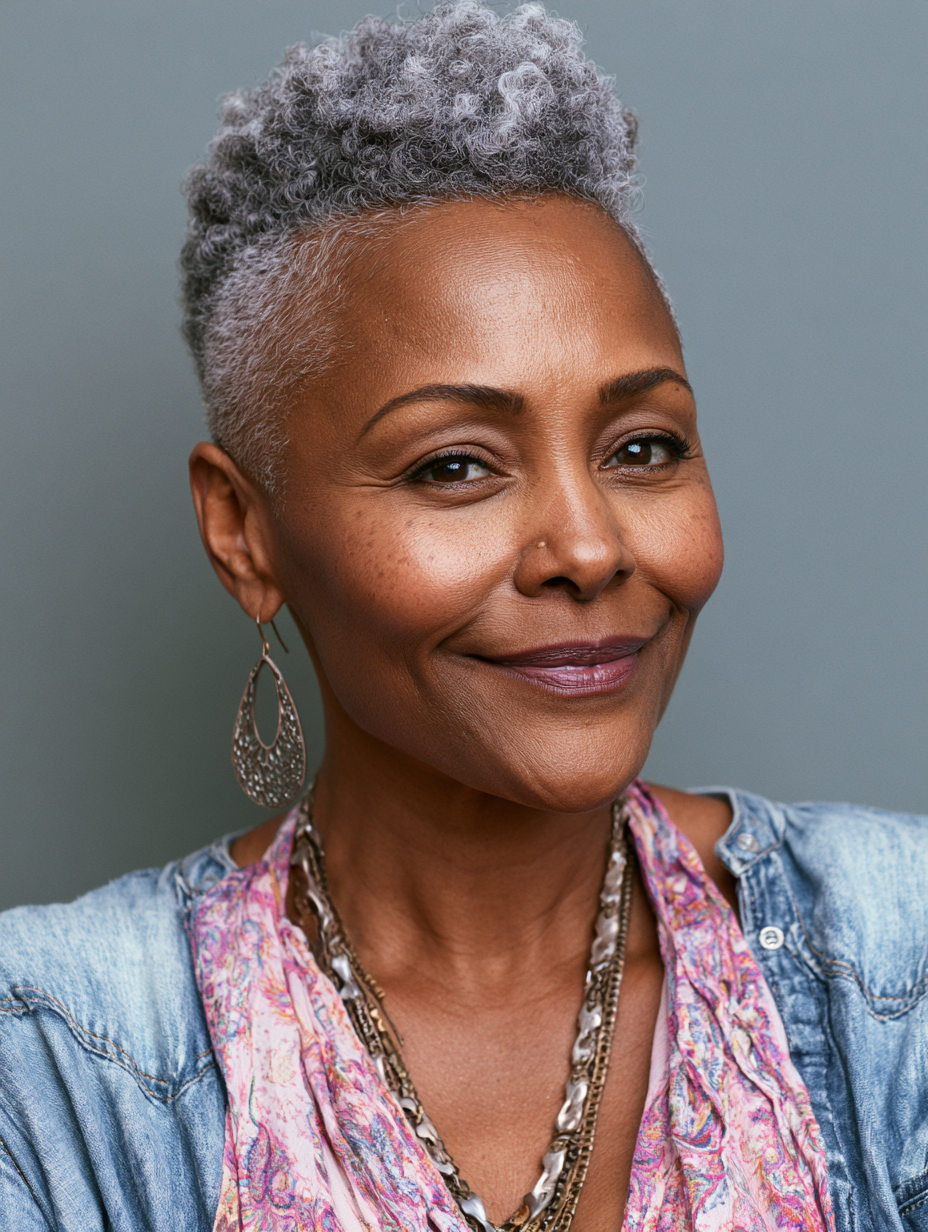
The sides taper close while the top stays full and brushed upward into a soft mohawk shape.
Different from a shaved-side mohawk, this version keeps everything attached and creates height through styling. Use a denman brush to lift the top section, then pick out volume with an afro pick.
The shape elongates round faces and adds presence in professional settings without looking too edgy.
A staple look during natural hair journeys, especially for women returning to their natural texture.
Honey Blonde Pixie
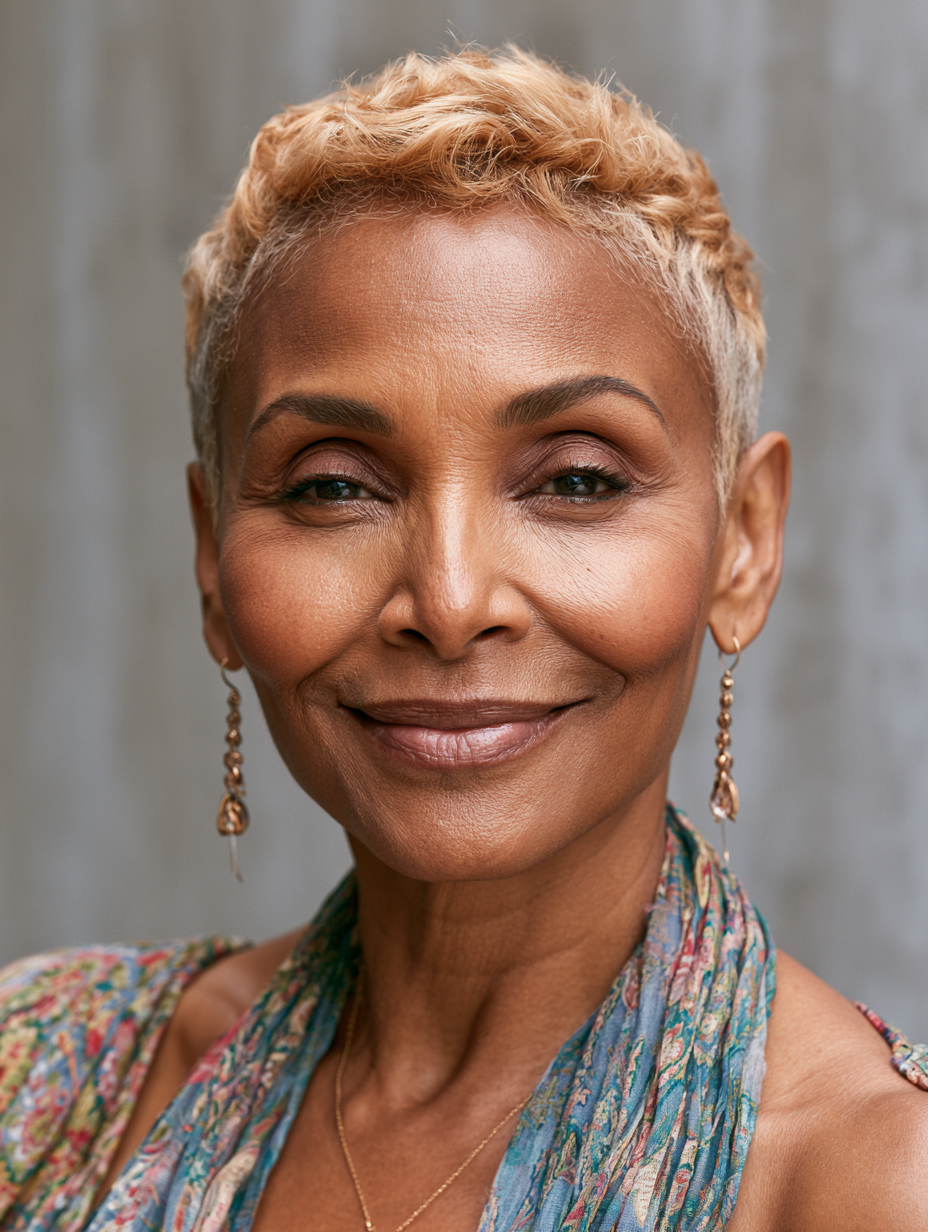
Color carries the look. The cut stays a standard short pixie while warm honey or caramel tones lift the face.
Honey tones complement most skin tones, especially deeper ones, in natural light. Bleaching textured hair requires a skilled colorist who understands the porosity of mature hair.
Use bond-building treatments between sessions and schedule toner refreshes every several weeks.
Aging hair handles color less well than younger hair, so spacing out appointments protects the strands.
Shaved Sides Pixie
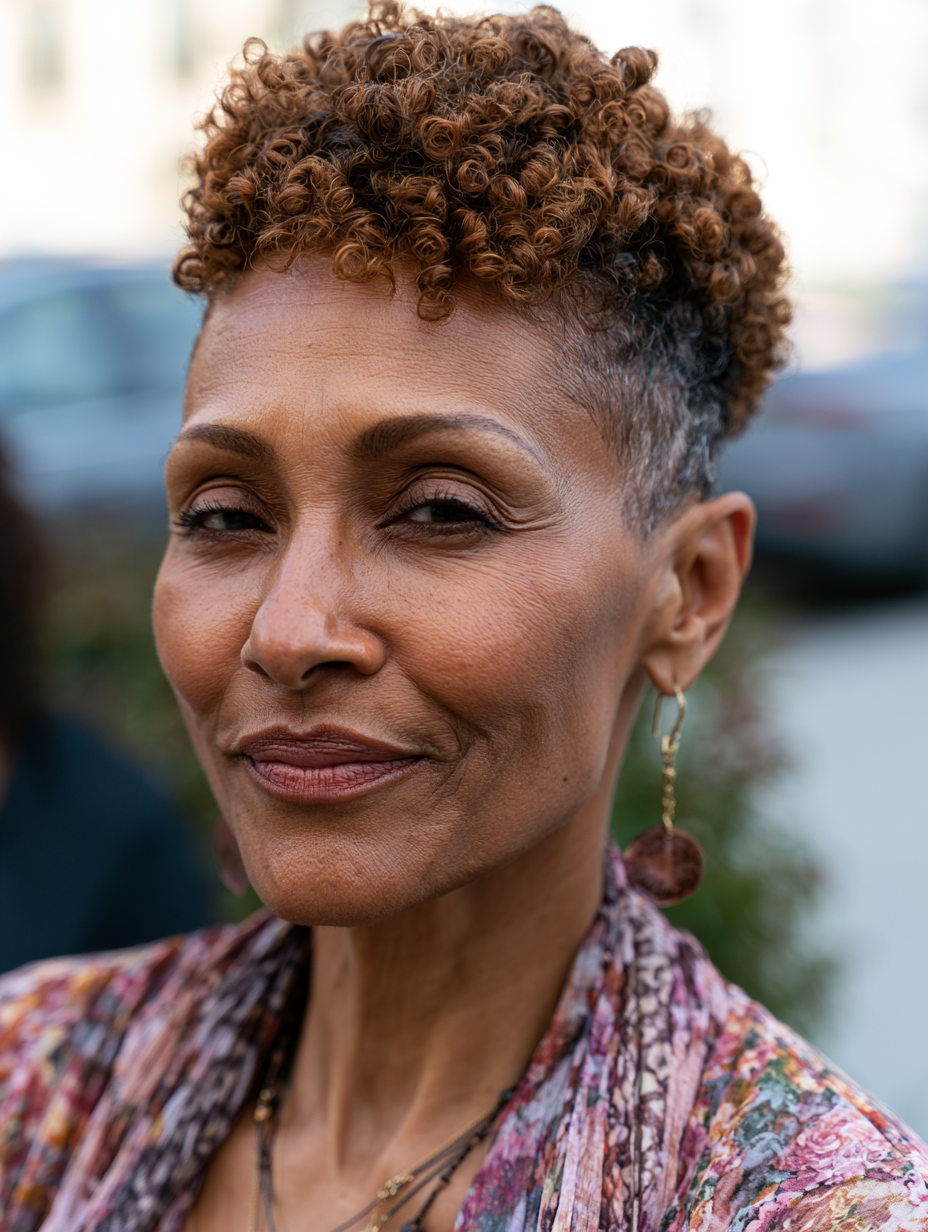
The sides stay shaved or cropped very close while the top stays full of curl or coil.
The contrast between bare sides and dense top texture looks sharp on darker skin tones.
Maintenance runs every two to three weeks for the sides, while the top gets the usual curl styling. This cut suits women who want a defined statement and don't mind frequent barber visits.
The shaved sections also keep you cooler in warm weather, especially under wigs or hats.
Burgundy Short Pixie
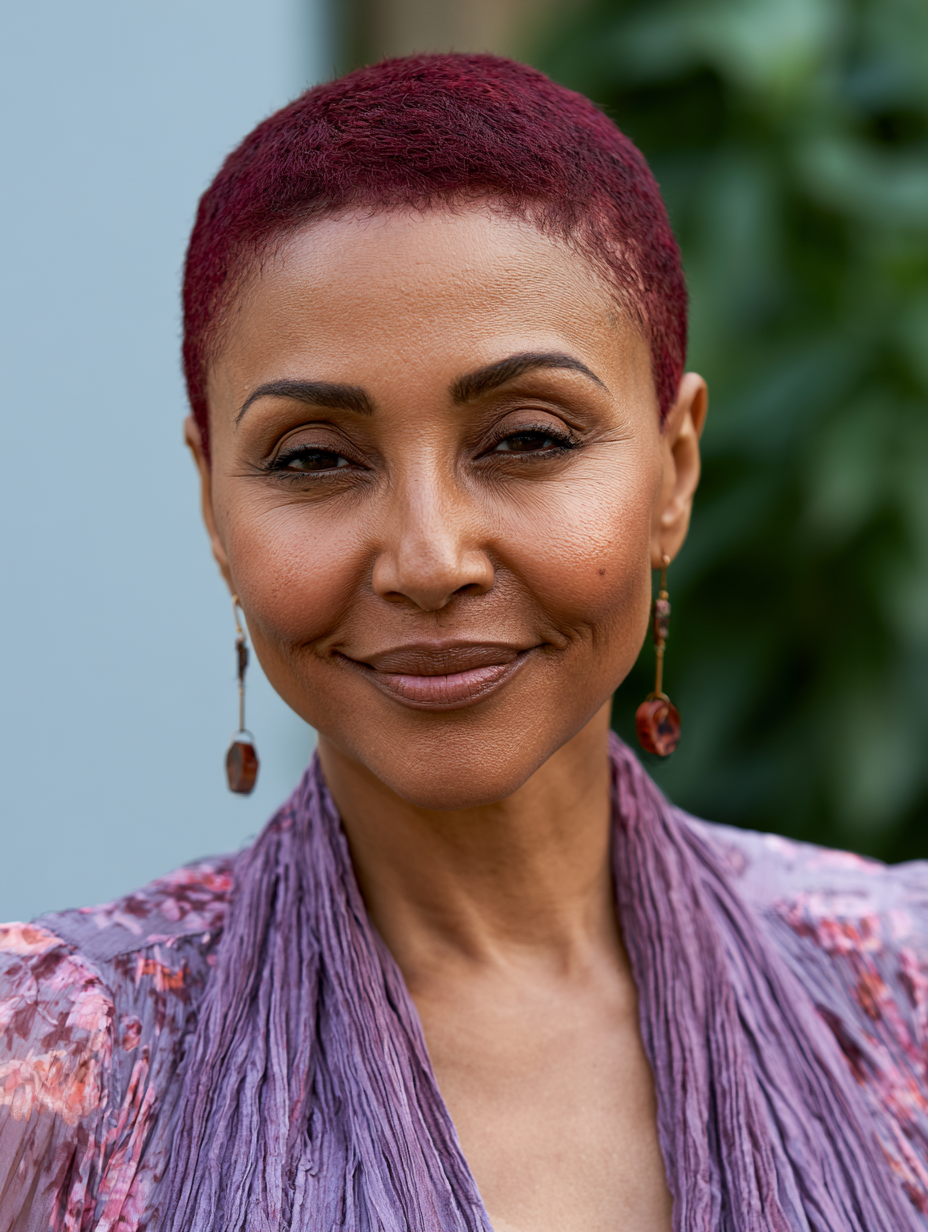
Burgundy looks warm against melanated skin and fades gracefully without harsh roots.
The cut stays a standard short pixie with the color carrying the visual weight. Semi-permanent dyes are gentler on aging hair than permanent color, and they refresh easily every few weeks.
The depth of burgundy makes the cut look more defined, since darker shades cast subtle shadow between sections.
This shade suits a wide range of skin tones and feels bold without being loud.