A pixie on textured hair behaves differently than a pixie on straight hair, and that changes how it should be cut. Coiled and curly strands shrink when dry, sometimes by half their wet length, so a stylist who cuts to a finished shape on wet hair will leave you with something shorter than you asked for. The cut needs to account for shrinkage, density, and curl pattern before the first snip.
The right pixie does more than save you styling time. It sharpens your features, shows off your face, and grows out without the awkward in-between stages longer cuts struggle through. Below are 24 versions worth bringing to your next salon visit, from tapered coils to silver gray, finger waves to a classic crop.
24 Short Pixie Haircuts for Black Women
Tapered Coil Pixie
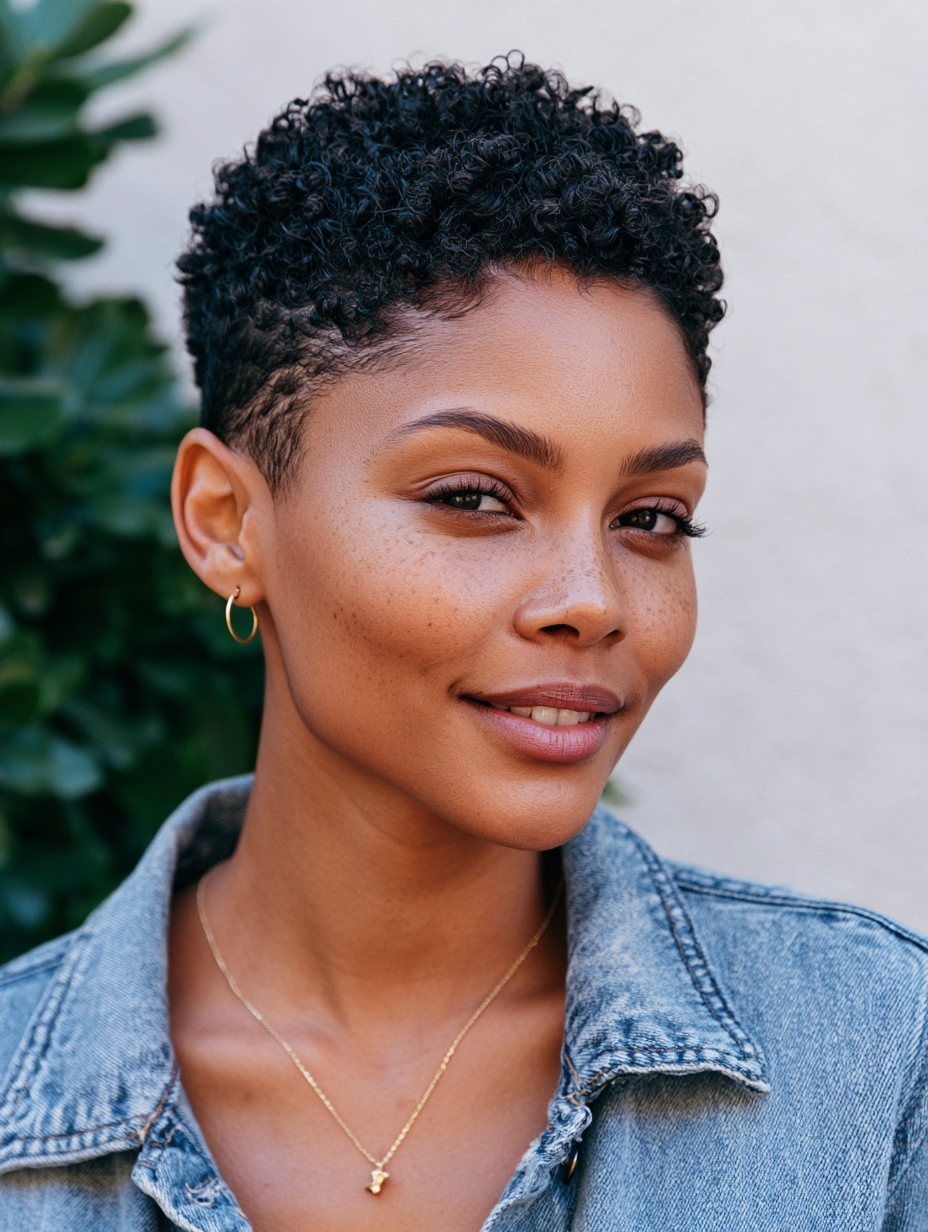
Ask your stylist for a low taper that fades into coiled length on top.
This works well on tightly coiled textures because the taper handles dense roots without bulk.
Keep the crown long enough to define curls with a denman brush and a leave-in cream. The shape sharpens cheekbones and grows out without looking awkward.
Touch-ups stay simple since you only need the sides reshaped between cuts, not the full silhouette redone each time.
Side-Swept Finger Waves
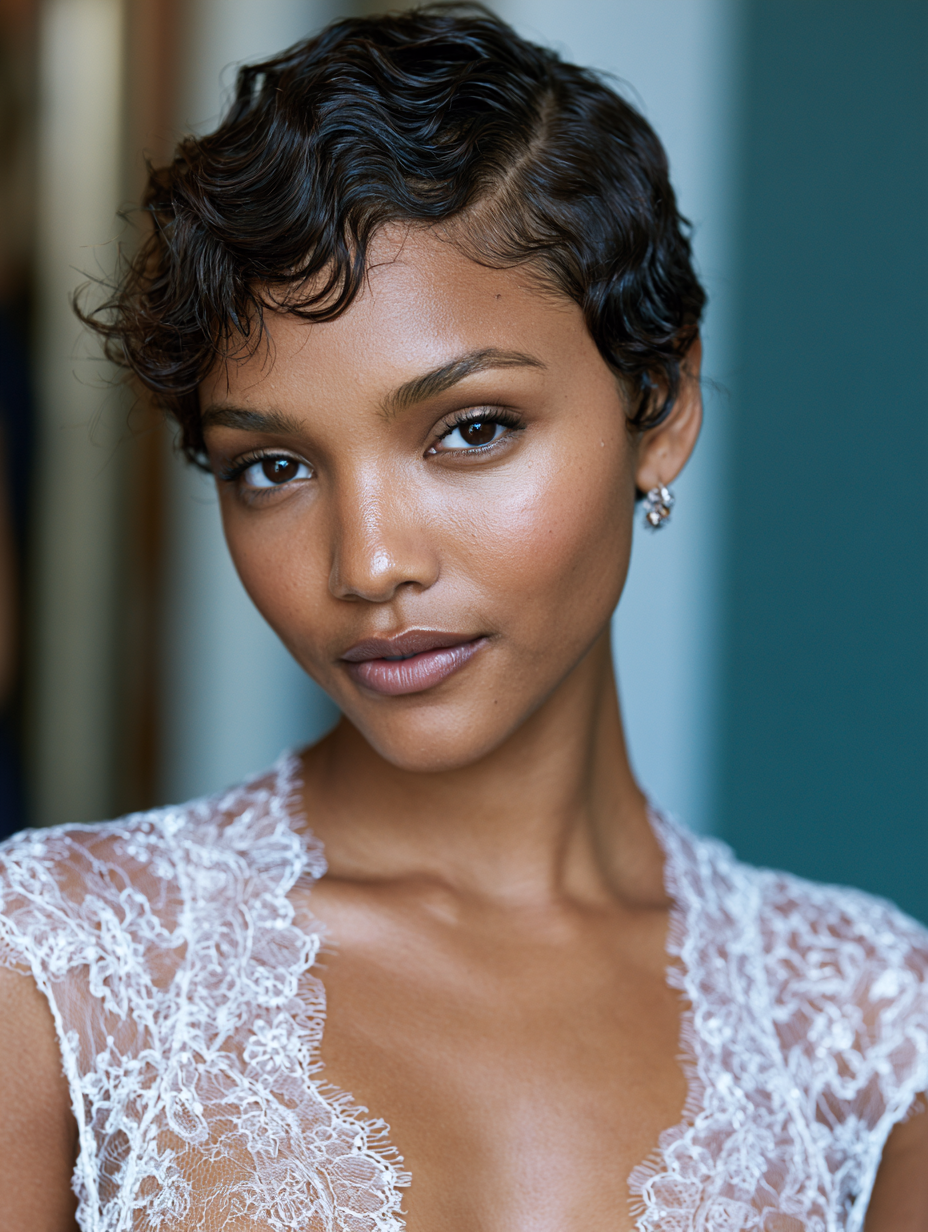
A styling tradition with roots in the 1920s, still worn today on shorter cuts.
The hair sits cropped at the nape with extra length on top, usually three to four inches.
Stylists set the waves with a strong-hold gel and a fine-tooth comb, then dry under a hooded dryer. Best executed on relaxed or silk-pressed hair where the strands lie flat.
The finished look photographs well, which is part of why it remains a wedding and event favorite.
Curly Crown Pixie
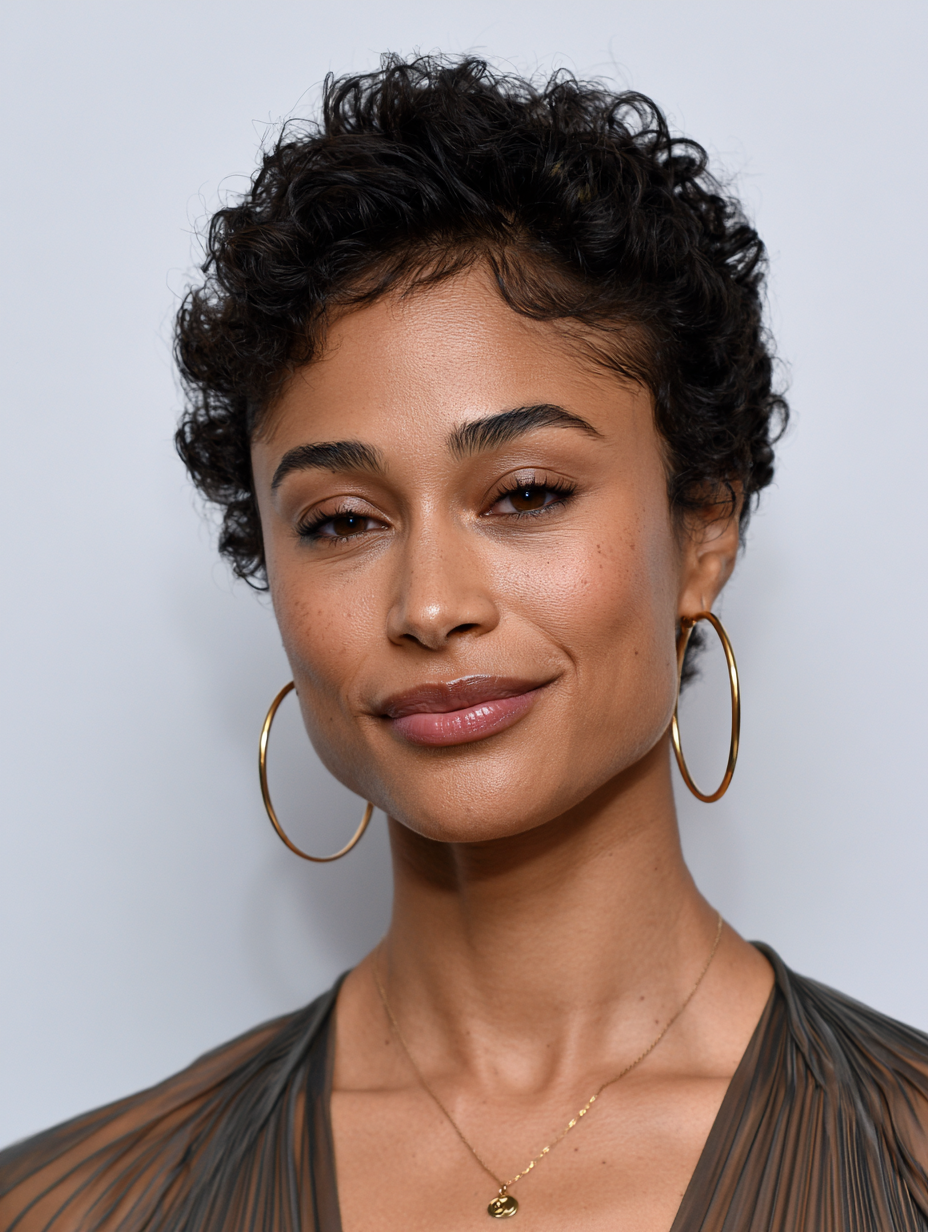
Ask for point-cutting on the top section to keep curls from looking blocky.
You want length concentrated at the crown, maybe two to three inches, with shorter sides that hug the head.
This silhouette suits round and heart-shaped faces because it adds height where you need it. Apply a curl cream or custard on damp hair, then air-dry or diffuse on low heat.
The volume on top balances fuller cheeks and softens a sharp jawline.
Buzzed Pixie with Designs
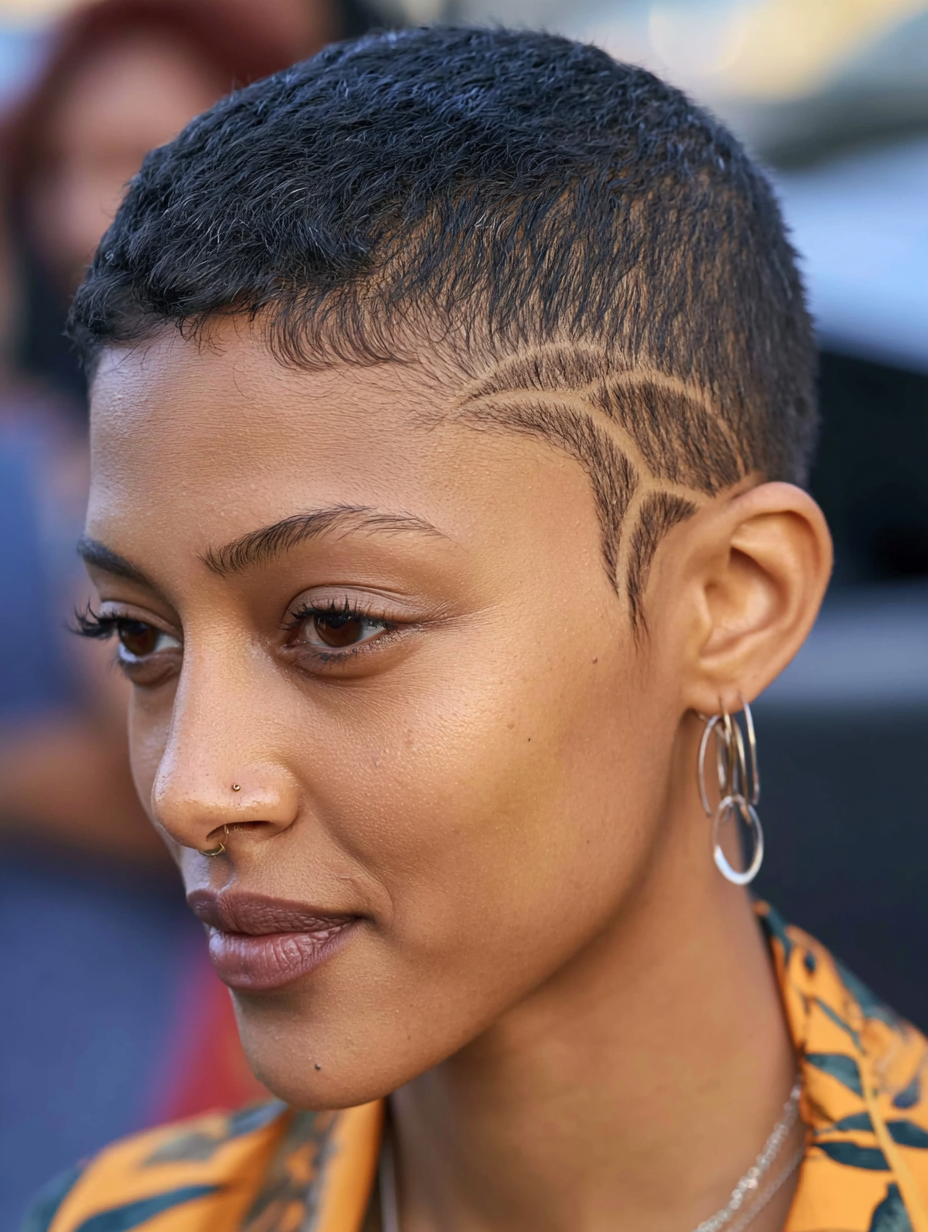
Razor-cut designs near the temple turn a basic buzz into something distinctive.
Think geometric lines, a single shaved part, or a subtle wave pattern. Length stays under an inch all over, so maintenance happens often, usually every two to three weeks at the barber chair. Smaller features and strong bone structure tend to wear this well.
Keep a light oil or scalp moisturizer on hand, since shorter hair exposes the scalp to more air and product buildup.
Asymmetrical Pixie
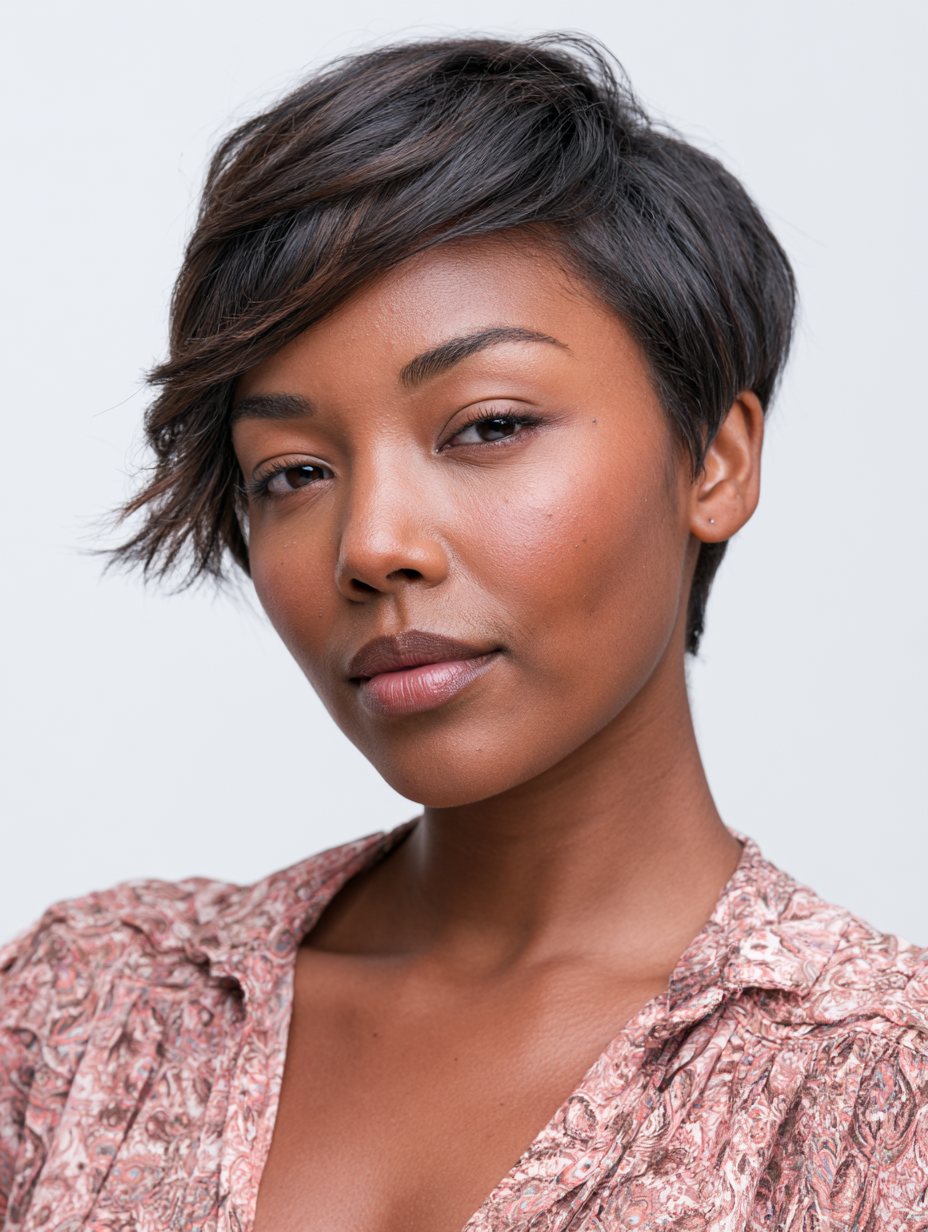
One side stays cropped close to the ear while the other falls past the jaw in a diagonal line.
The asymmetry draws the eye across the face, which can slim rounder shapes.
Stylists usually layer the longer side to keep it from looking flat. This cut works on relaxed hair, blown-out natural hair, or a wig install.
Skip this style if you tie your hair back often, since the imbalance gets awkward when you try to pull it up.
Honey Blonde Pixie
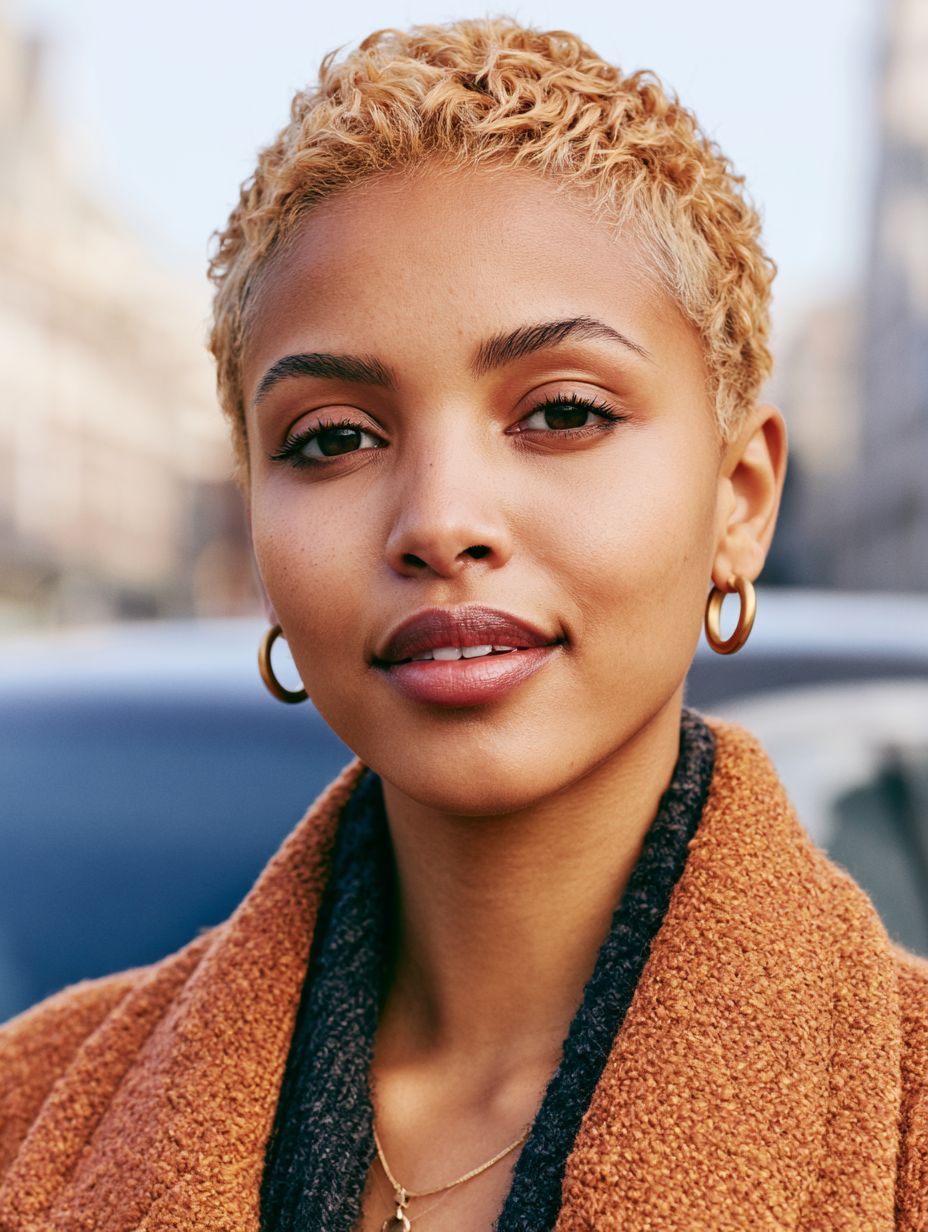
Color carries this look. The cut stays simple, short layers all over with slight length on top, while a warm honey or caramel tone shifts how your skin reads.
Cool undertones tend to suit ash blonde, warm undertones suit golden honey.
Bleaching textured hair requires a skilled colorist and bond-building treatments between sessions to protect the strands.
Expect toner refreshes every several weeks. The warmth against deeper skin tones is especially well in natural daylight.
Soft Curly Pixie with Bangs
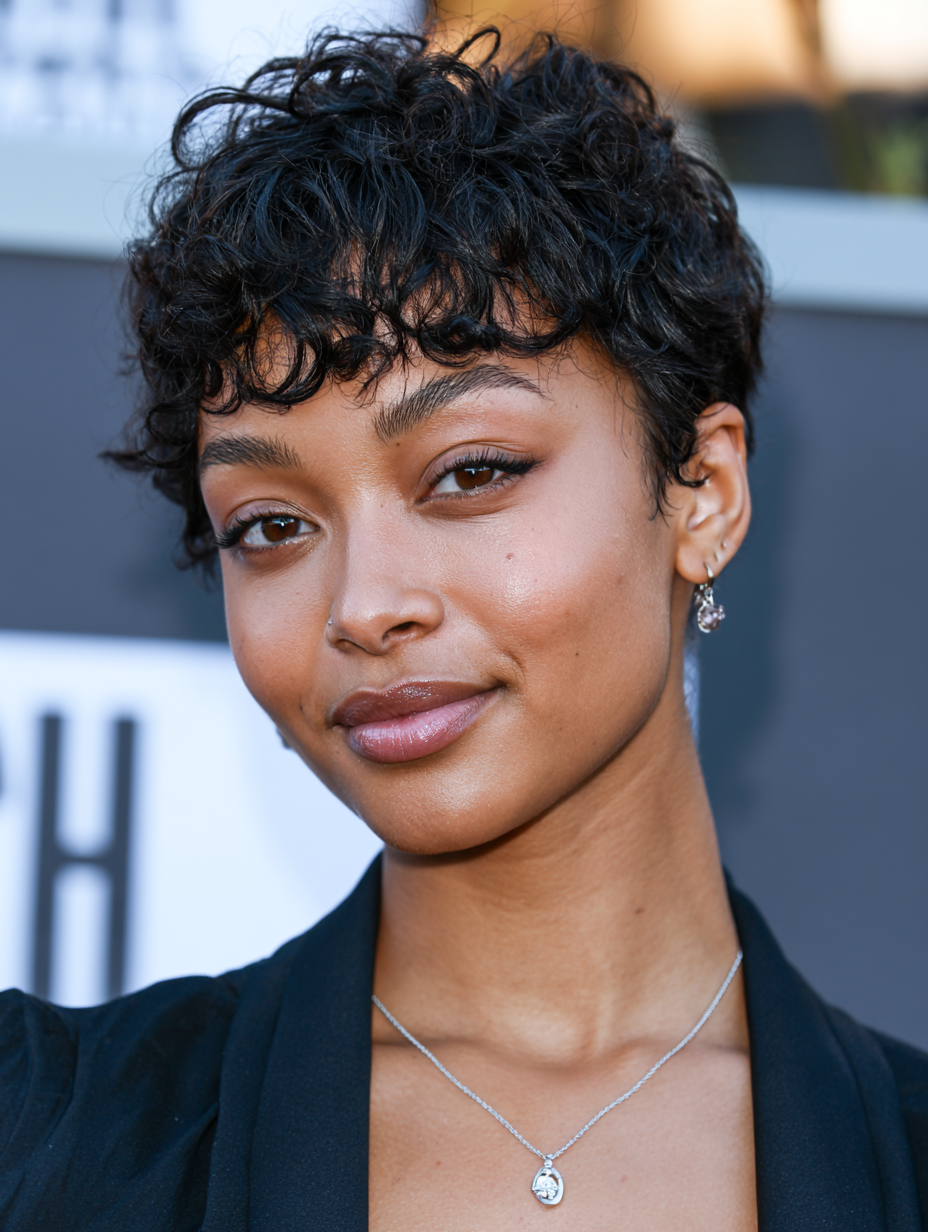
The bangs sit just above the brow, soft and piece-y rather than blunt. Curls on top stay loose, set with a twist-out or wash-and-go method for definition.
The cut suits looser curl patterns best because the texture shows up without needing heavy product. Use a diffuser on low heat to dry without disturbing the shape.
Trim the bangs every few weeks to keep them from creeping into your eyes. Long faces look softer with this framing.
Slicked-Back Pixie
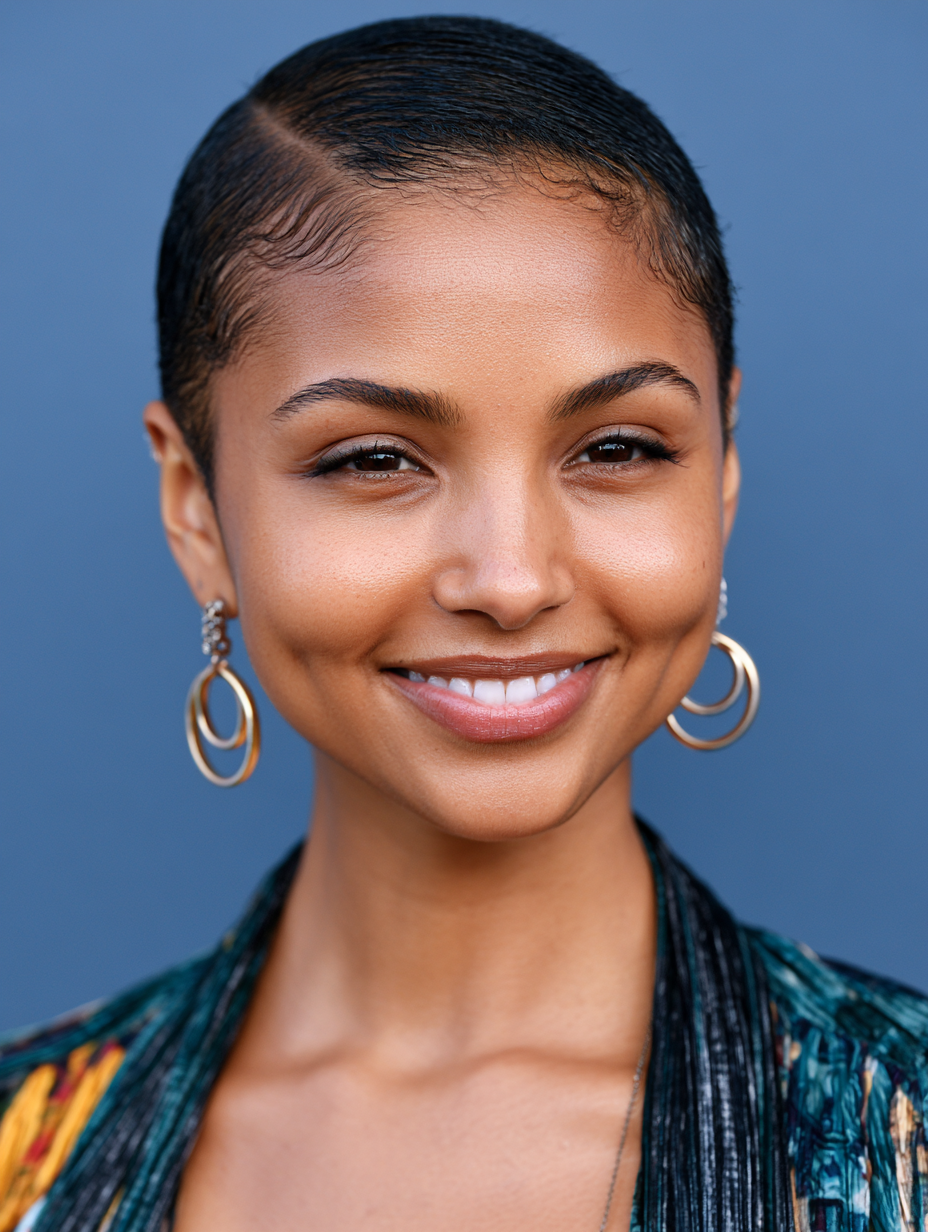
A small amount of edge control or styling wax smoothed back over freshly washed hair creates this look in minutes.
The cut works best on relaxed or texlaxed hair, ideally three to four inches long throughout. You can wear the back natural or wrap it overnight with a satin scarf for extra smoothness.
The finished style reads clean in professional settings and edgy with bold accessories on weekends.
It also handles humidity better than most styling choices.
Burgundy Curly Pixie
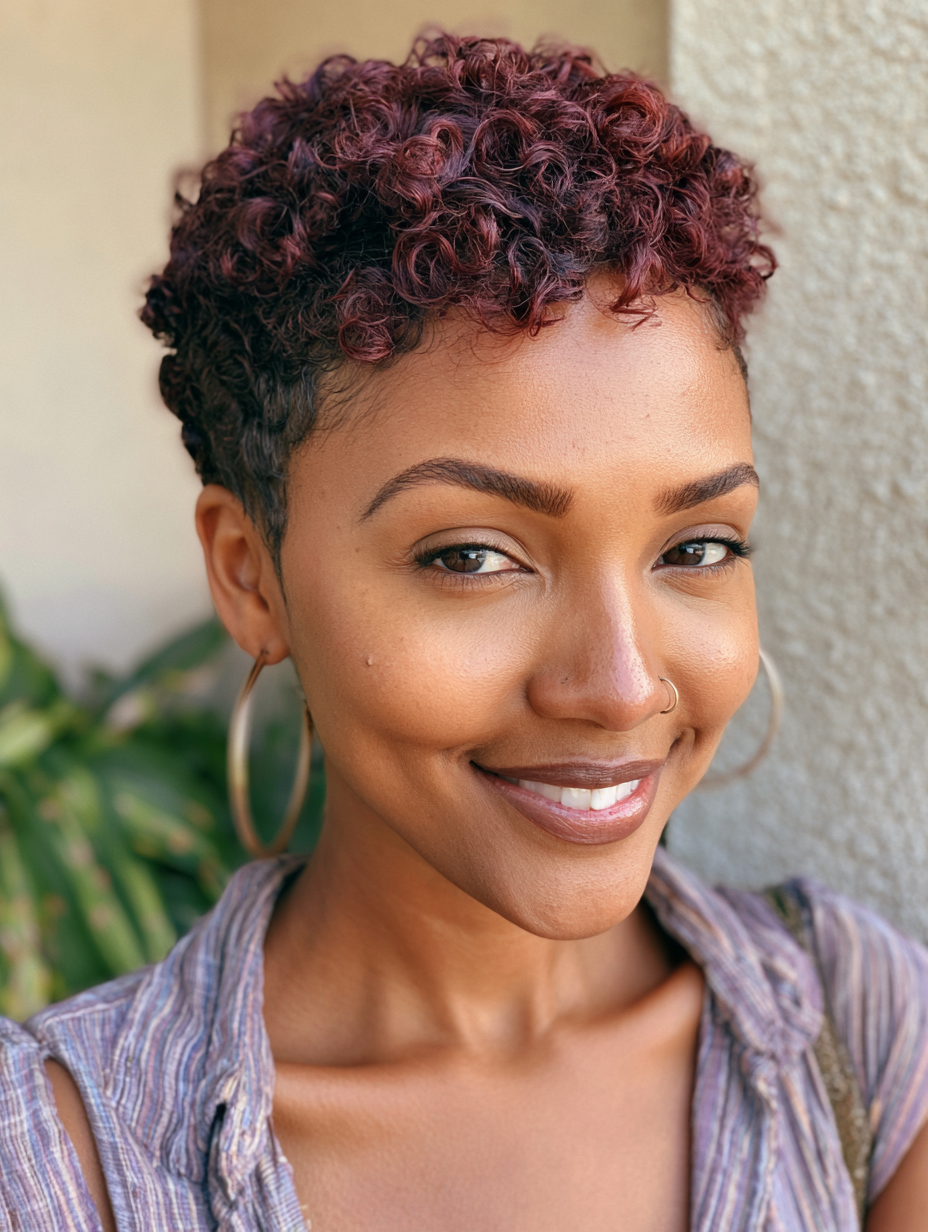
Burgundy reads warm against brown skin and fades naturally without harsh roots.
The cut stays curly and full on top with shorter sides. Semi-permanent dyes are gentler on textured hair than permanent color, and they fade gracefully when refreshed every few weeks.
The depth of the burgundy makes the natural curl pattern look more defined without changing the texture itself.
This shade reads bold without being loud, and it suits a wide range of skin tones.
Pixie Mohawk
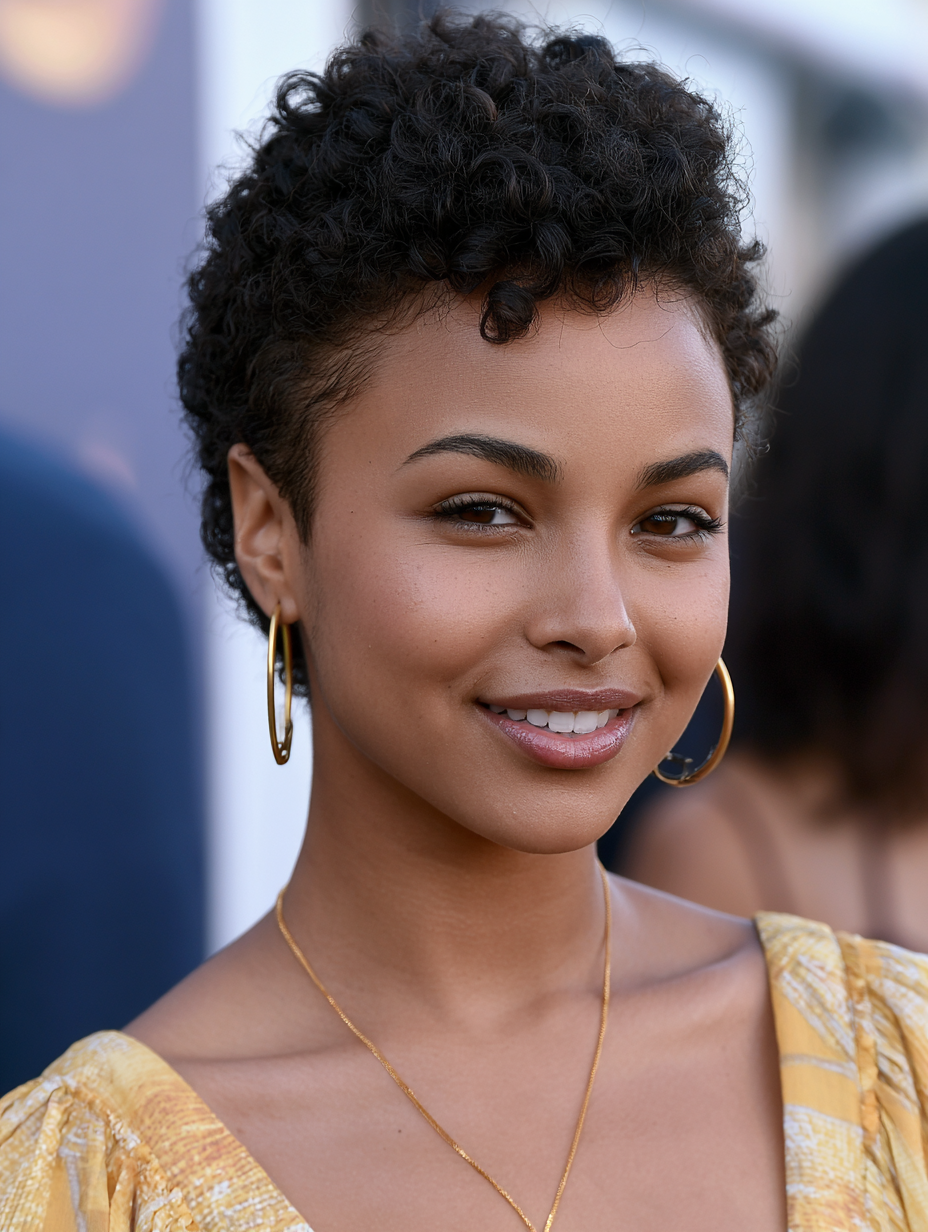
The sides stay cropped or shaved, while a strip of length runs from forehead to nape.
The width of the strip changes the feel, narrow reads punk, wider reads softer. Twist or set the top section nightly to maintain curl definition.
The cut grows out into a regular pixie within several weeks, so it's a lower-commitment way to try something dramatic.
Strong-jawed faces tend to wear this with confidence. It also keeps the sides cool in warm months.
Silver Gray Pixie
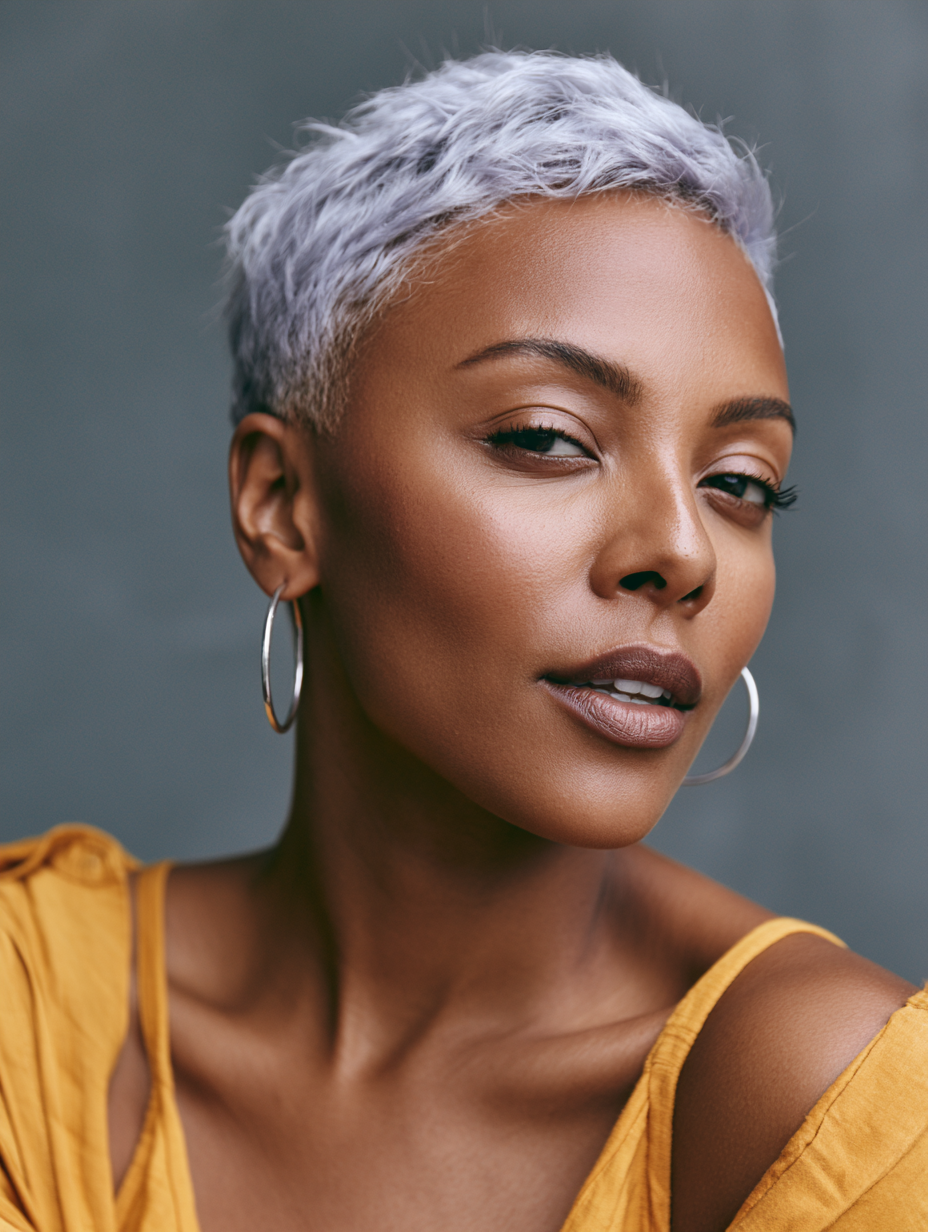
Silver hair against melanated skin creates a striking contrast.
The cut should stay simple so the color leads, short layers with a slight curl on top.
Achieving true silver requires lifting hair to a pale yellow first, then toning with a violet-based gloss. A purple shampoo used weekly keeps the tone from going brassy.
The maintenance is real, both for the color and the hair health afterward, but the finished look reads editorial. It suits women who don't mind salon visits.
Pixie with Side Part
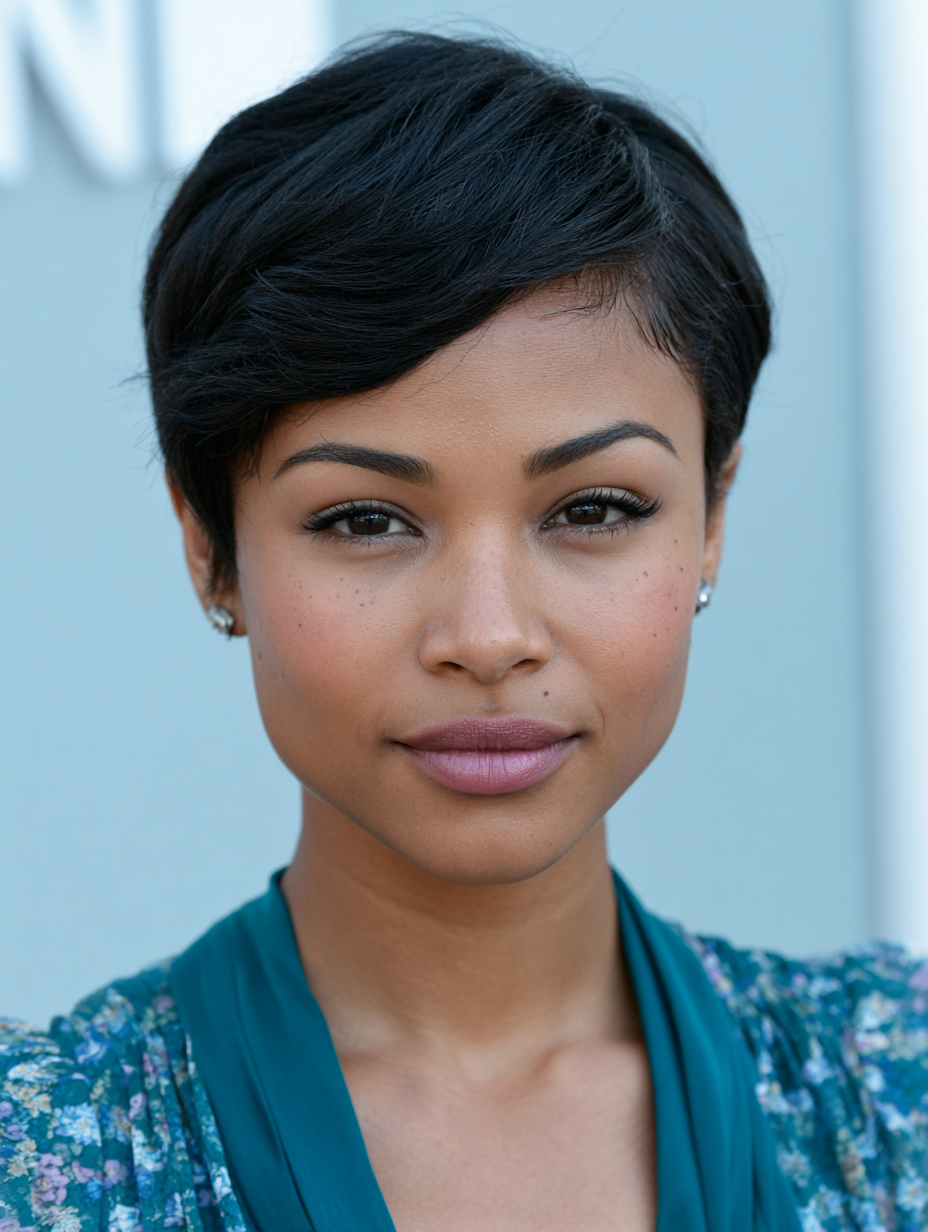
A deep side part adds polish to even the simplest pixie.
Length sits between two and four inches, with the longer section sweeping across the forehead. This style suits silk presses, relaxers, or wig units where the part can lie flat and clean.
The line itself elongates round faces. Use a pomade or light styling cream along the part for shine without crunch.
Pair with a clean lip and small earrings for a put-together weekday look that requires minimal morning effort.
Coily Caesar Cut
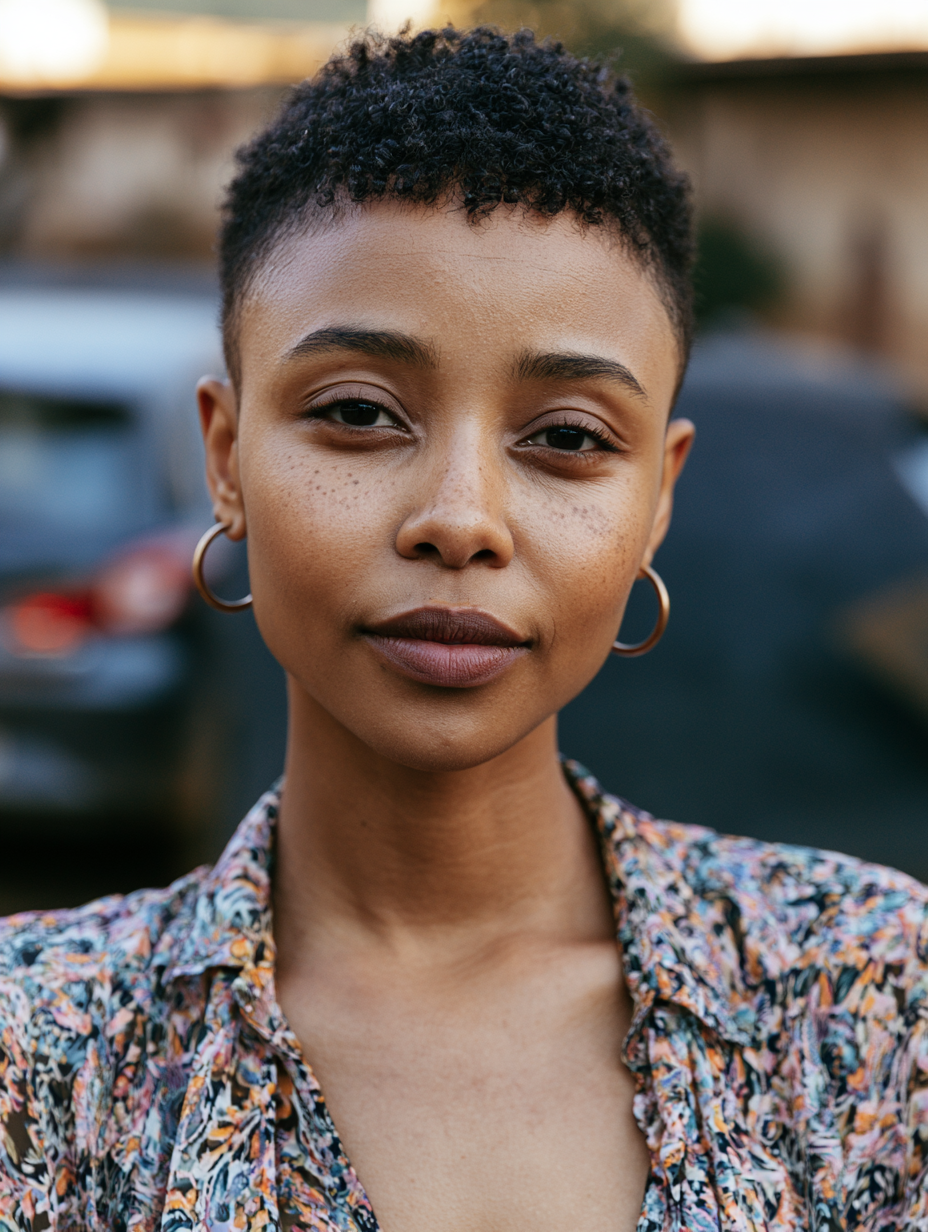
Borrowed from men's barbering and worn by women for decades now.
The Caesar features a straight, low fringe across the forehead with the rest cut to a uniform short length.
On coily hair, the texture gives the fringe natural softness rather than a hard line. Visit a barber who works with textured hair, since precision matters here.
Apply a light oil to keep the scalp from drying out. The cut suits oval and square faces particularly well.
Long Pixie with Curls
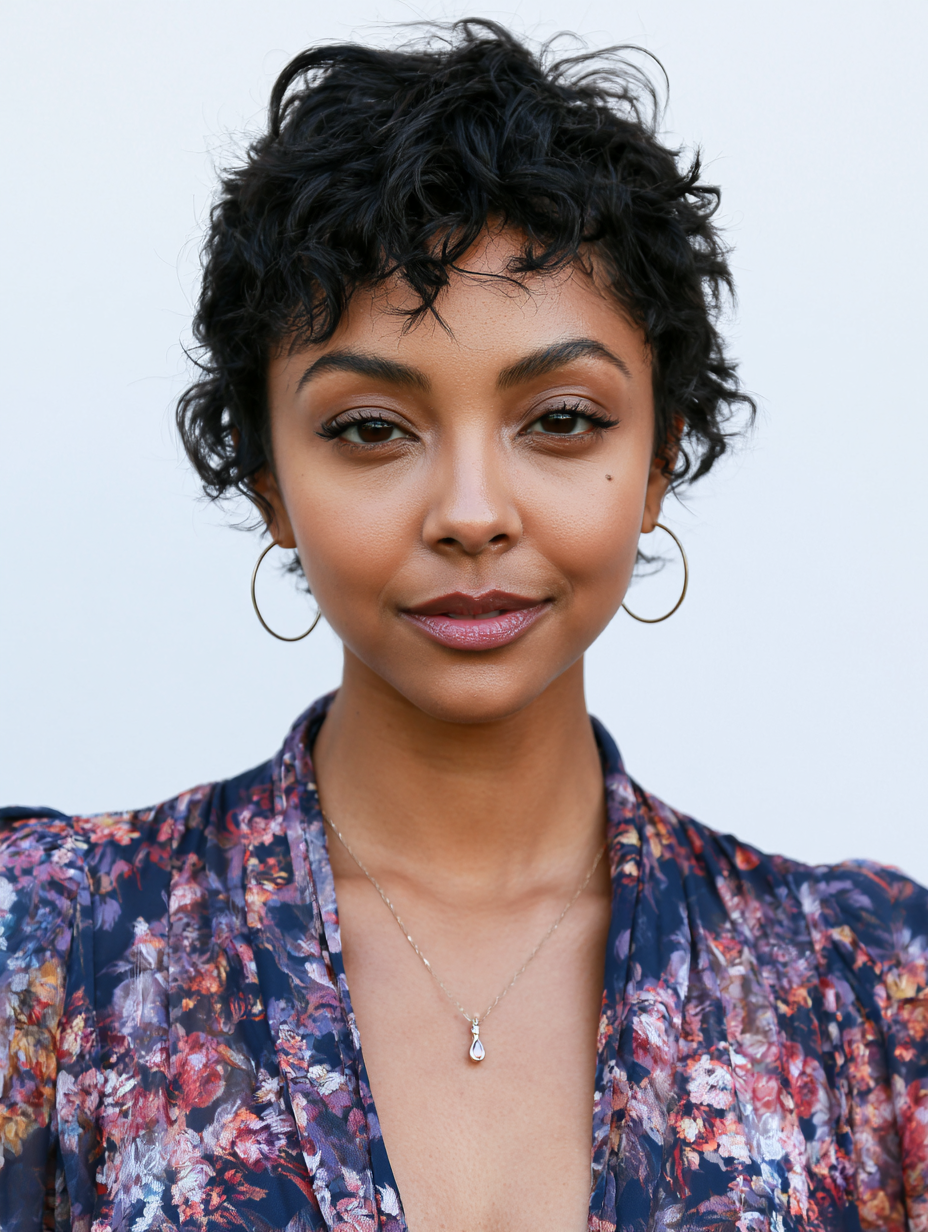
The longer interpretation, around four to five inches throughout, with defined curls.
Layers stay heavy enough to weigh down the back but not so heavy they kill volume on top.
Best for looser curl patterns where curls fall rather than coil tightly. Sleep with a satin bonnet to preserve the shape overnight.
This pixie transitions easily to a bob if you decide to grow it out, with no awkward in-between phase. A versatile choice for first-time pixie wearers.
Pixie with Shaved Nape
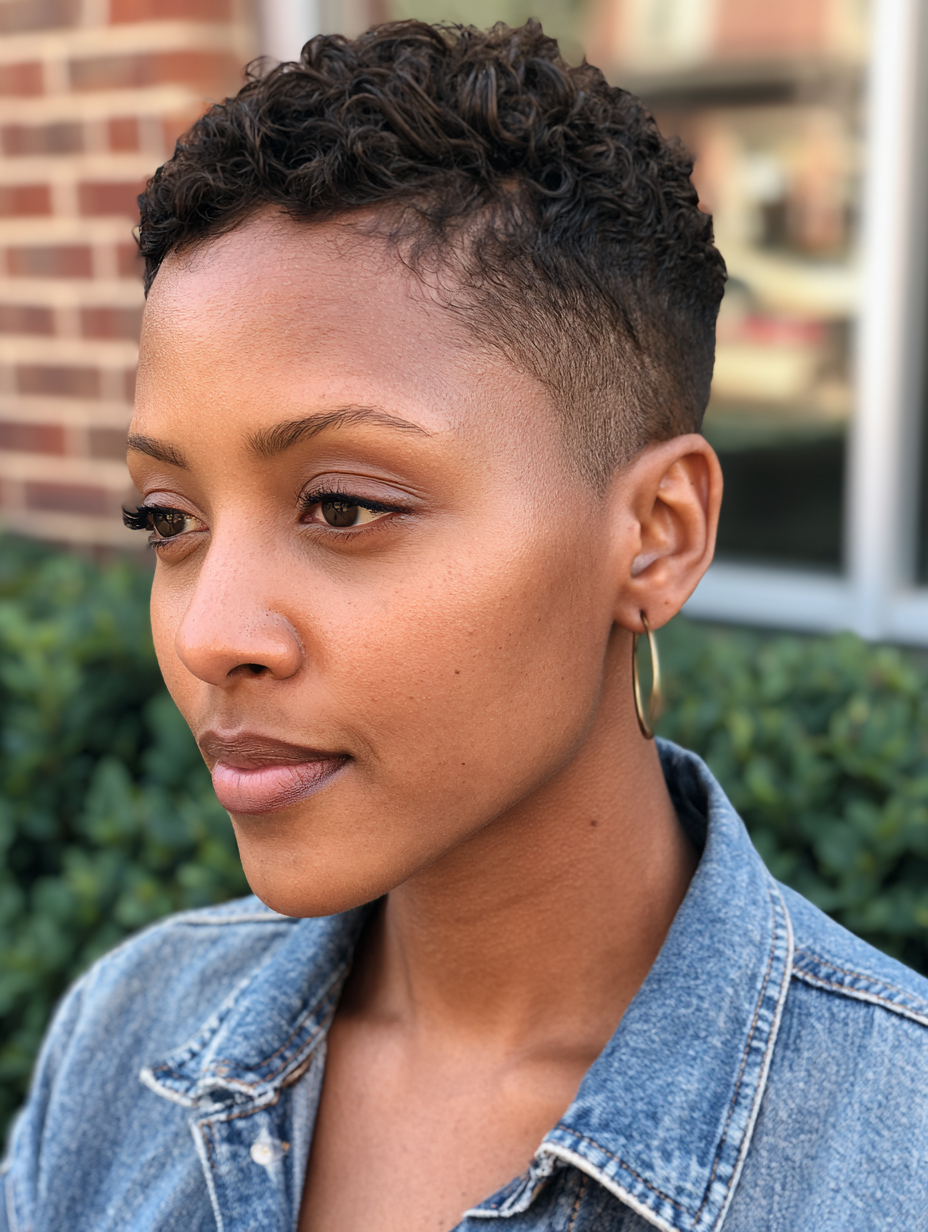
Hidden until you turn around. The nape gets shaved or tapered close while the rest stays full and styled normally.
This cut keeps the back cool in warm weather, helpful for women dealing with heat under wigs or thicker styles.
The reveal when you pull hair up into a clip feels intentional. Ask for the shaved section to follow your natural hairline curve rather than a straight line.
Touch up the nape every couple of weeks for a clean finish.
Red Copper Pixie
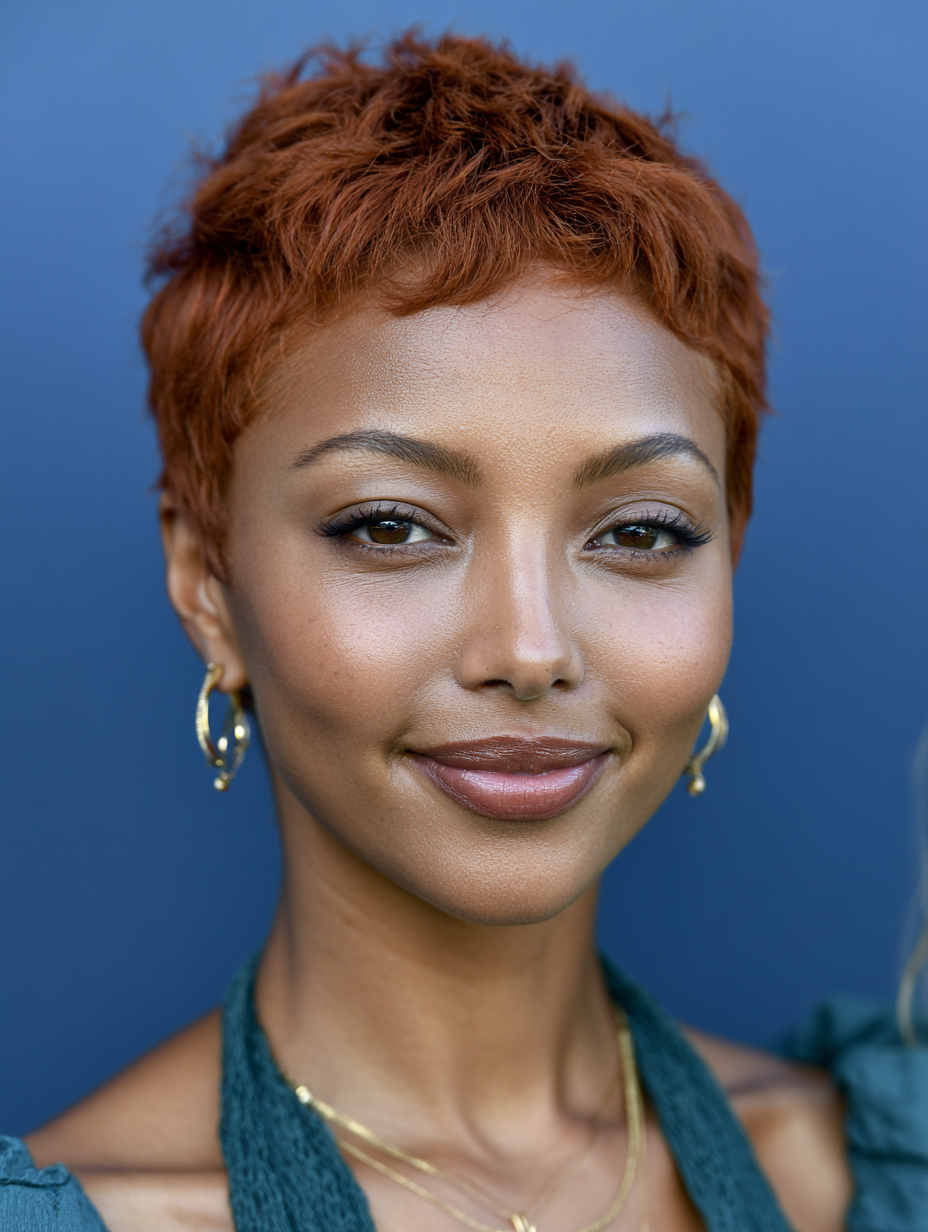
Copper reads warmer than red and softer than orange, which suits a wider range of skin tones.
The cut stays short and textured, with feathered ends rather than blunt lines. Use a color-safe shampoo to keep the tone from fading to brassy.
The warmth complements brown eyes and golden undertones. This shade looks especially good in autumn months when it picks up the season's natural light.
Touch up roots every several weeks, and use bond-building treatments between color sessions.
Edgy Spiked Pixie
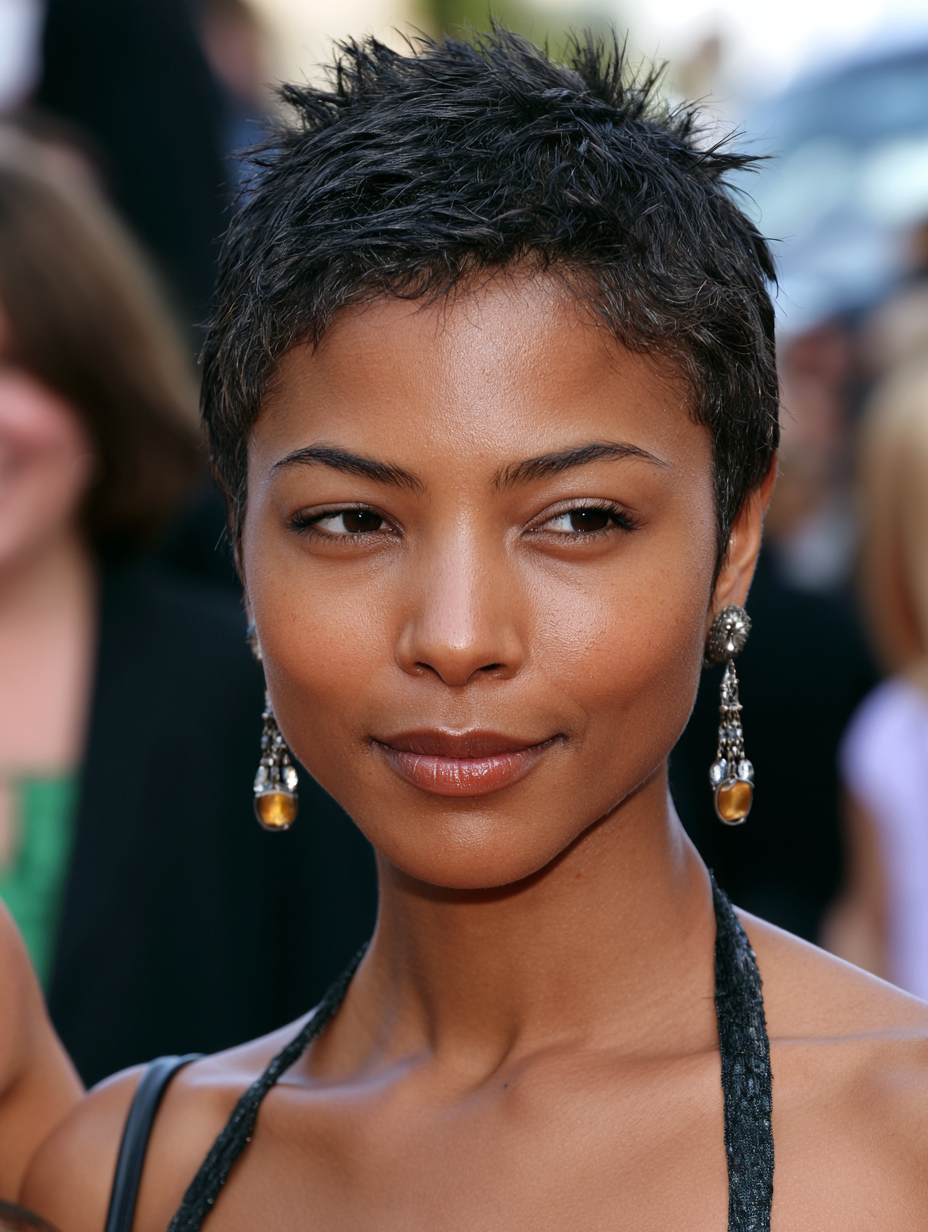
Spikes come from product, not from the cut itself.
Ask for choppy layers all over, then apply a strong-hold gel and pinch sections upward while air-drying. The texture reads edgy without being costumey.
Works best on relaxed or naturally straight textured hair where the spikes can hold their shape. Pair with statement earrings and a clean brow.
The finished look photographs well and shifts from day to night easily. Skip on humid days, since moisture flattens the spikes within an hour.
Wet-Look Pixie
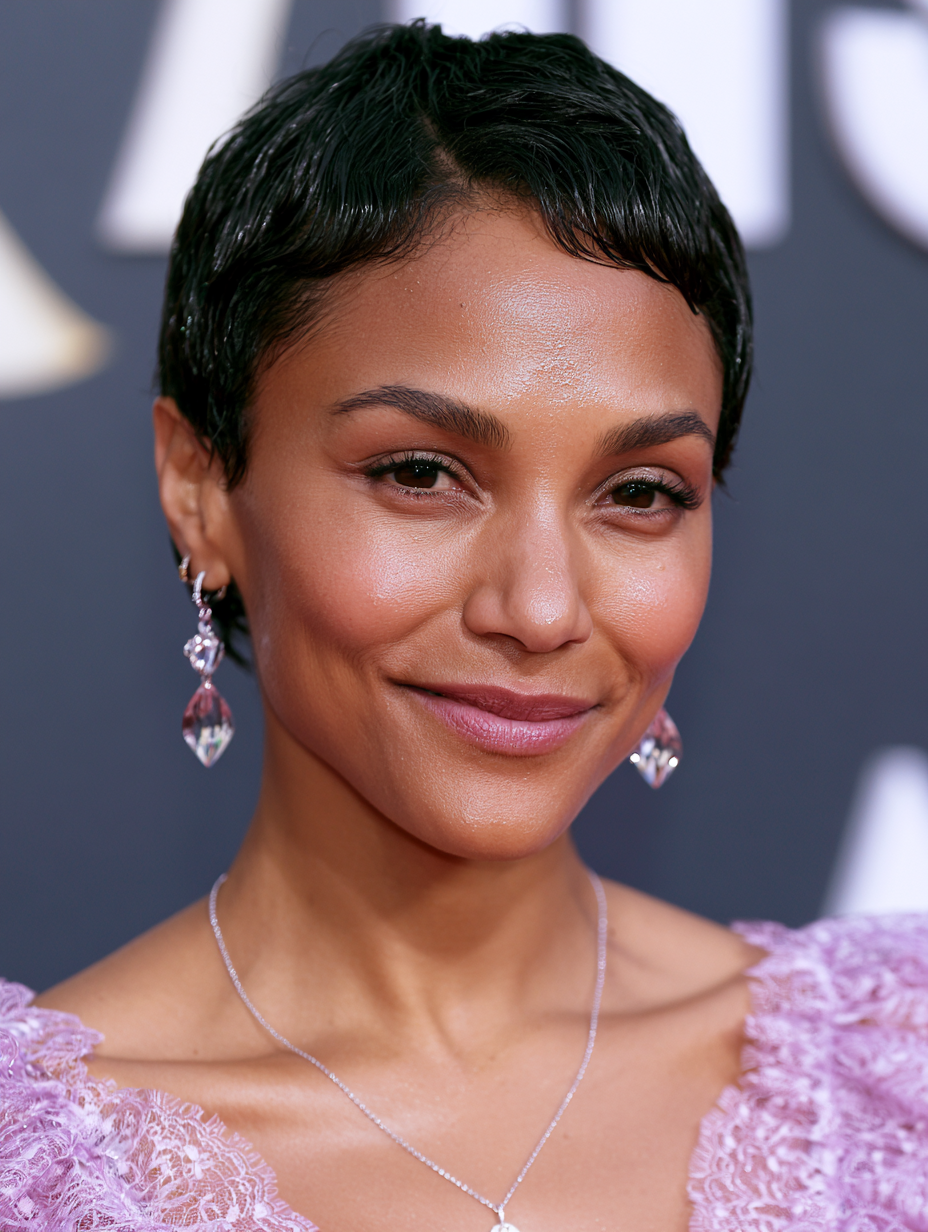
Glossy and slicked, as if you just stepped out of the shower.
A small amount of gel mixed with a few drops of light oil creates the right balance of hold and shine without crunch. The cut stays simple, short and tight to the head, so the finish carries the look.
This style reads polished on red carpets and date nights. It works on most textures with the right product blend. Reapply oil through the day to maintain the wet finish.
Pixie with Defined Edges
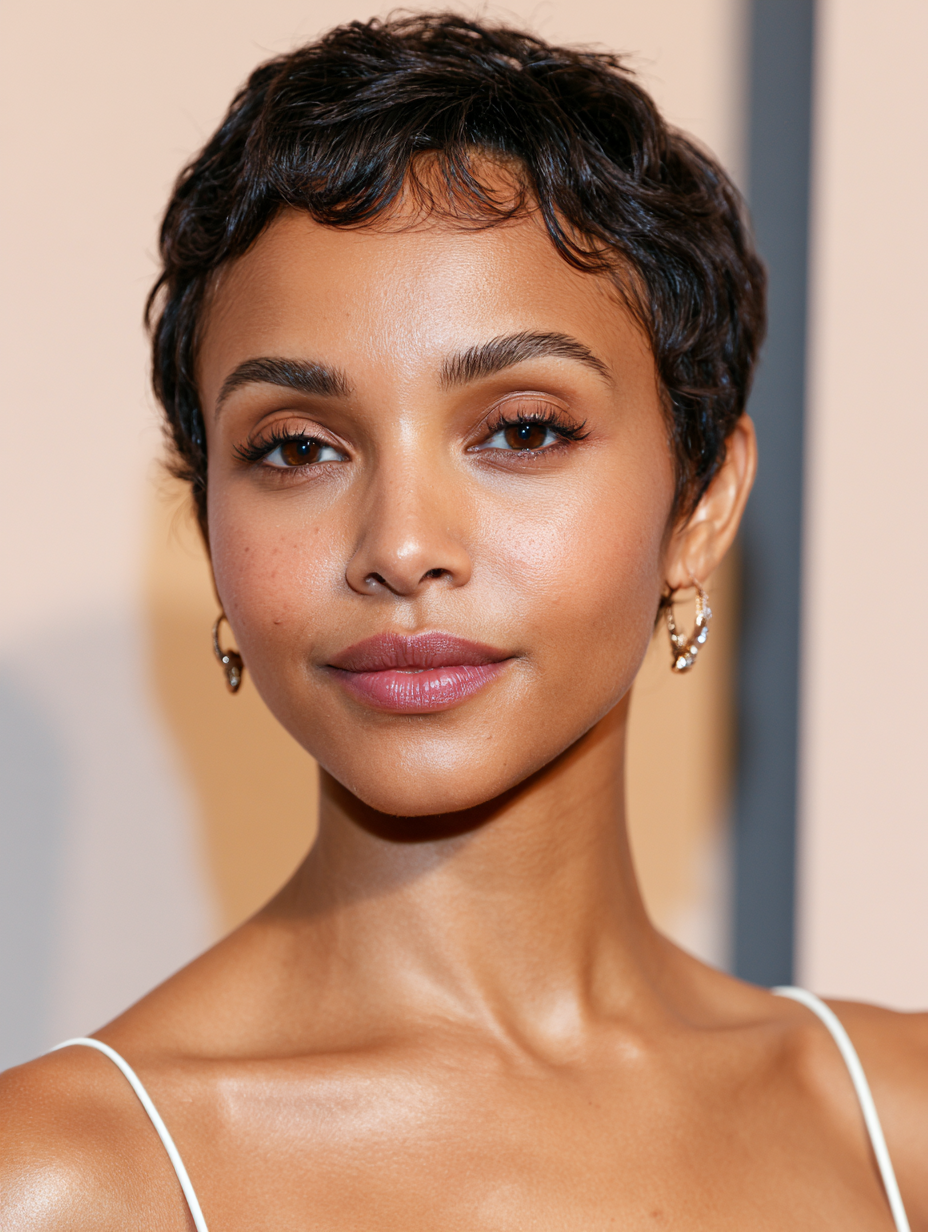
The cut itself is short and unfussy, but the baby hairs do the work.
Lay edges with a fine-tooth toothbrush and a small amount of edge control. Create swirls, swoops, or a sleek straight line depending on your mood.
This styling tradition runs deep in Black hair culture and adds polish to any pixie. The contrast between the soft pixie and the precise edges photographs beautifully.
Wrap the edges with a silk scarf for a few minutes to set them in place.
Frohawk Pixie
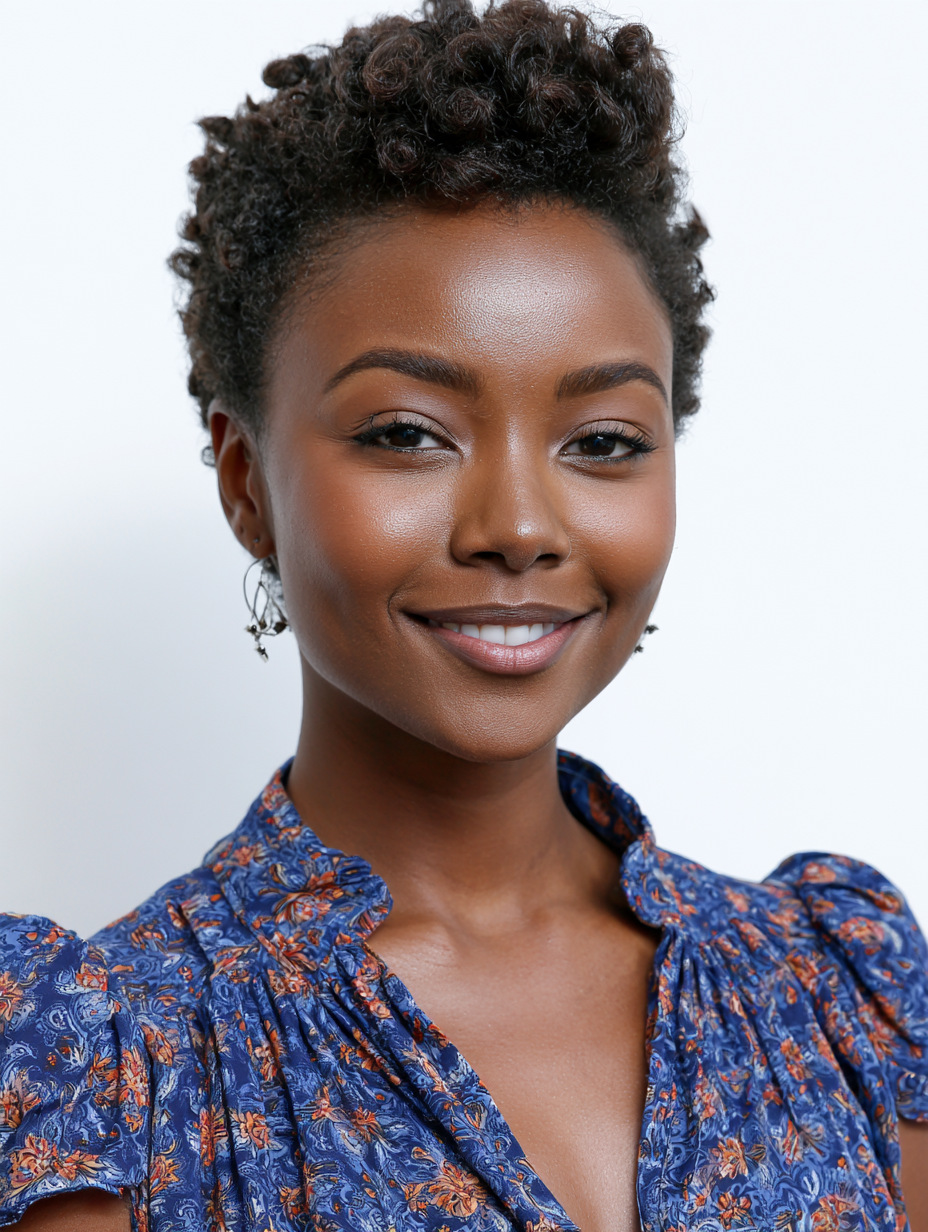
The sides stay tapered while the top stays full and brushed upward into a soft mohawk shape.
Unlike a shaved-side mohawk, this version keeps everything attached but creates height through styling.
Use a denman brush to lift the top section, then pick out volume with an afro pick. The shape elongates round faces and adds presence in professional settings without reading too edgy.
A staple look during natural hair journeys, especially in the early months after a big chop.
Pixie with Twist-Out Top
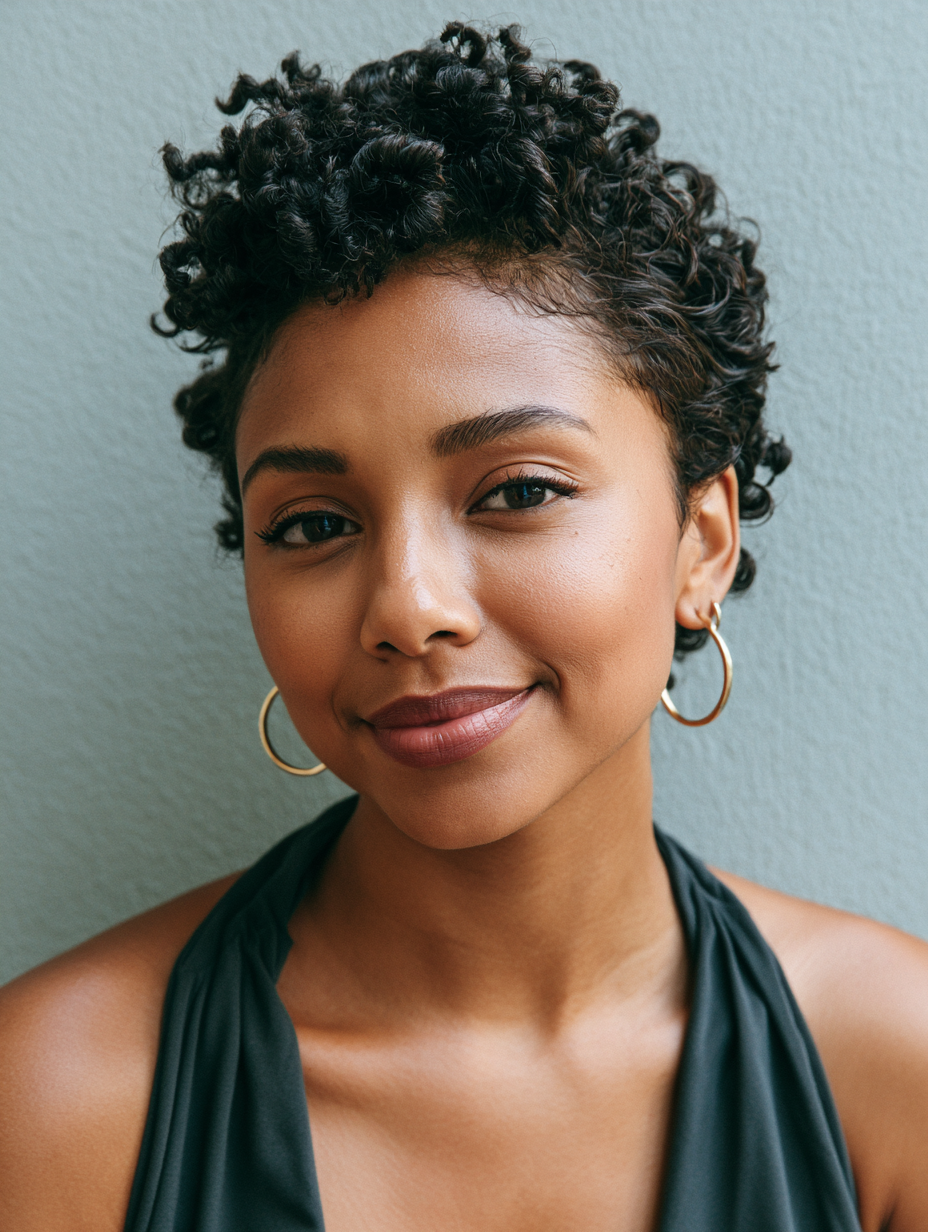
Two-strand twists set on damp hair the night before, unraveled the next morning.
The result is defined ringlets on top with shorter, cleaner sides. This style holds for several days with a satin bonnet at night. Best suited to coily textures where the twist pattern holds well. Use a setting cream or twist-defining product on damp hair.
Re-twist a few pieces in the morning to refresh second-day hair. The look feels effortless but rewards the prep time.
Classic Cropped Pixie
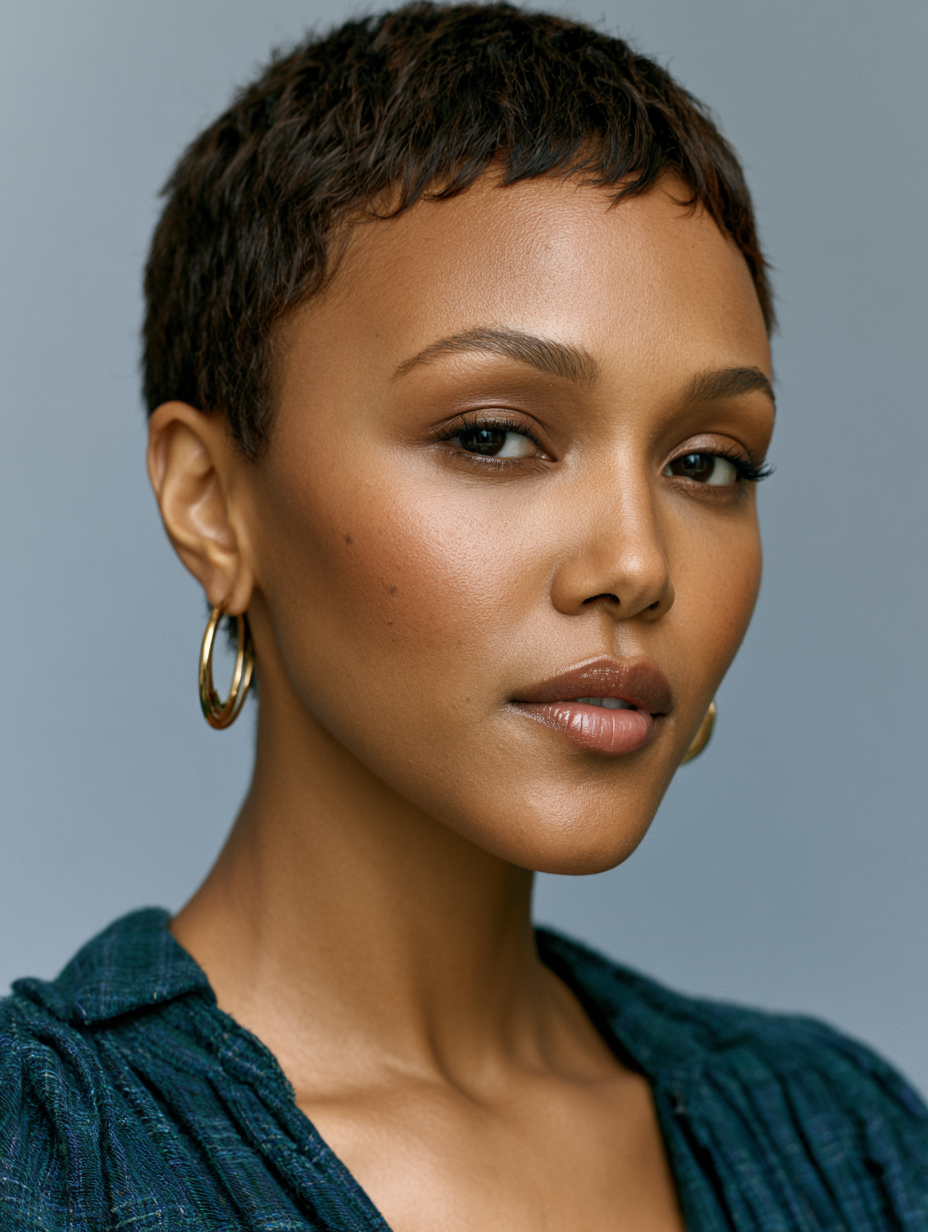
The original short cut, no twists or shaves or color tricks.
Length stays under two inches everywhere, layered just enough to give shape around the face.
This works on every texture, every age, every face shape, which is why it endures. The simplicity makes it a fallback during busy seasons when styling time disappears.
A regular trim keeps stray pieces in check. Pair with hoops, a bold lip, and confidence.
Pixie with Color-Tipped Ends
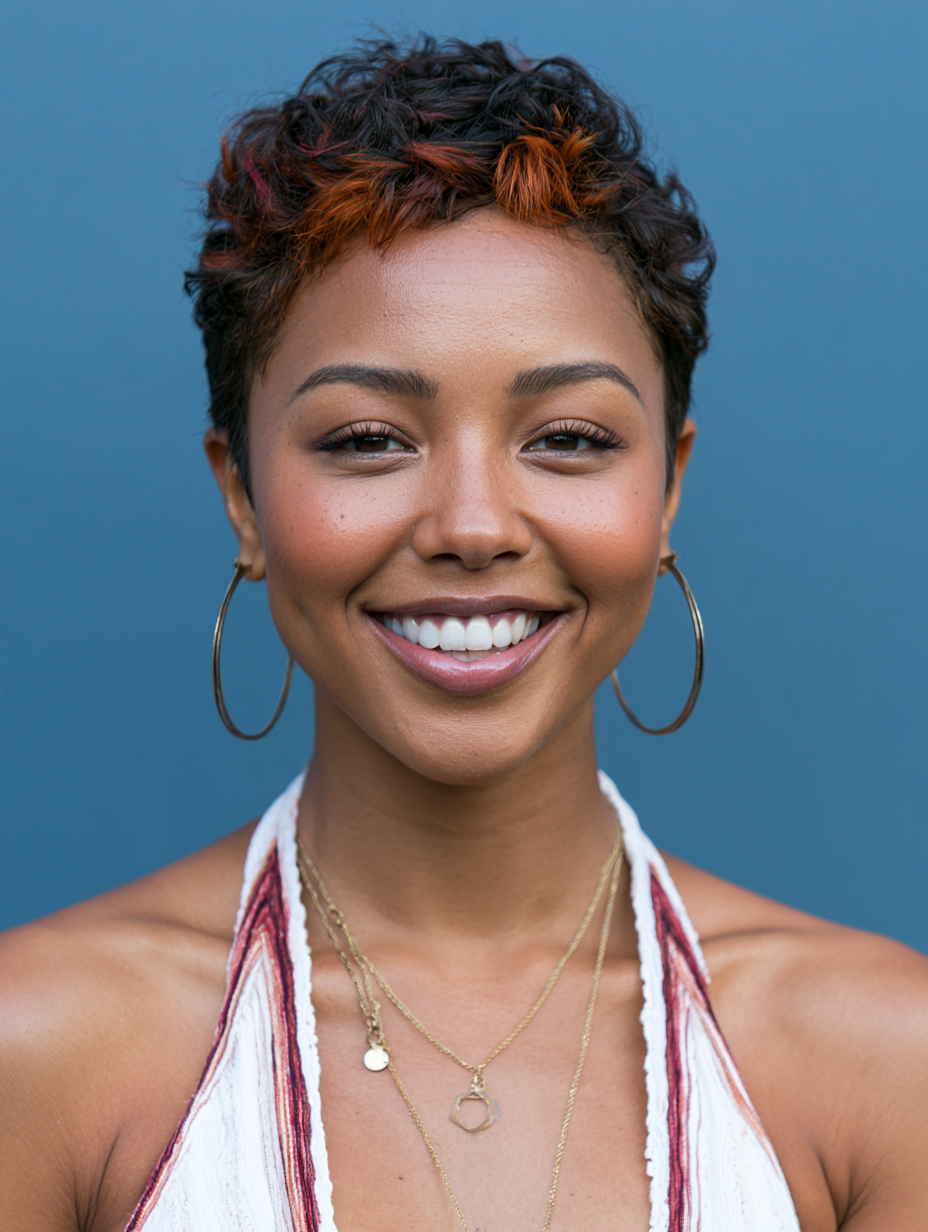
Color shows up at the very ends of the cut, dipped rather than balayage'd.
Burgundy, copper, or honey tips on dark hair create movement without committing to full color.
Best executed on a textured pixie where the ends curl or flick outward, since the color catches the eye when the strands move.
Semi-permanent dyes work well here because the ends are the most fragile section. Refresh every several weeks. The look reads playful and grown at the same time.
Layered Pixie with Wispy Fringe
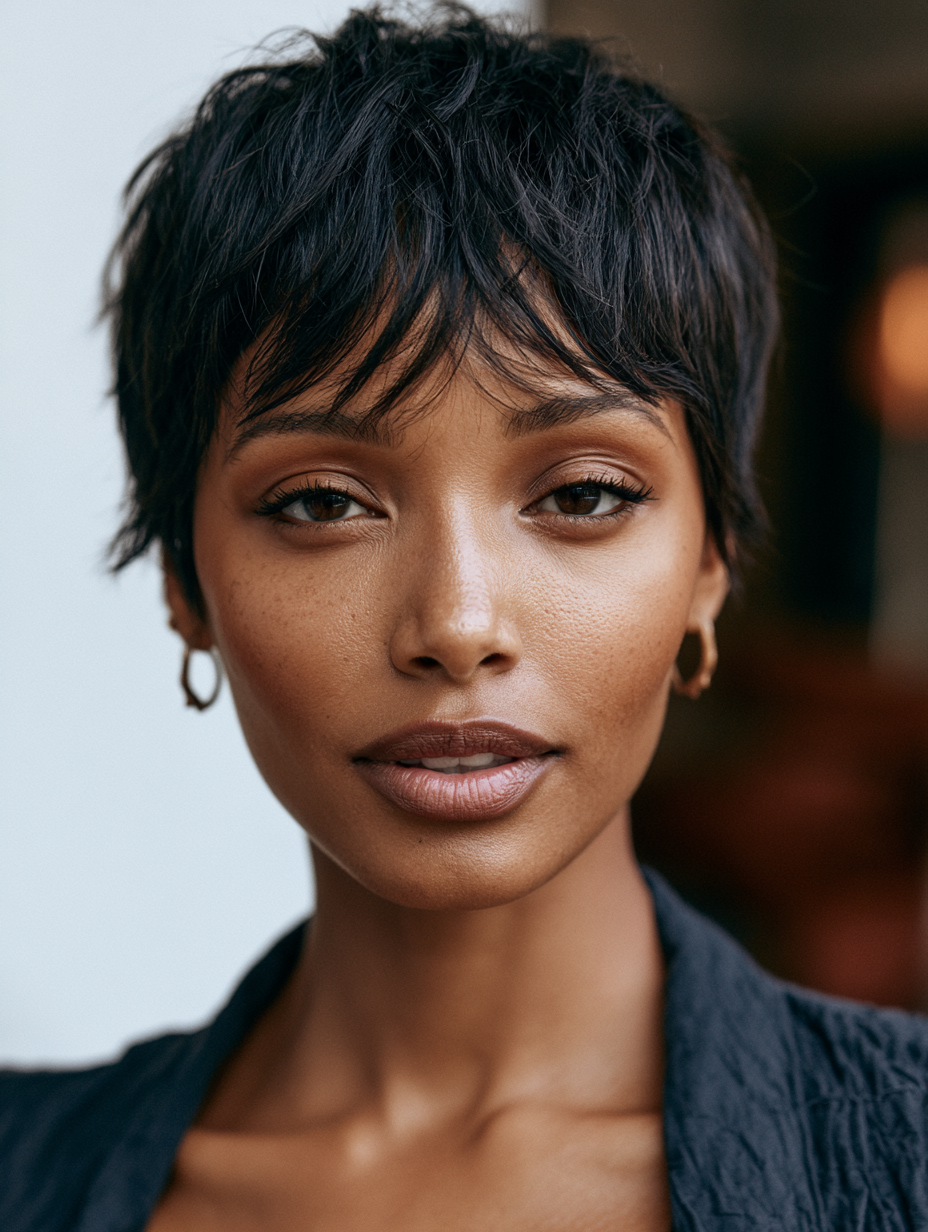
Choppy layers throughout with a soft, wispy fringe that falls just past the brows.
The layers add movement, the fringe softens the forehead. This cut suits straighter textured hair, silk presses, or wigs where the wisps can fall naturally without curling up.
Use a small amount of light cream or serum on the ends to keep them from looking dry.
The fringe needs a trim every few weeks to stay at the right length. Best for oval and heart-shaped faces.