Thick hair and pixie cuts have a complicated relationship. Density that looks lush at shoulder length can turn into a helmet at pixie length if the cut doesn't remove enough internal weight. The visible shape is only half the work, the other half happens with thinning shears, point-cutting, and slide-cutting underneath the surface. A stylist who skips that step gives you a pixie that puffs out instead of laying right.
The cuts below all account for density. Some lean into the volume, others tame it through layering or tapering. All work at true pixie length, roughly one to four inches, across straight, wavy, curly, and coily textures.
22 Short Pixie Haircuts for Thick Hair
Heavily Layered Pixie
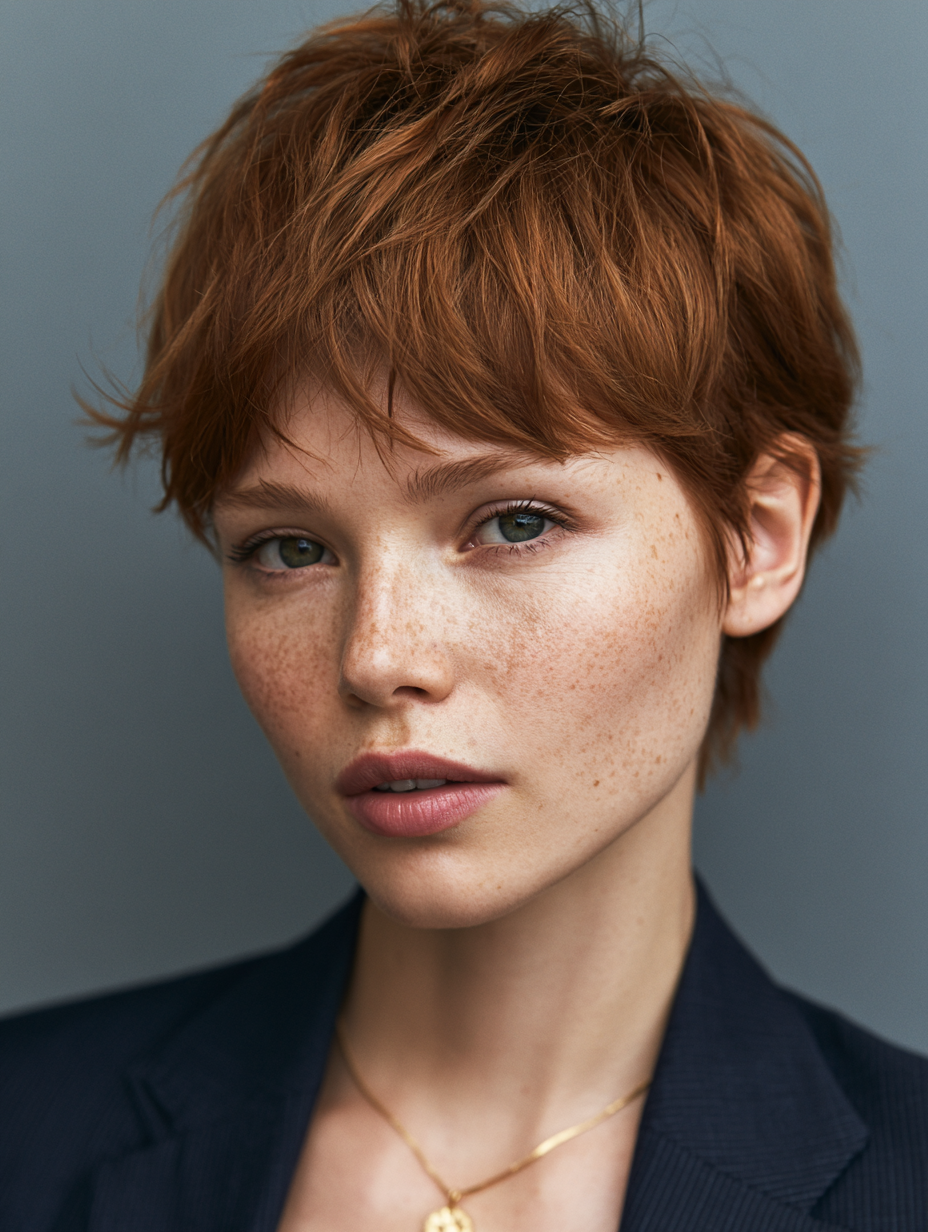
Layers throughout the cut remove internal weight without changing the silhouette.
Ask for layers cut with point-cutting rather than blunt scissor work, since blunt edges on thick hair create visible steps.
The finished cut moves and shifts rather than sitting in one solid mass. This works across most textures, especially straight and wavy thick hair.
A light styling cream finishes the look without weighing the layers back down. The shape grows out gracefully without needing constant reshaping.
Tapered Pixie with Volume on Top
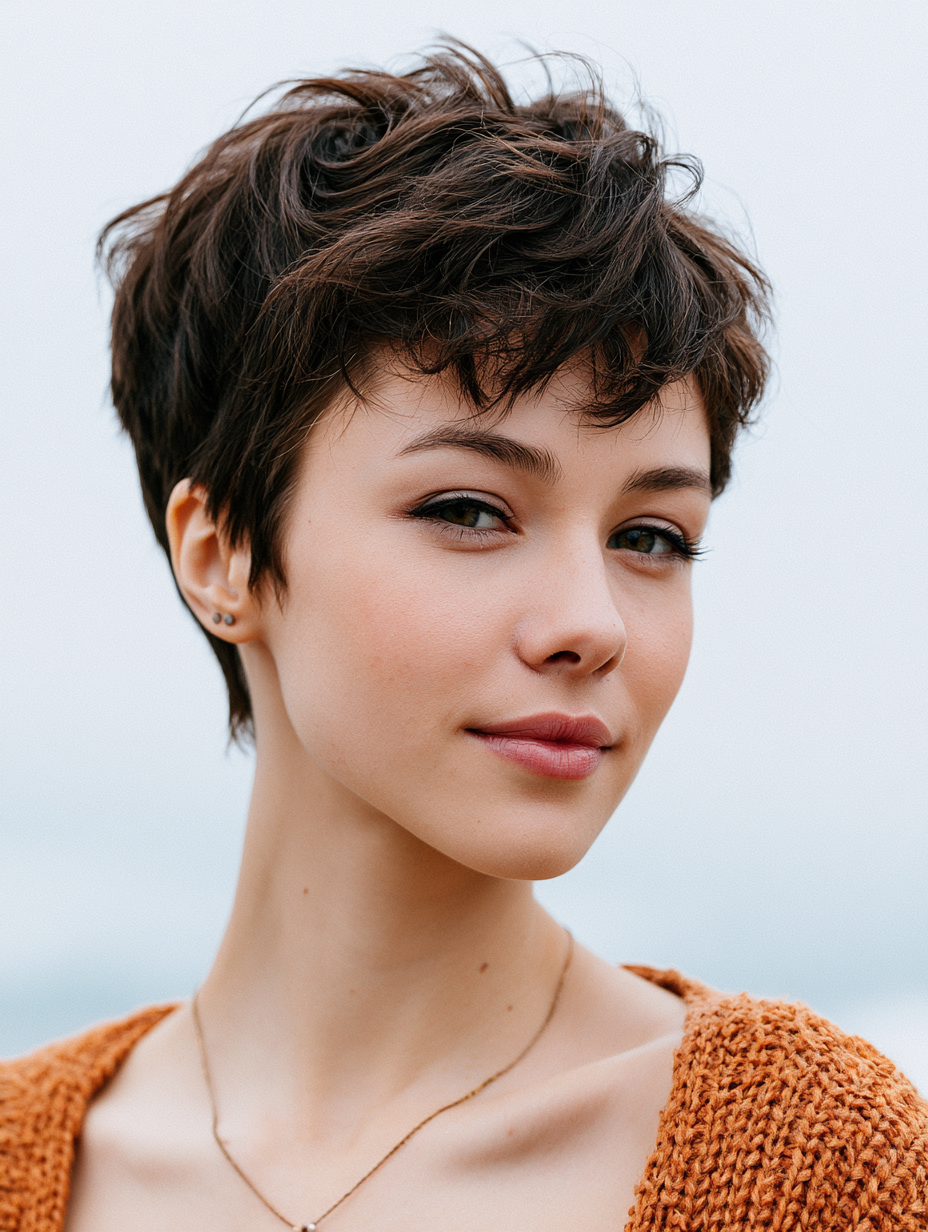
The sides and back taper close to remove bulk where thick hair sits heaviest.
Length stays on top, usually two to three inches, giving you height and movement. This silhouette suits round and square faces because the volume on top elongates the proportions.
Ask for the taper to start higher on the sides than a standard pixie, since thick hair needs more removed to avoid the helmet effect.
The cut looks structured without looking severe.
Choppy Pixie
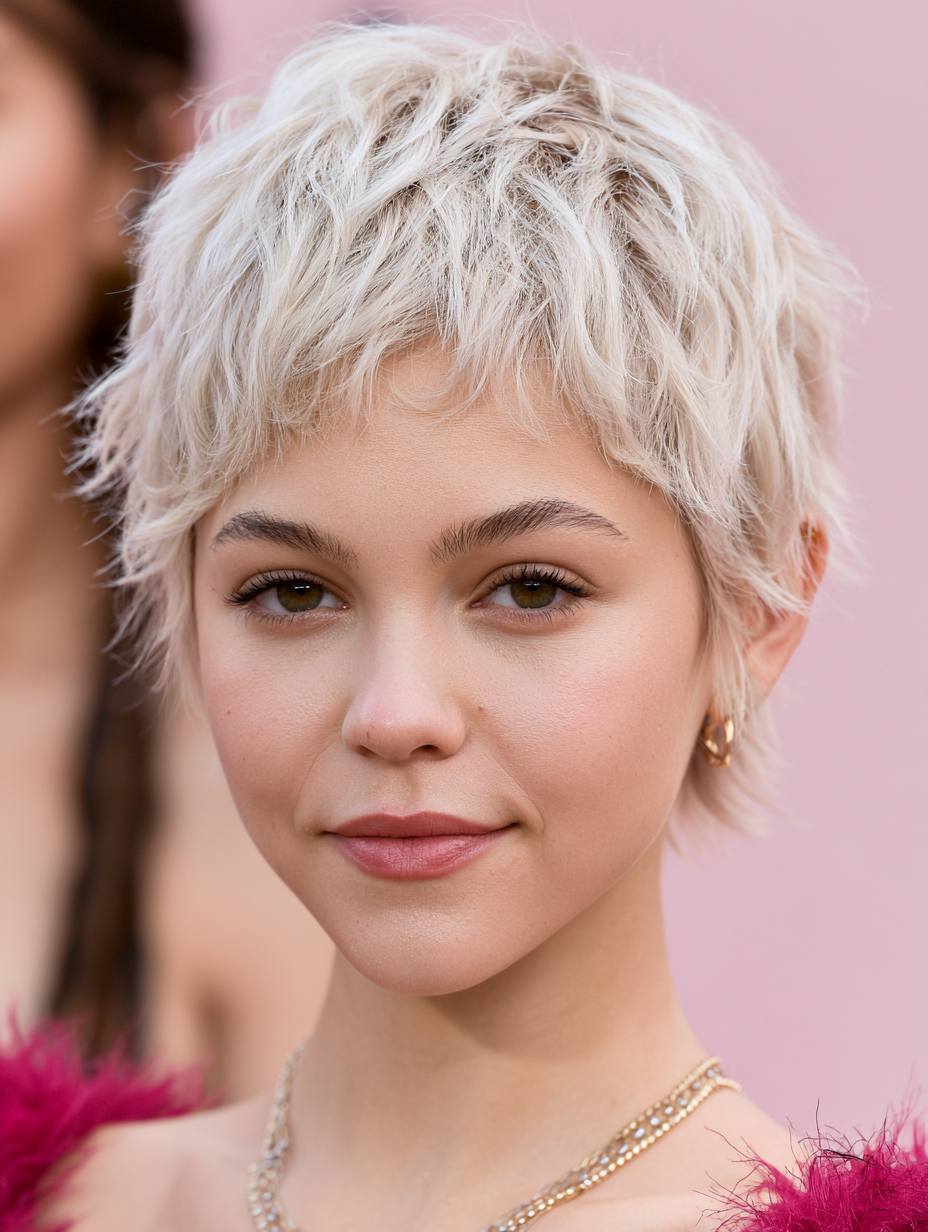
Choppy refers to the cutting technique, not a separate style.
Stylists use point-cutting and slide-cutting throughout to create irregular ends that break up the density. The finished cut looks lived-in rather than precise.
This works especially well on thick straight or wavy hair where blunt lines emphasize bulk. Apply a small amount of texture spray or light pomade with your fingers to define the choppy ends.
Skip this cut if you want a sleek, polished finish, since the texture is the whole point.
Undercut Pixie
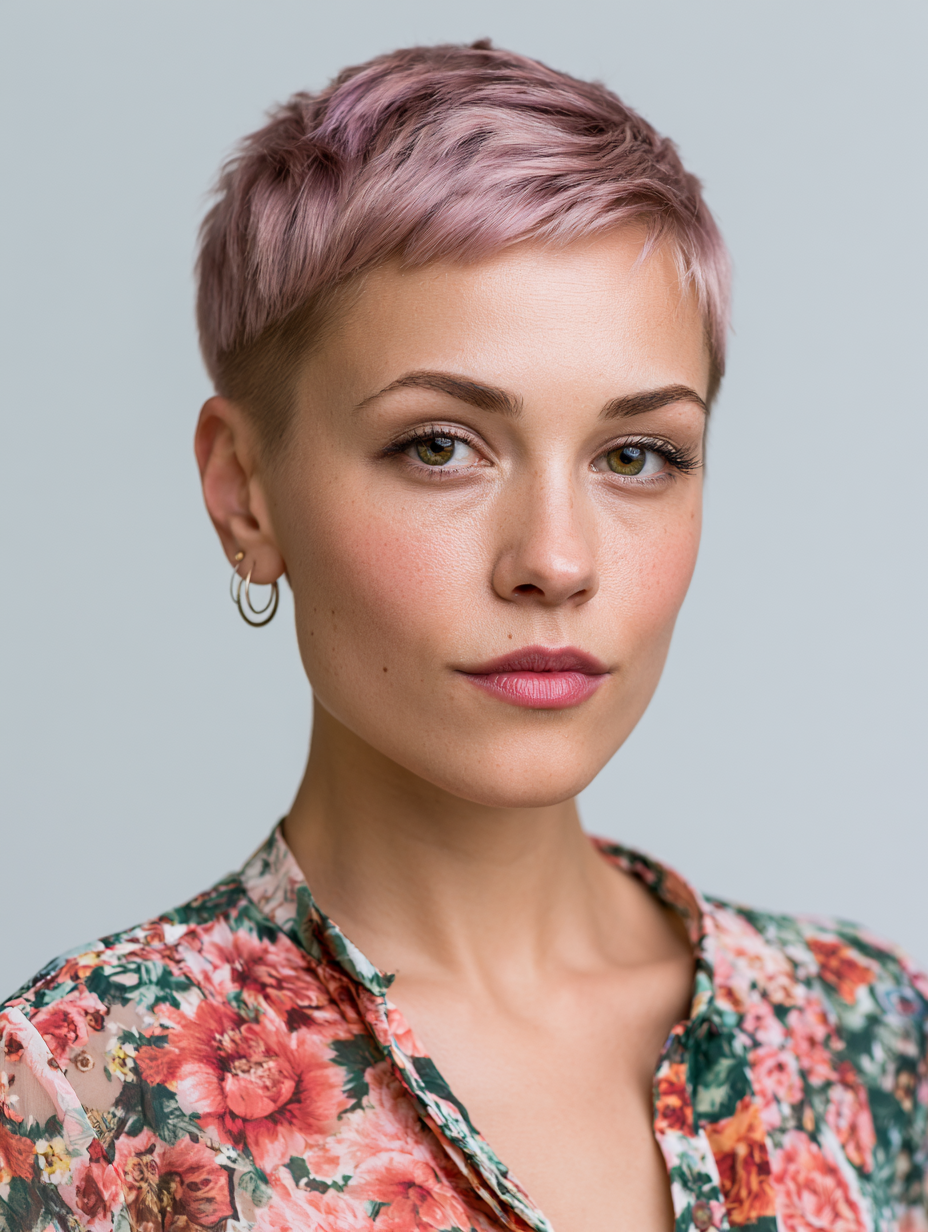
A section underneath the surface gets cut significantly shorter or shaved, hidden by the longer top layer.
This removes density without changing how the cut looks from the front.
Thick hair benefits more than any other texture from an undercut, since the hidden section eliminates bulk you can feel but not see. Ask for the undercut to extend behind the ears or across the nape.
The longer top section falls more naturally over the shortened underneath, lying flat instead of pushing outward.
Long Pixie with Internal Layers
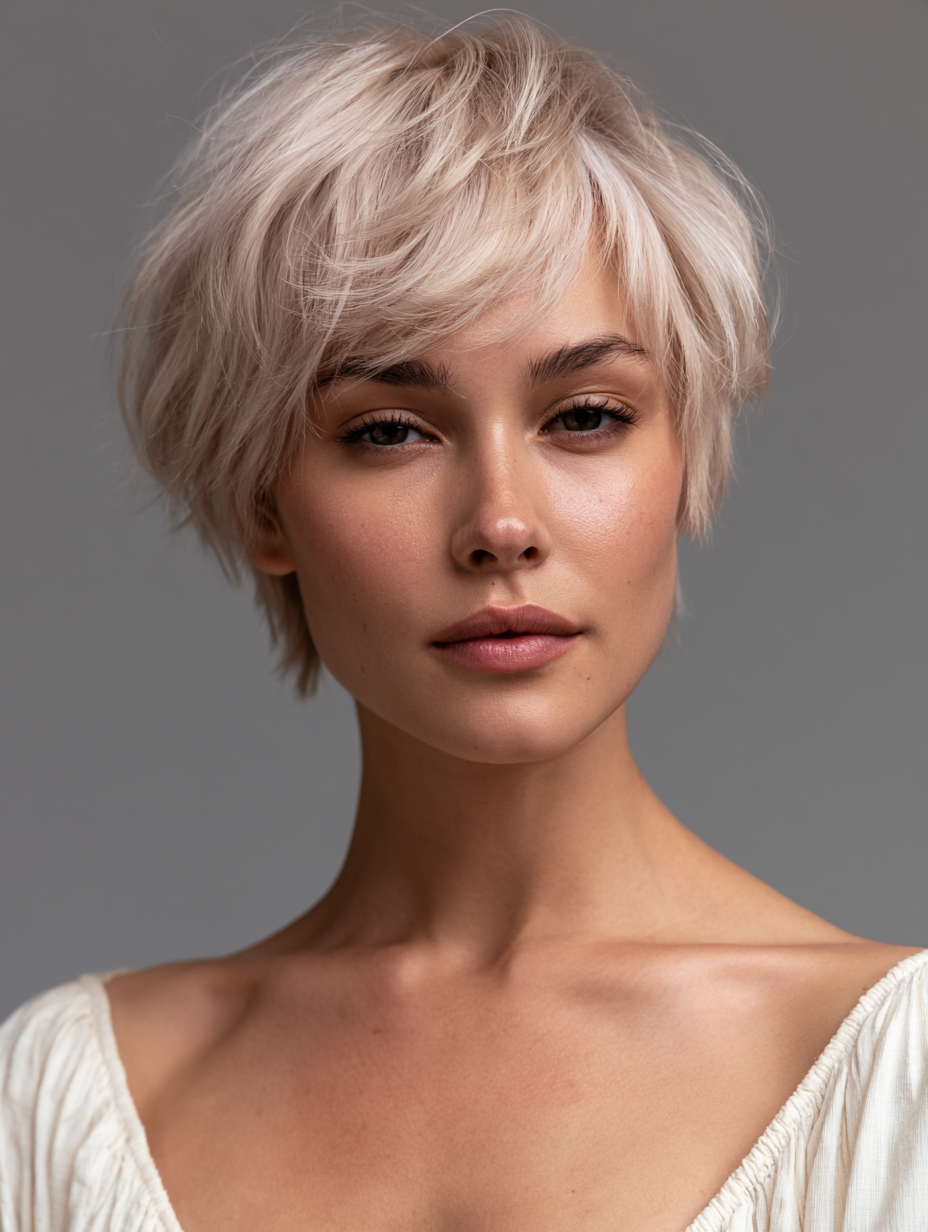
The longer pixie interpretation, around four inches throughout, with heavy internal layering.
The visible length stays consistent while the layers underneath remove weight. This suits thick hair that the wearer doesn't want cut too short.
The shape transitions easily to a bob during growth-out phases. Use a leave-in cream and a light serum to finish the ends.
A blow-dry with a round brush gives the layers shape, while air-drying lets the natural texture come through.
Tapered Coily Pixie
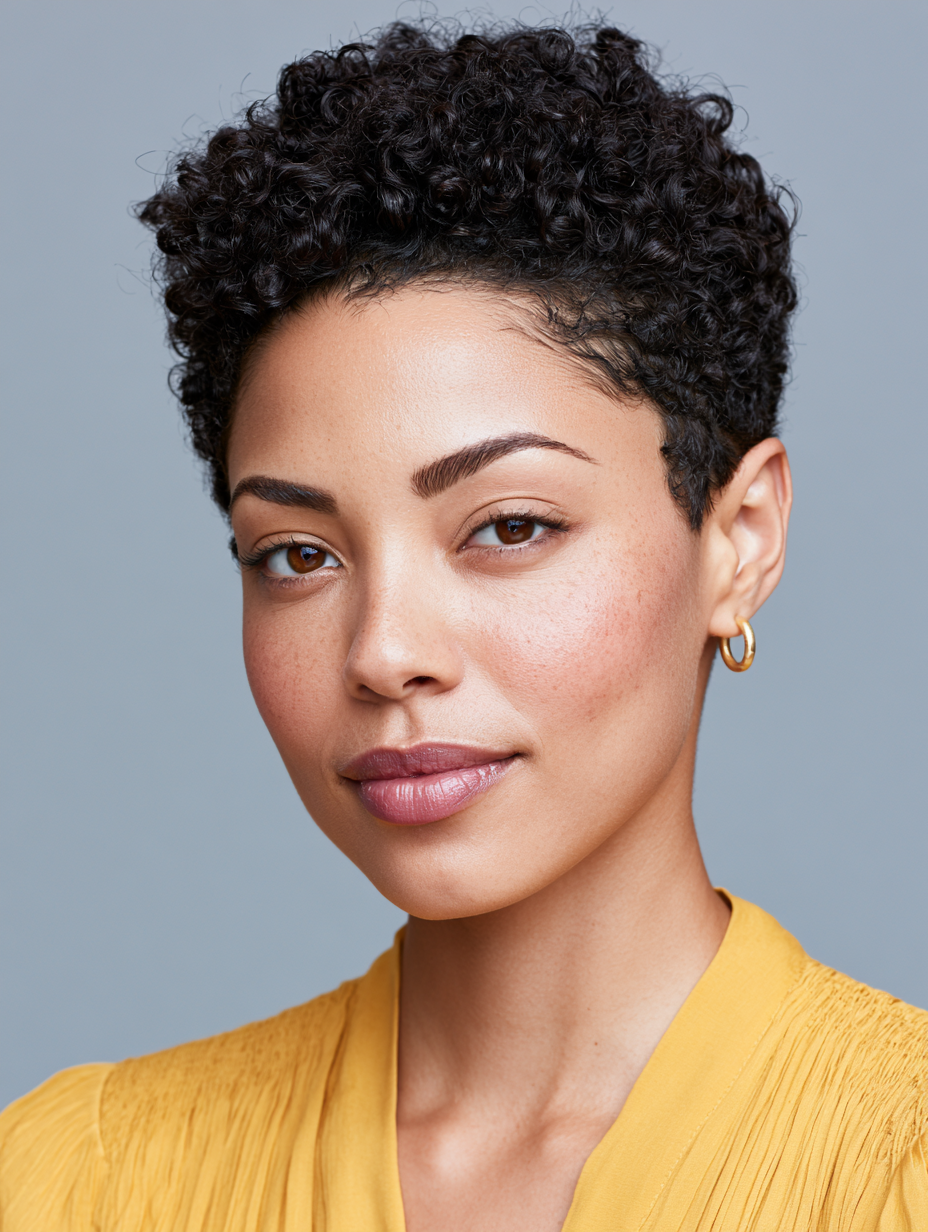
Coily thick hair packs density into a smaller visual footprint, so the cut needs to address bulk at the roots.
Ask for a low taper that fades from short sides into coiled length on top. The taper handles the dense root area while the top stays full enough for curl definition.
Apply a curl cream or custard on damp hair and let it air-dry.
The shape sharpens features and grows out without losing its structure between salon visits.
Asymmetrical Pixie
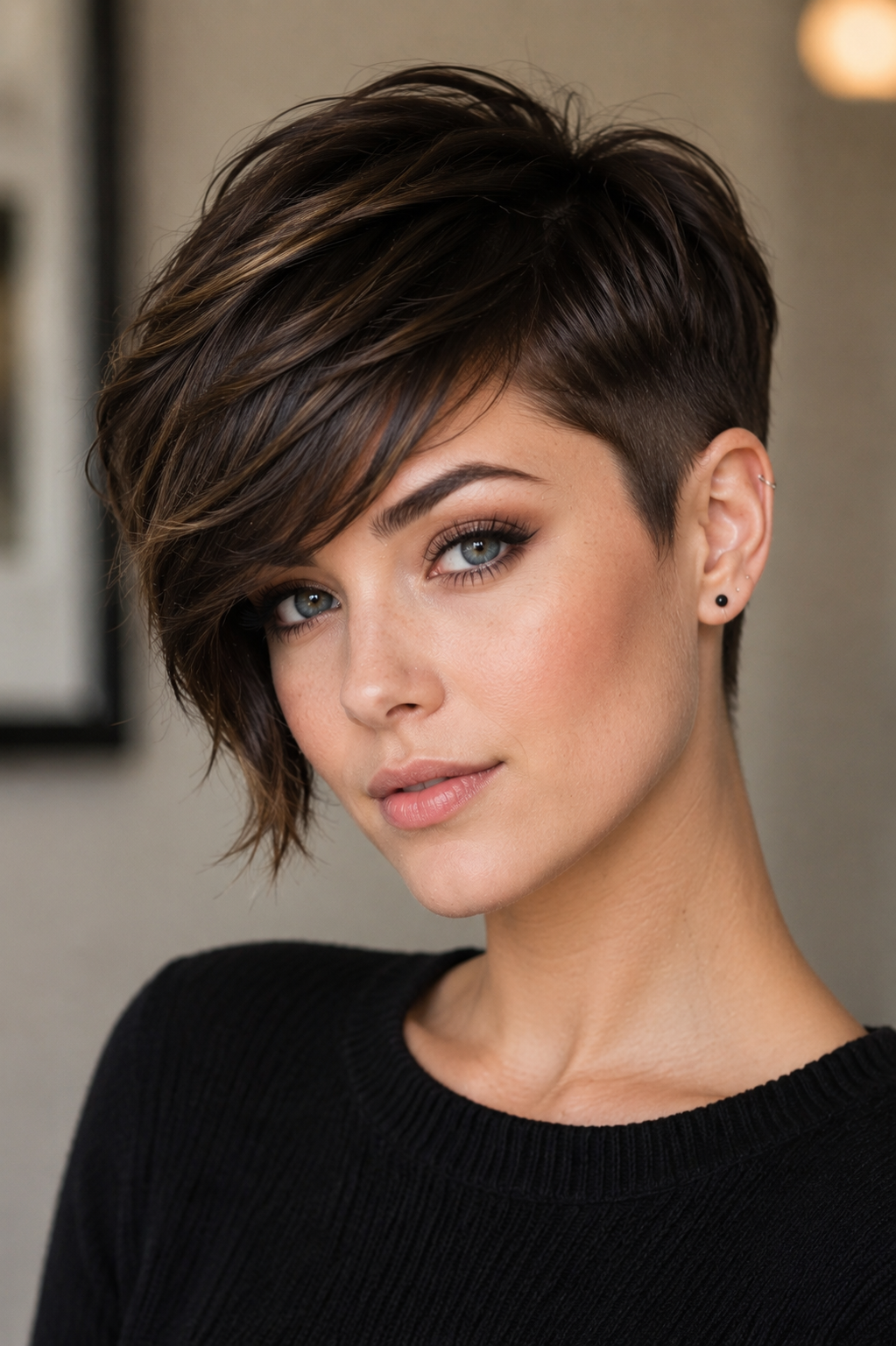
One side stays cropped close, the other falls longer in a diagonal line.
The asymmetry breaks up the visual density of thick hair and draws the eye across the face. Stylists usually layer the longer side to keep it from sitting heavy.
This works across textures but suits thick straight and wavy hair best, since the longer side falls cleanly without curling up.
Avoid this cut if you pull your hair back often, since the imbalance gets awkward.
Pixie with Side-Swept Bangs
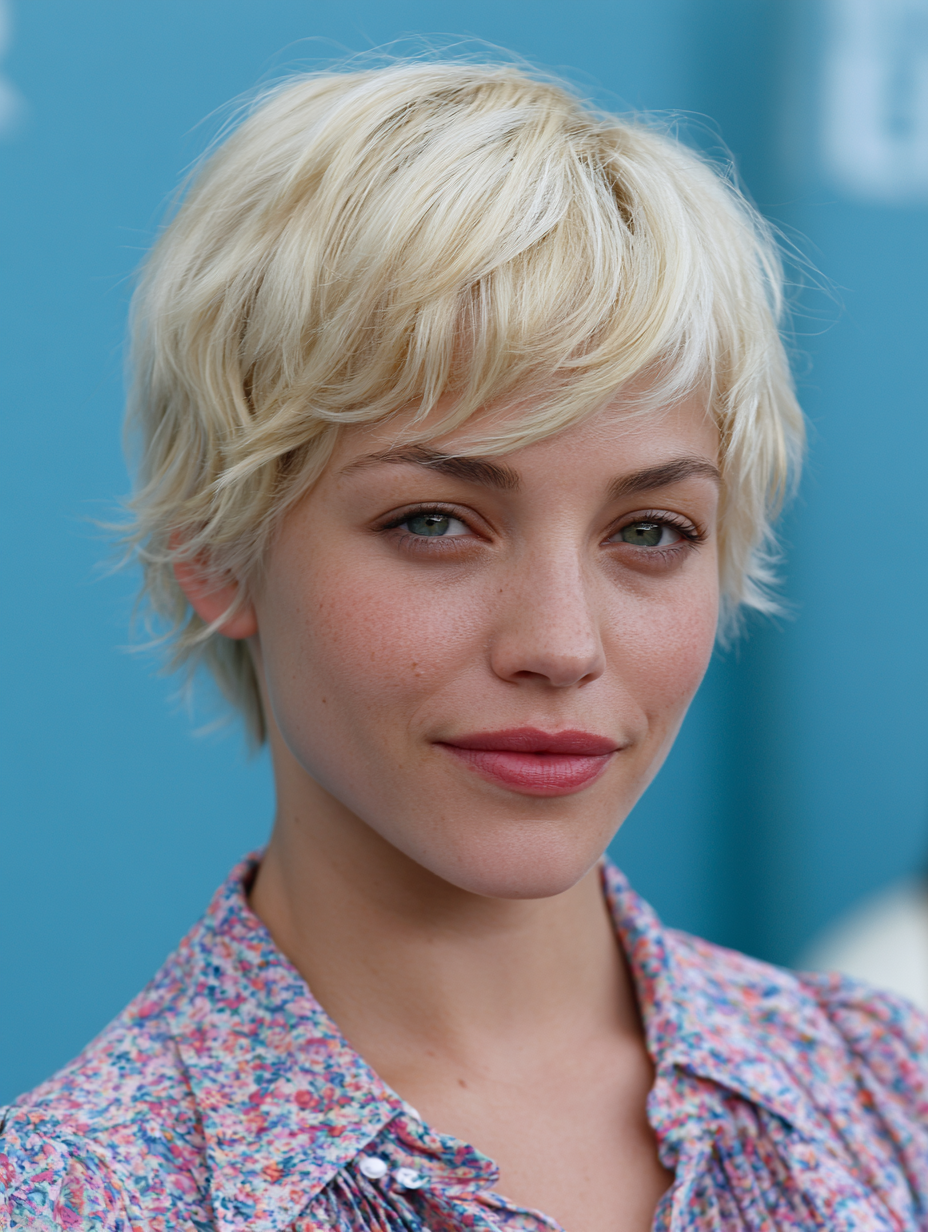
The bangs sit longer than typical, sweeping diagonally across the forehead.
Thick hair gives the bangs enough body to hold their shape without thin or stringy patches.
Ask your stylist to thin out the bangs from underneath so they lay flat rather than sticking out. The rest of the cut stays short and layered.
This style suits longer face shapes because the diagonal sweep adds width across the forehead. Trim the bangs every few weeks to keep the line clean.
Pixie with Curtain Bangs
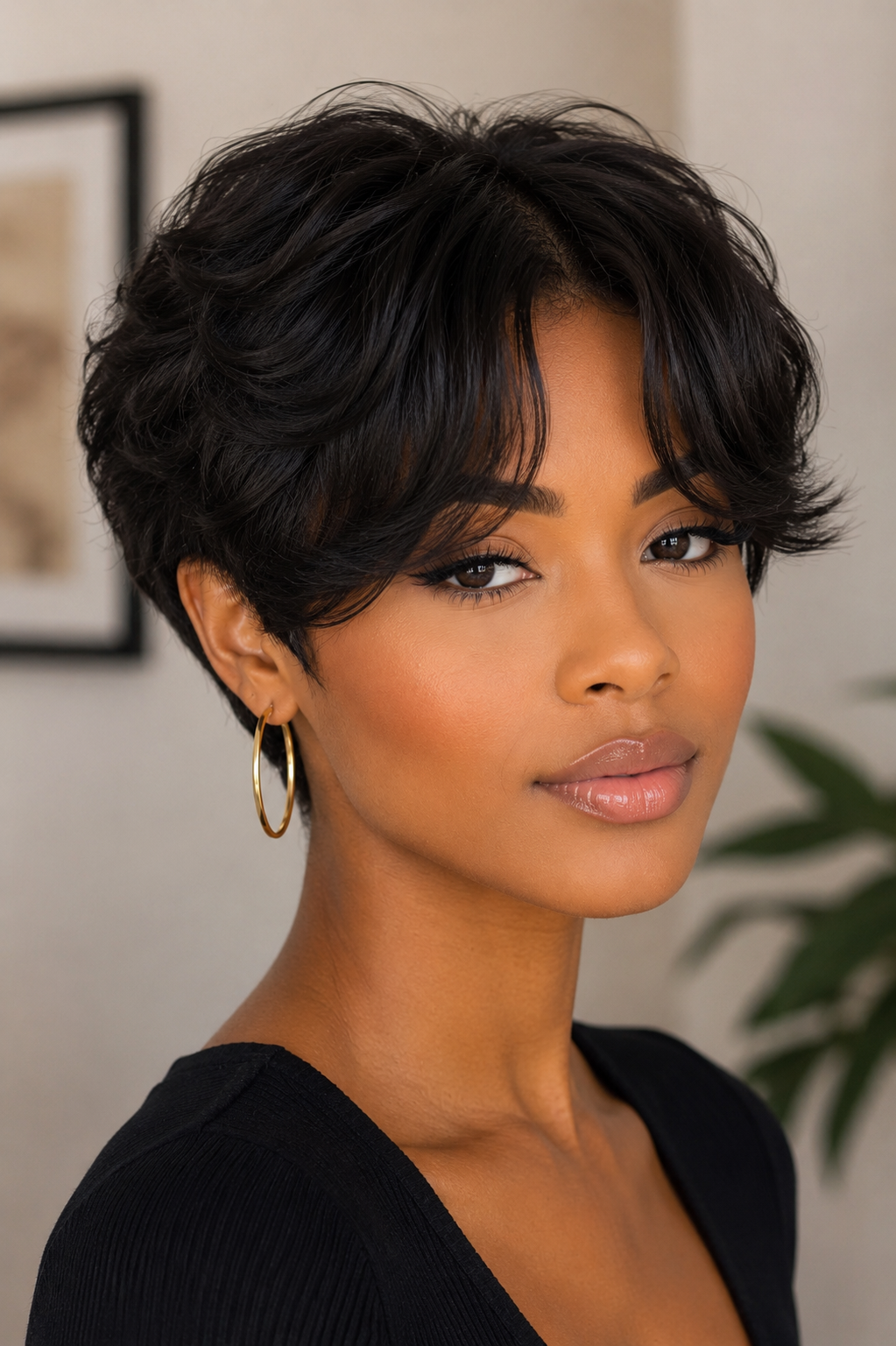
Curtain bangs frame the face on both sides, parted in the middle.
Thick hair gives curtain bangs the body and movement they need to look intentional rather than flat. The rest of the cut stays short and textured.
This shape suits oval and heart-shaped faces especially well. Style the bangs with a round brush and a quick blow-dry to set the curtain shape.
The look feels soft and feminine, balancing the boldness of a short cut.
Pixie Mohawk
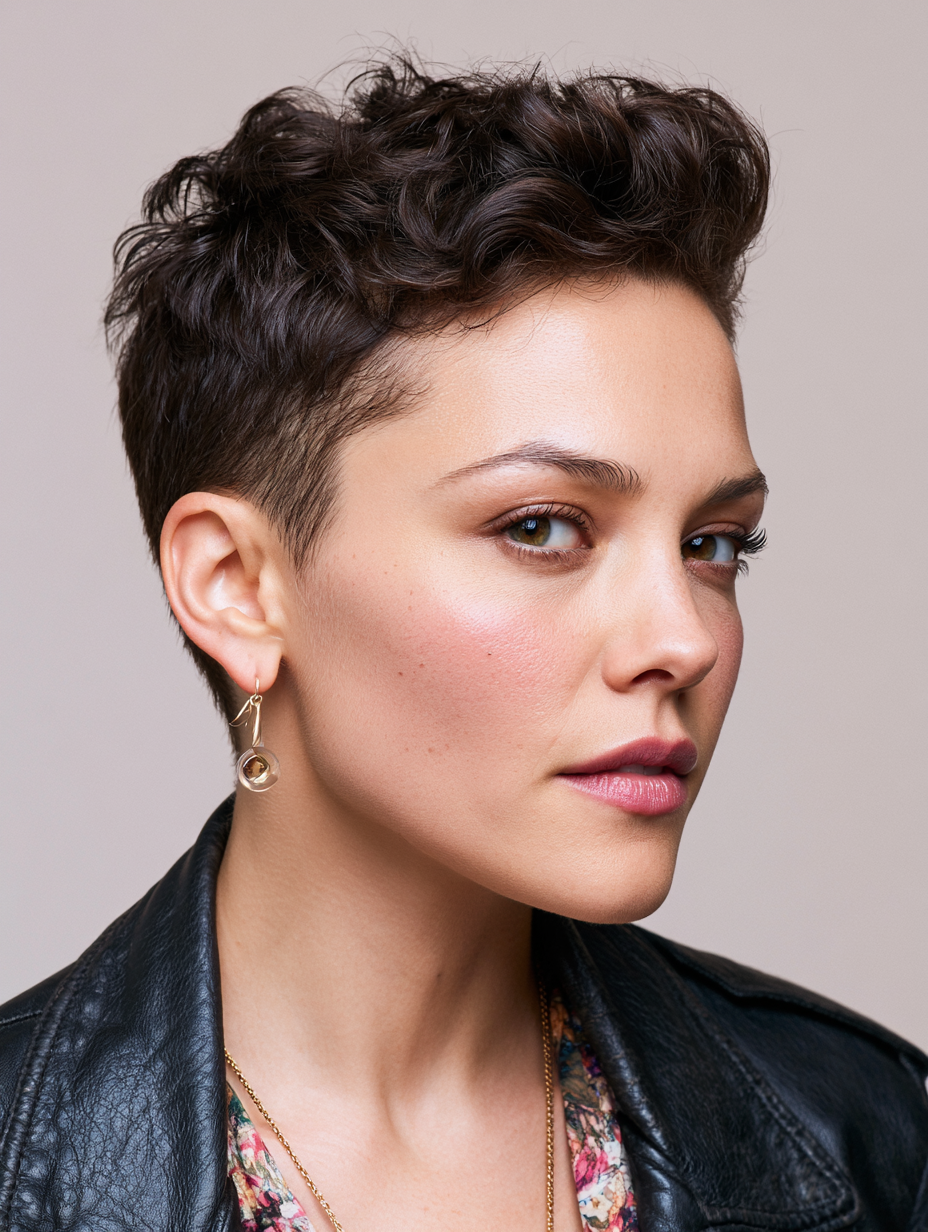
The sides taper or shave close while the top stays full from forehead to nape.
Thick hair holds the mohawk shape better than fine hair, since the density gives the top section natural height.
The width of the strip changes the feel, narrow leans punk, wider leans softer. Set the top with styling product to maintain shape through the day.
The cut grows out into a regular pixie within several weeks, so it's a lower-commitment way to try something dramatic.
Frohawk Pixie
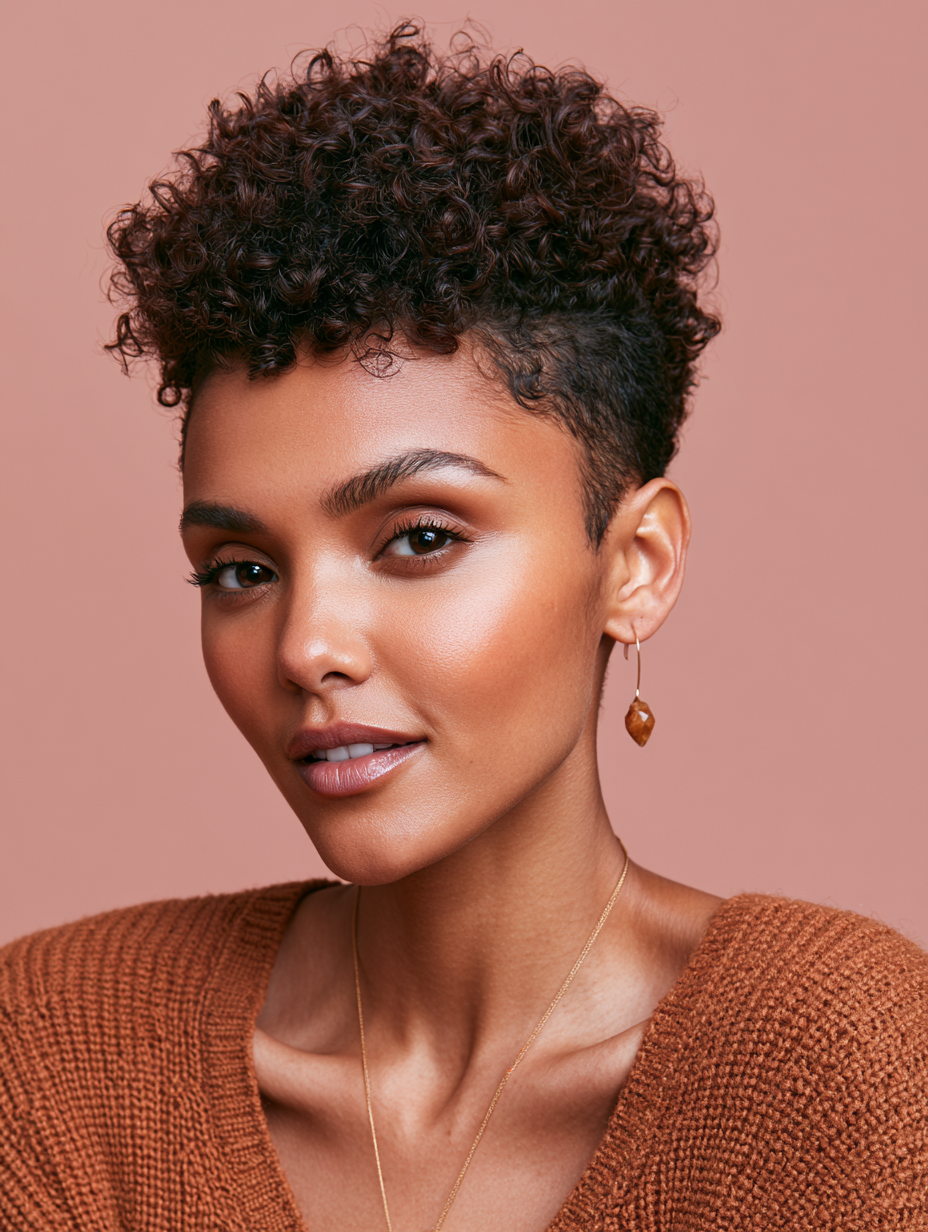
The sides taper close while the top stays full and brushed upward into a soft mohawk shape.
Different from the shaved mohawk, this version keeps everything attached and creates height through styling.
Thick coily and curly hair holds frohawk shape naturally, while straighter textures need product help. Use a denman brush to lift the top section, then pick out volume with an afro pick.
The shape elongates round faces and adds presence without looking too edgy.
Pixie with Shaved Designs

Razor-cut designs on the shaved sides or back turn a basic pixie into something distinctive.
Geometric lines, a single shaved part, or a wave pattern work across textures.
Thick hair gives the contrast more impact, since the dense top section sits next to the precision of the shaved design. Maintenance runs every couple of weeks at the barber chair to keep the designs sharp.
Pair with statement earrings to draw attention to the shaved area.
Pixie with Disconnected Layers
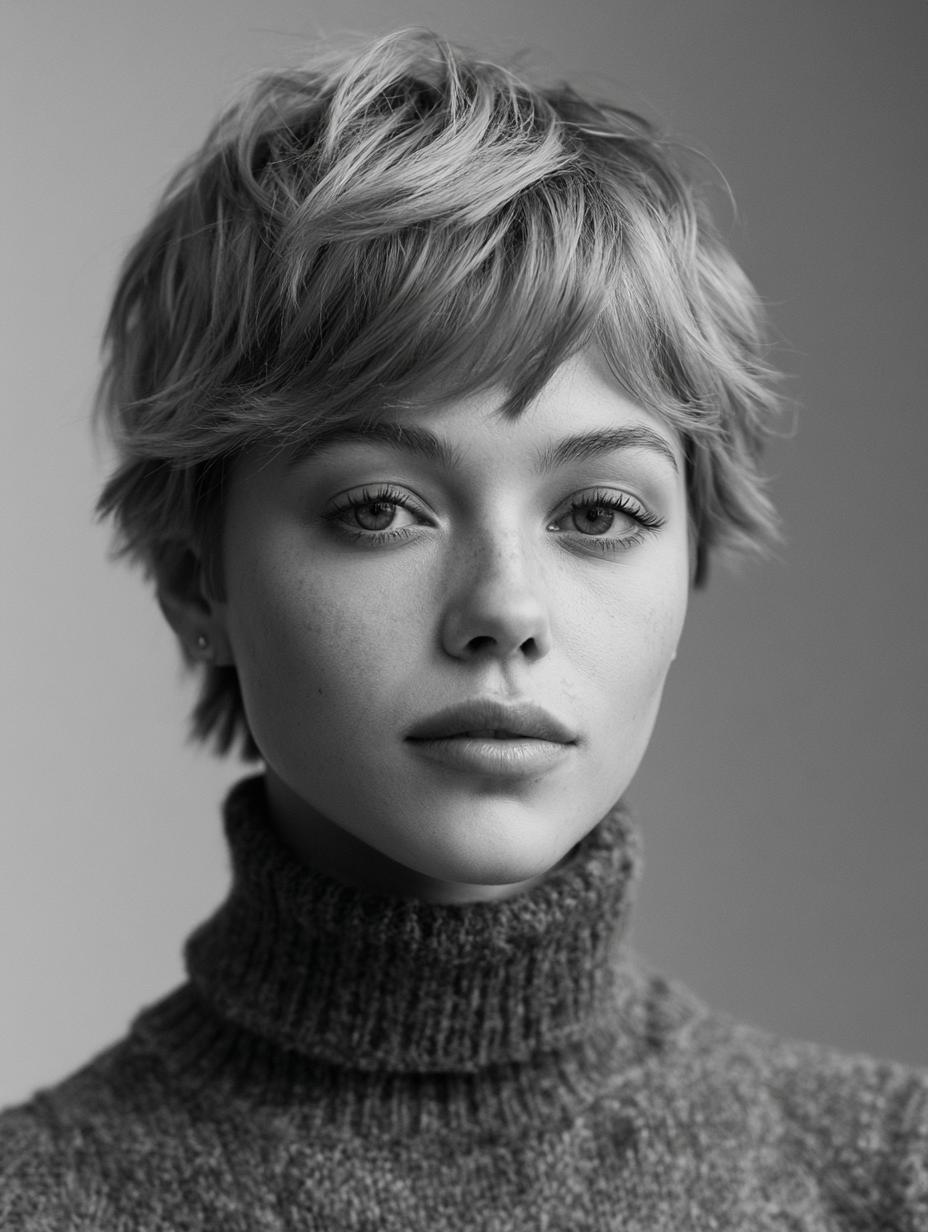
Different from standard layering, disconnected layers have visible length differences rather than blended transitions.
The top stays significantly longer than the sides, with a clear break between sections. This removes density dramatically while keeping a defined shape.
The cut works best on straight or wavy thick hair where the disconnection looks architectural rather than messy.
Style with a small amount of pomade to define the separation between layers. The look feels modern and editorial.
Slicked-Back Pixie
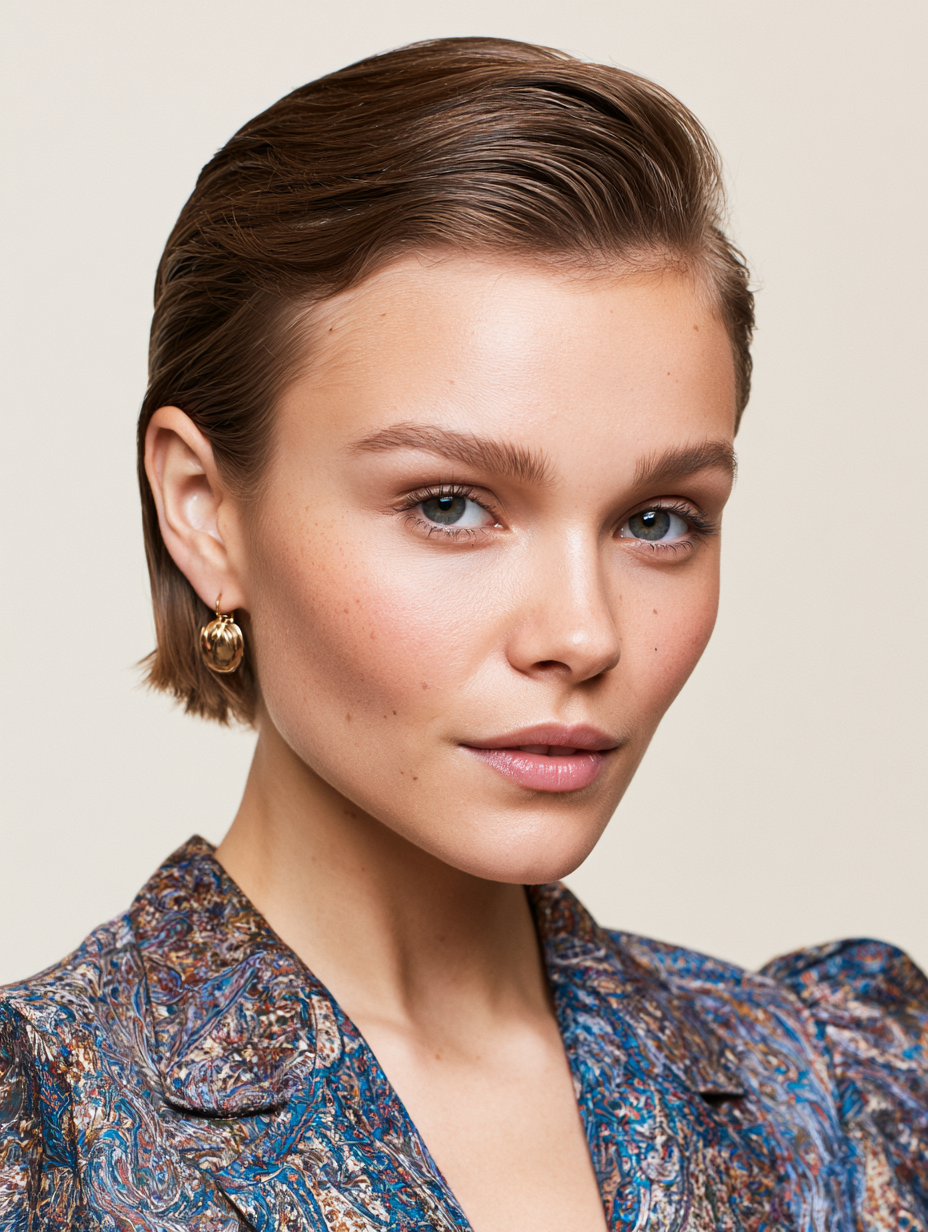
A medium-hold gel or styling wax smoothed back over thick hair creates a sleek finish.
Thick hair holds the slicked shape longer than fine hair, since the density anchors the product. The cut stays around three to four inches long throughout.
This style works on straight or relaxed thick hair where the strands lie flat under product. The finished look comes across as polished in professional settings.
Apply product to damp hair, comb back, and let it air-dry or sit briefly under a hooded dryer.
Pixie with Volume at the Crown
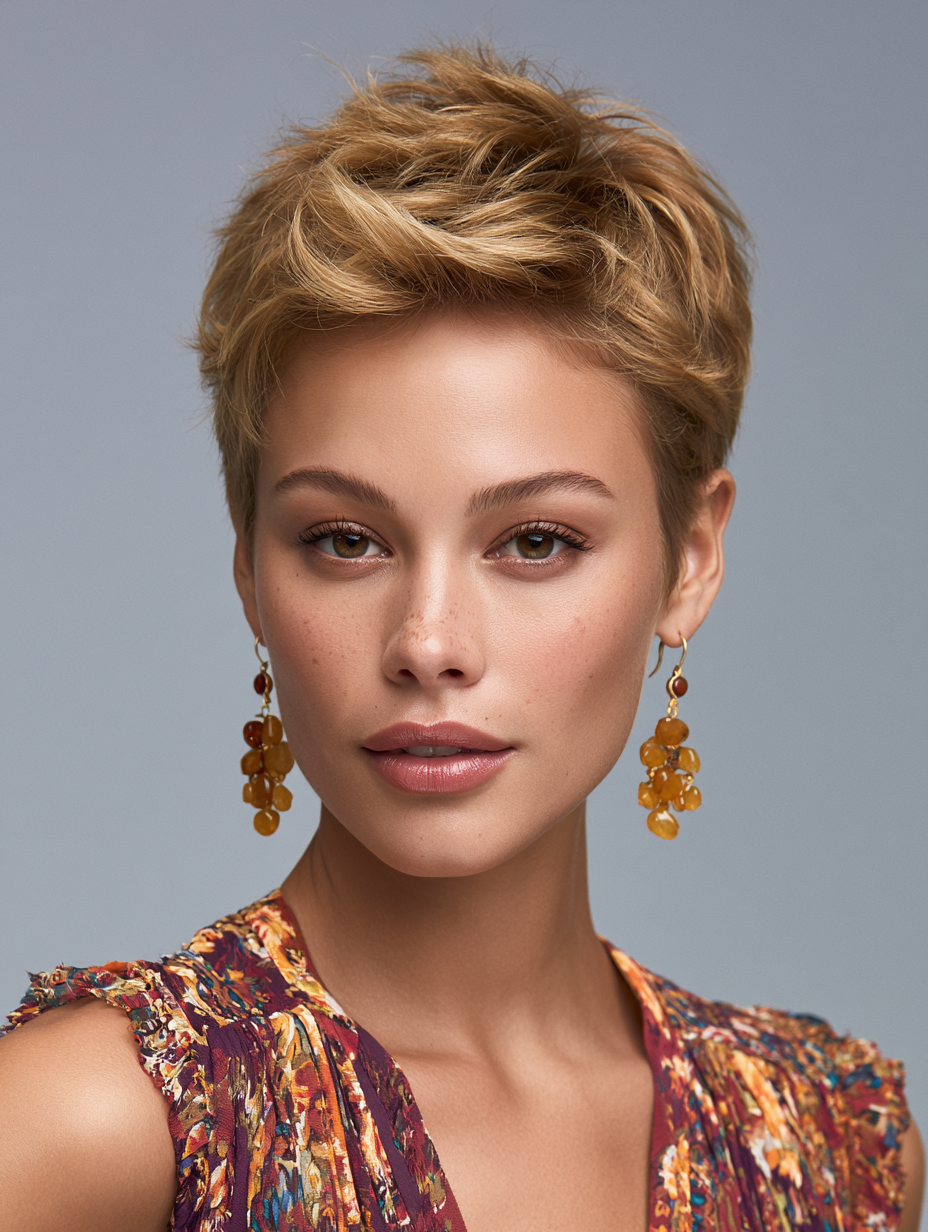
Different from the tapered pixie, this version concentrates length and styling at the crown for height.
Thick hair makes this easier to achieve, since the density supports the volume without collapsing. Ask your stylist to leave extra length at the crown specifically.
Use a volumizing mousse at the roots and lift the section with a round brush during blow-drying.
The added height balances strong jawlines and elongates round faces. The shape looks structured and intentional.
Honey Blonde Thick Pixie
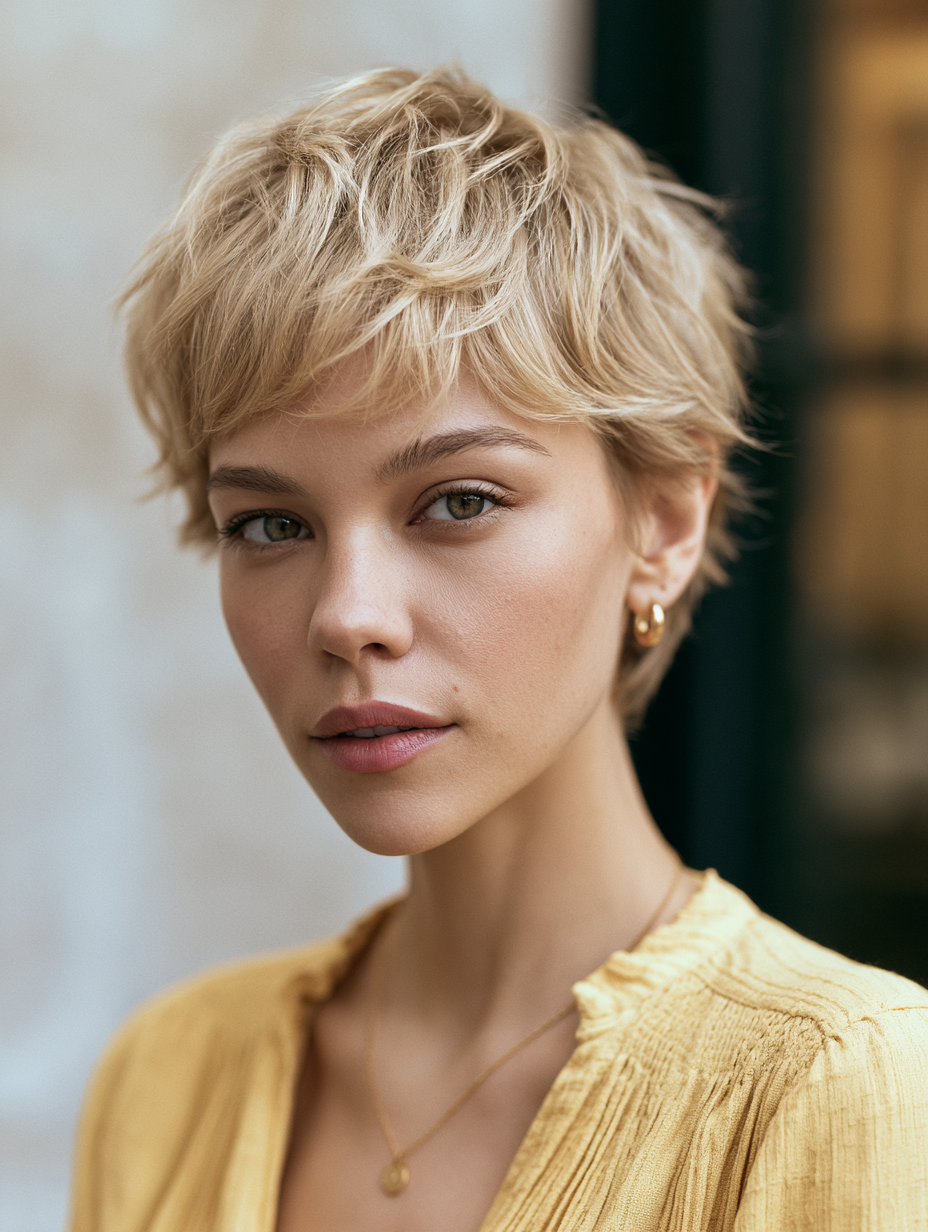
Color carries the visual weight on this version.
The cut stays a standard layered pixie while warm honey or caramel tones shift how your skin appears.
Bleaching thick hair takes longer than fine hair, since the strands are more resistant to color lift. Use bond-building treatments between sessions to protect the hair structure.
The warmth complements deeper skin tones and photographs especially well in natural light. Expect toner refreshes every several weeks to keep the tone from going brassy.
Burgundy Layered Pixie
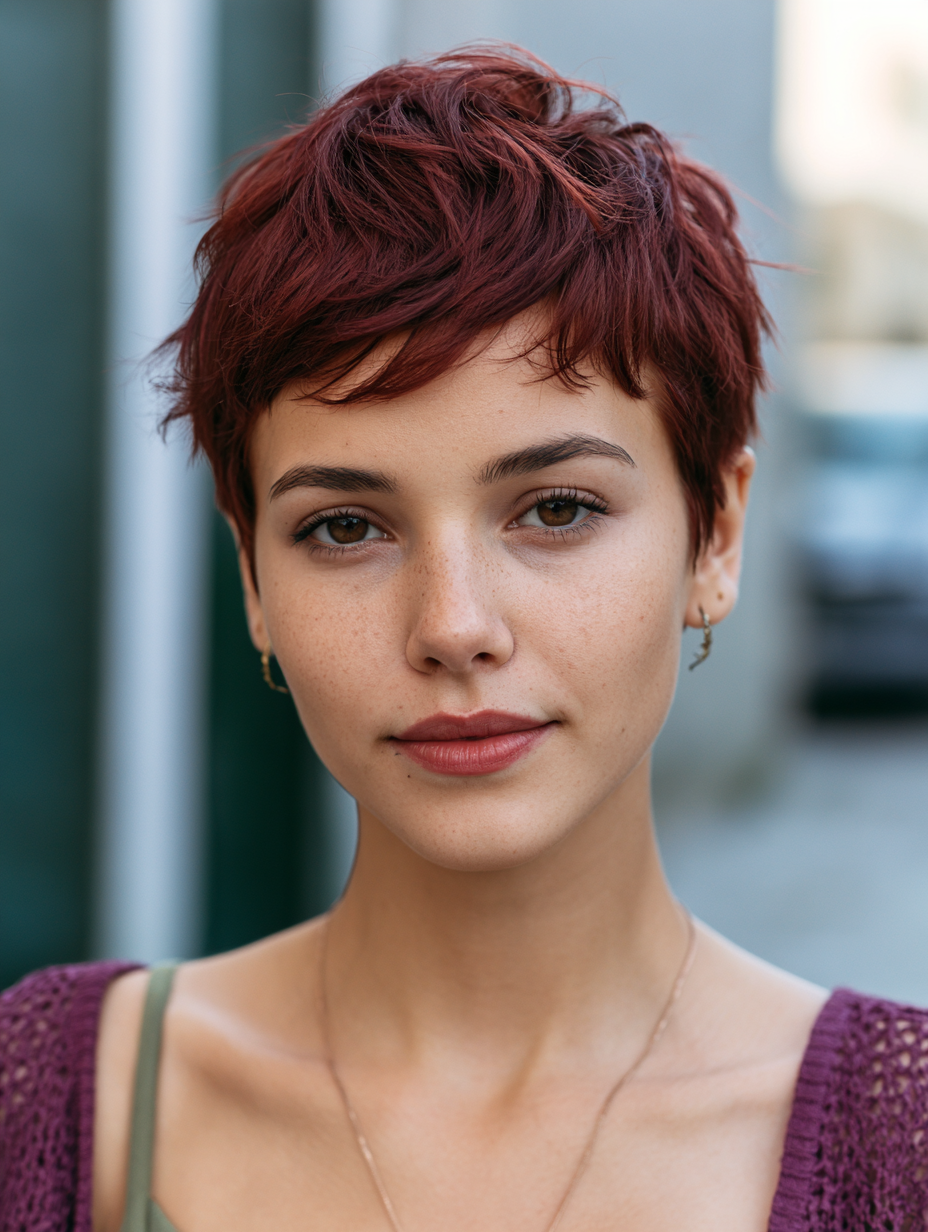
Burgundy fades gracefully without harsh roots and looks warm across skin tones.
The cut stays layered to manage density while the color adds depth. Semi-permanent dyes work especially well on thick hair, since the strands hold pigment longer than finer textures.
The depth of burgundy makes the layered cut more defined, since darker shades cast shadow between sections.
This shade suits a wide range of skin tones and feels bold without being loud. Refresh every few weeks.
Silver Gray Pixie
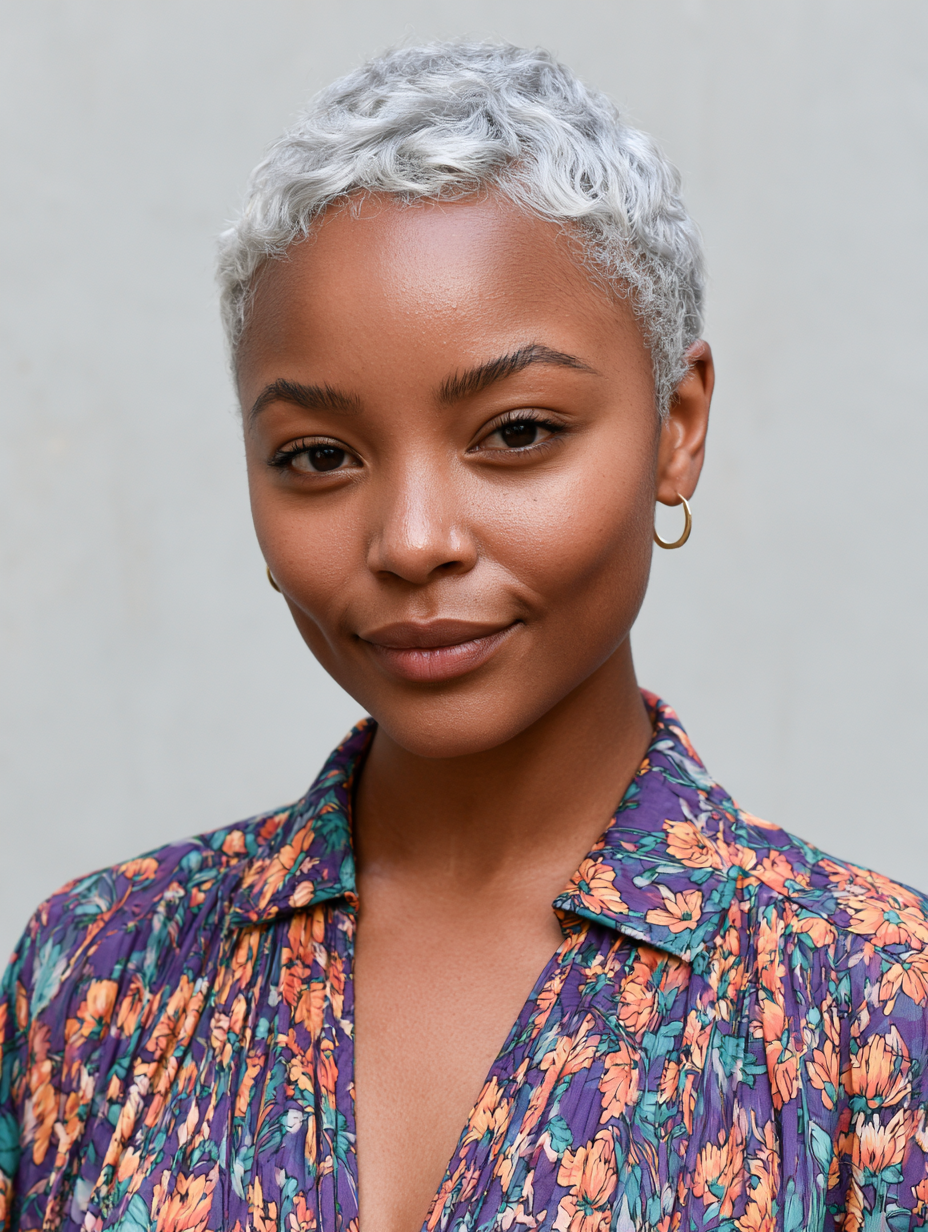
Silver against thick hair creates a striking contrast, especially on melanated skin.
The cut should stay simple so the color leads. Achieving true silver requires lifting hair to a pale yellow first, then toning with a violet-based gloss.
Thick hair takes longer to lift than fine hair, so expect multiple sessions. Use a purple shampoo weekly to keep the tone from pulling brassy.
The maintenance is real, both for color and hair health, but the finished look feels editorial and grown.
Pixie with Money-Piece Highlights
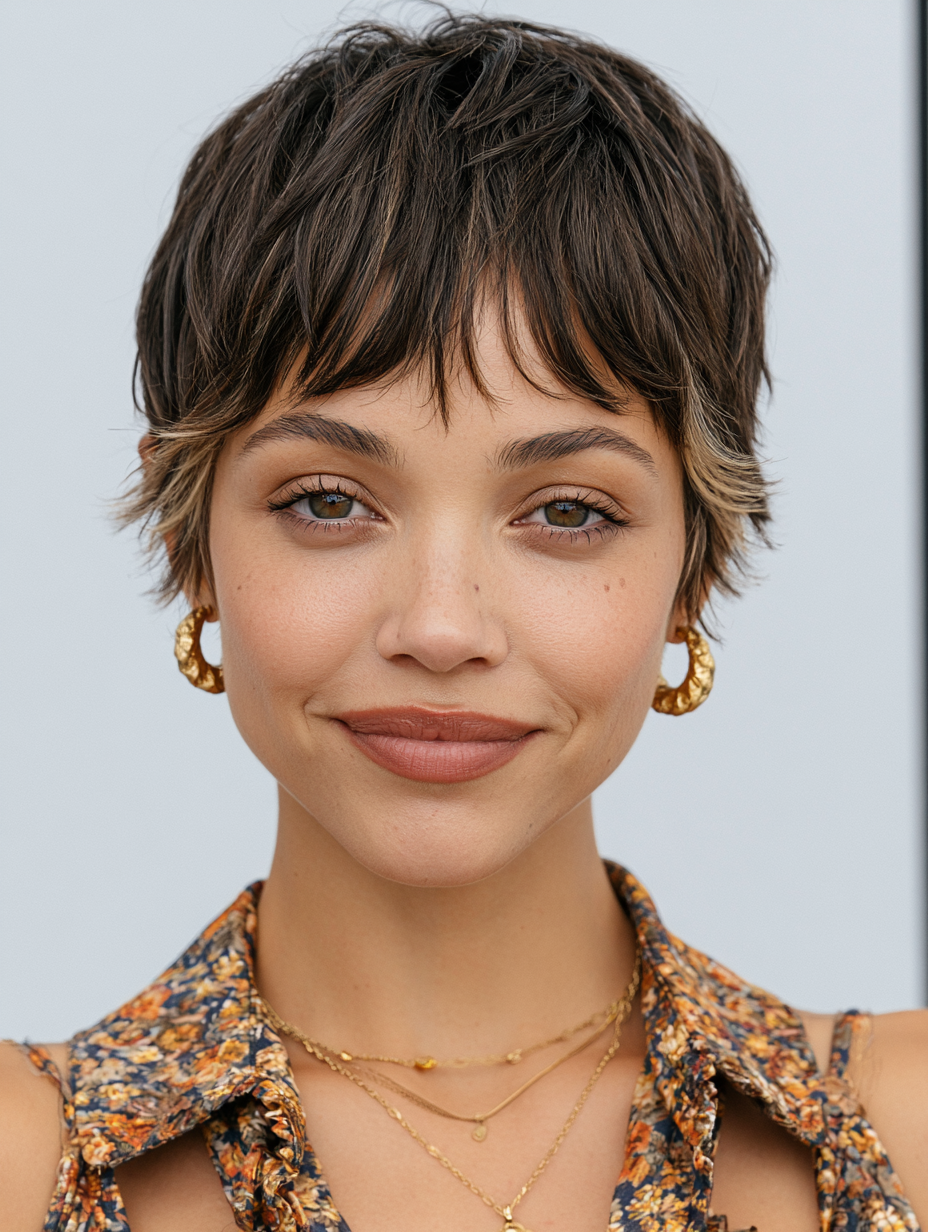
A money piece refers to lighter sections framing the face, brighter than the base color.
On thick hair, the money piece breaks up density around the cheekbones and adds dimension. The rest of the cut stays a standard layered pixie.
This style suits women who want color without committing to full highlights.
The money piece grows out without harsh lines, since the framing is intentional rather than blended throughout. Pair with a deeper base color for stronger contrast.
Pixie with Curly Top and Buzzed Sides
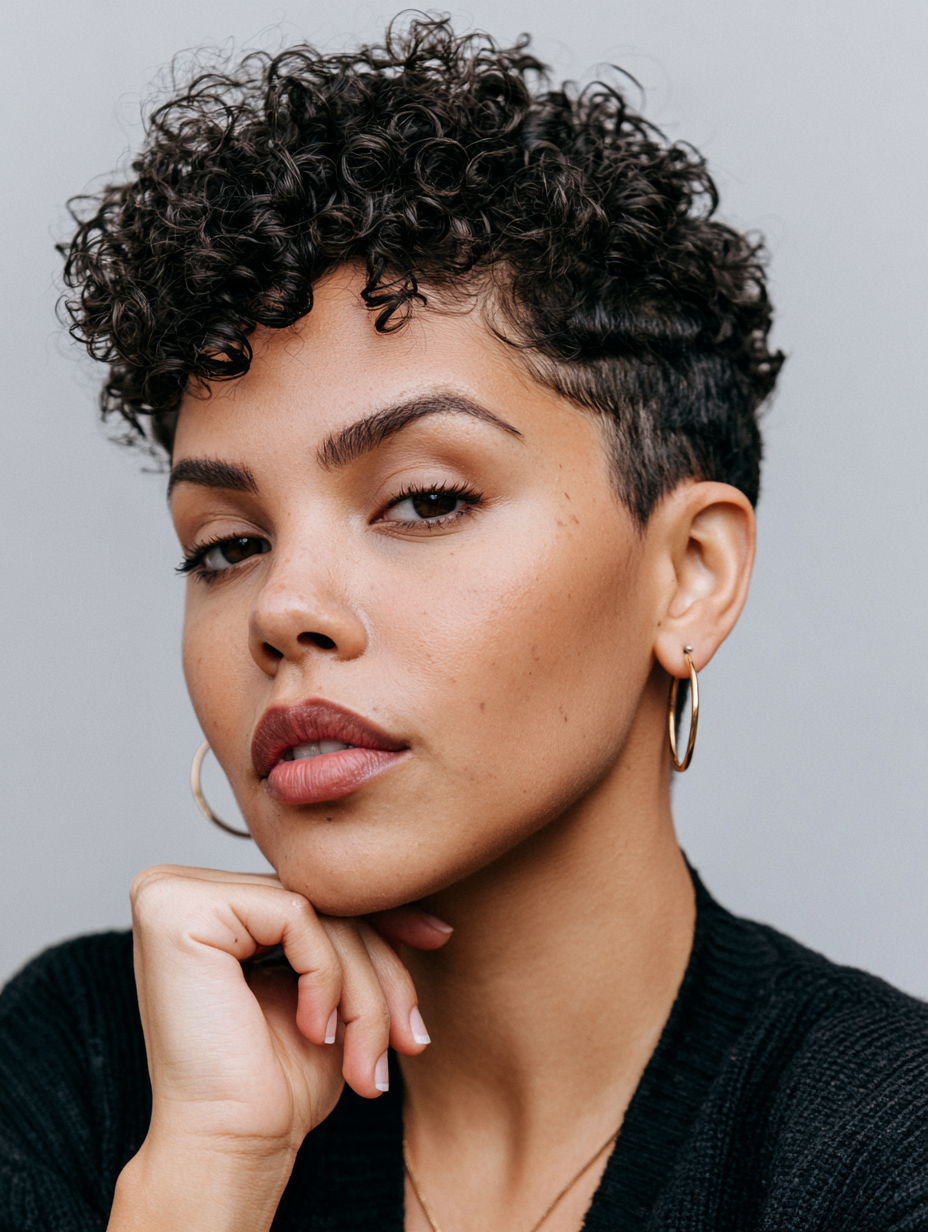
The top stays full of natural curl while the sides buzz close to the scalp.
The contrast between dense curls and bare sides looks sharp on thick coily and curly hair.
Maintenance runs every couple of weeks for the sides, while the top gets styled with curl cream and air-dried. This cut suits women who want a defined statement and don't mind frequent barber visits.
The shape sharpens features and shows off the natural curl pattern at the same time.
Edgy Razor-Cut Pixie
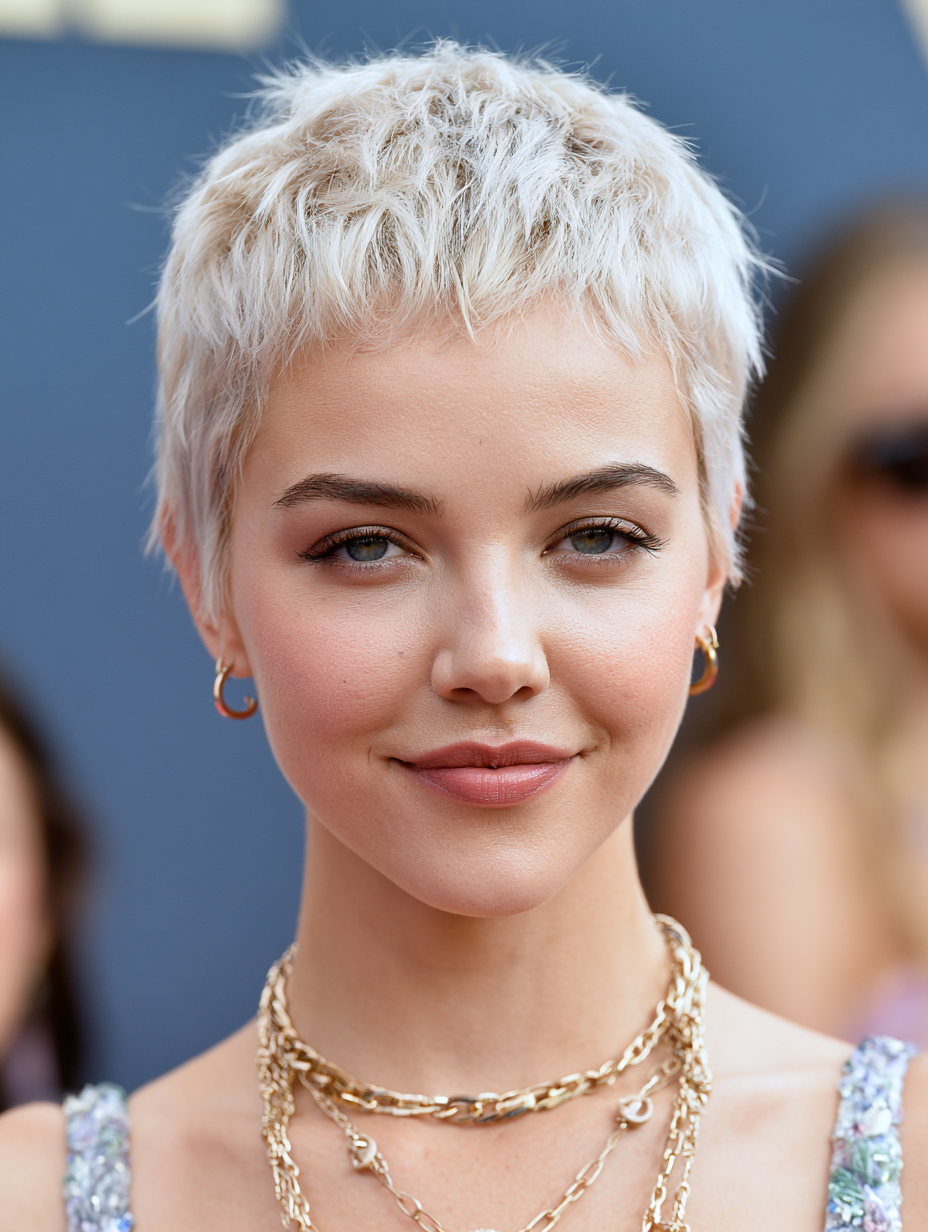
The whole cut uses a razor instead of scissors, creating soft, feathered ends throughout.
Razor cutting removes weight and adds movement at the same time, which works well on thick straight and wavy hair.
The finished cut sits softer than a scissor cut, with ends that taper to fine points. Style with a light cream and a quick rough-dry.
Skip razor cutting on curly or coily hair, since the technique disrupts curl patterns and can cause frizz.
Classic Short Pixie
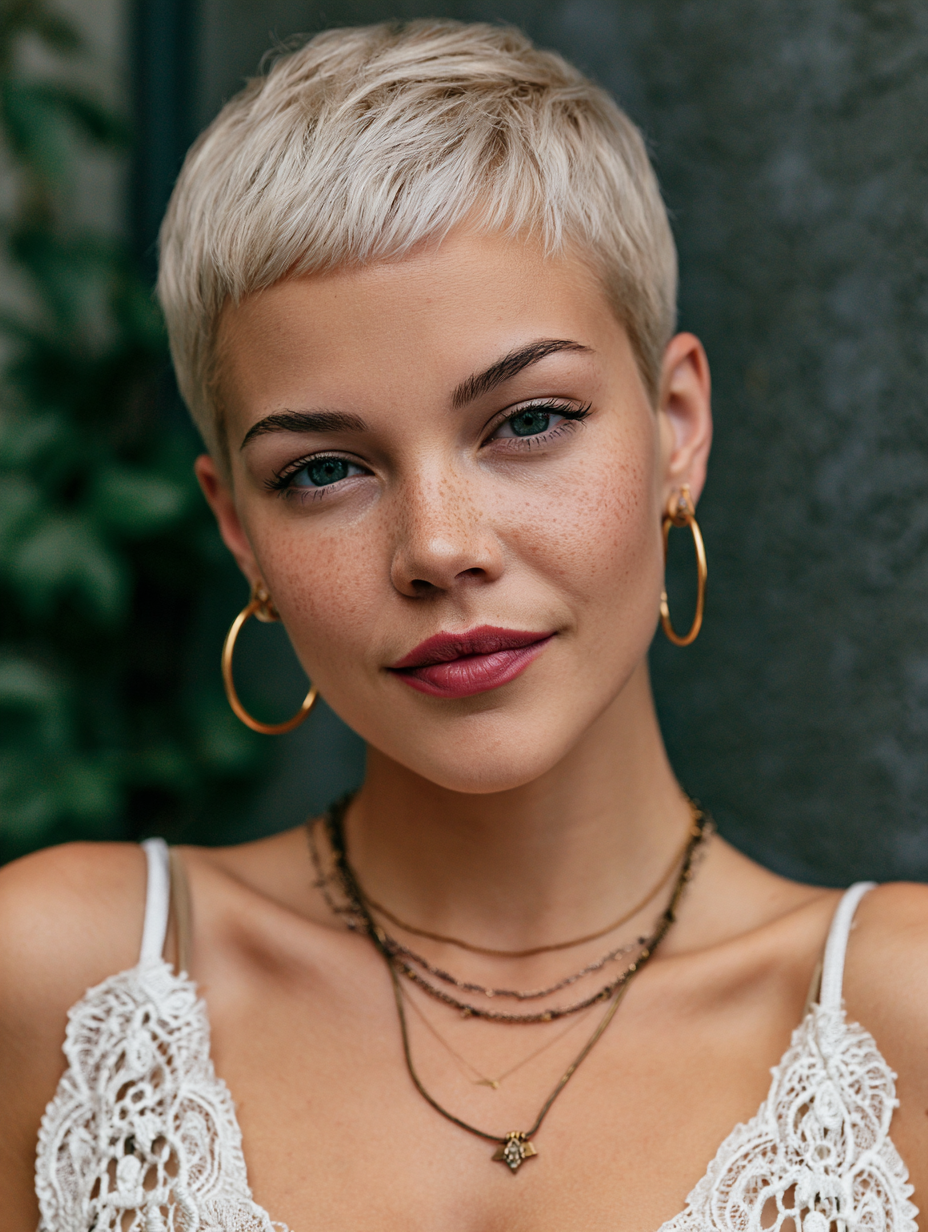
The original, no color tricks or shaved sections, just a well-cut short pixie that handles density through internal layering.
Length stays under two inches everywhere, layered enough to give shape without bulk. This works across every texture with the right cutting technique.
The simplicity makes it the easiest version to maintain. A regular trim keeps the layers from growing into a heavier shape.
Pair with hoops, a bold lip, and confidence. It's the version most stylists will recognize on sight.