Stylists and TikTok will use these two terms like they mean the same thing. They don't.
A textured bob and a layered bob start from the same short foundation. They end up in very different places. One asks almost nothing of your mornings. The other rewards you for spending ten minutes with a round brush.
Knowing the difference is the difference between leaving the salon thrilled and leaving wondering what just happened. Here is the honest breakdown.
What Is a Textured Bob?
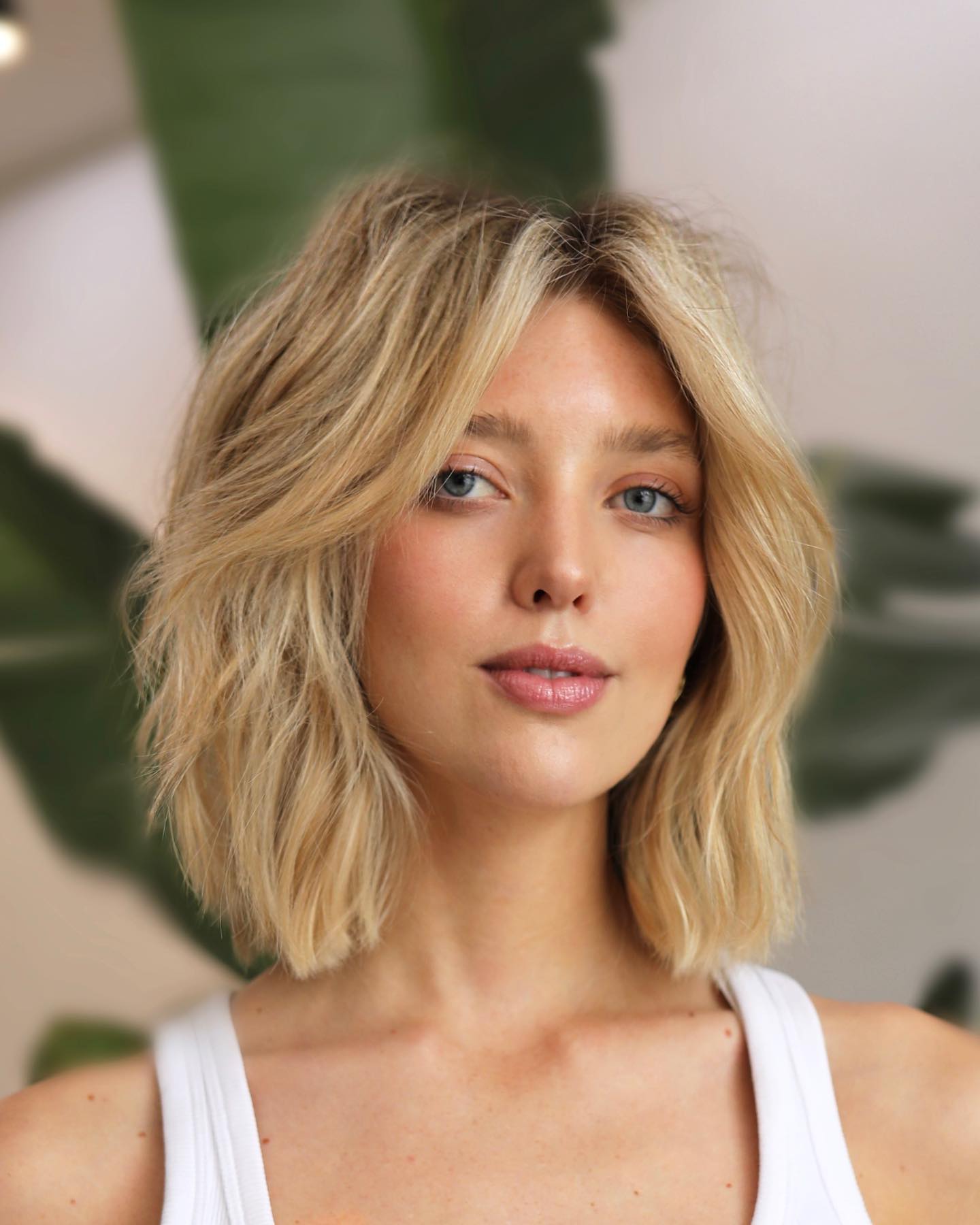
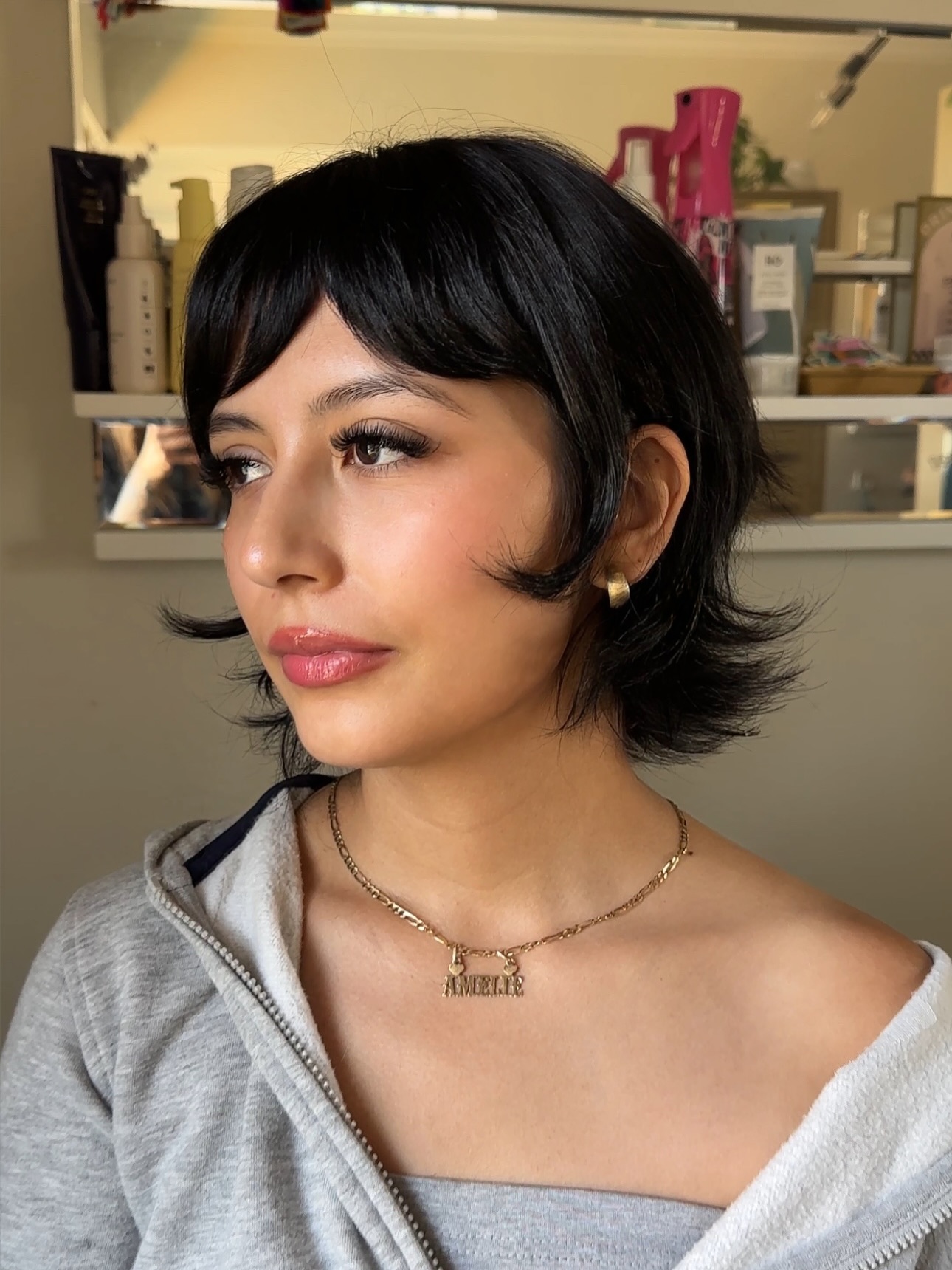
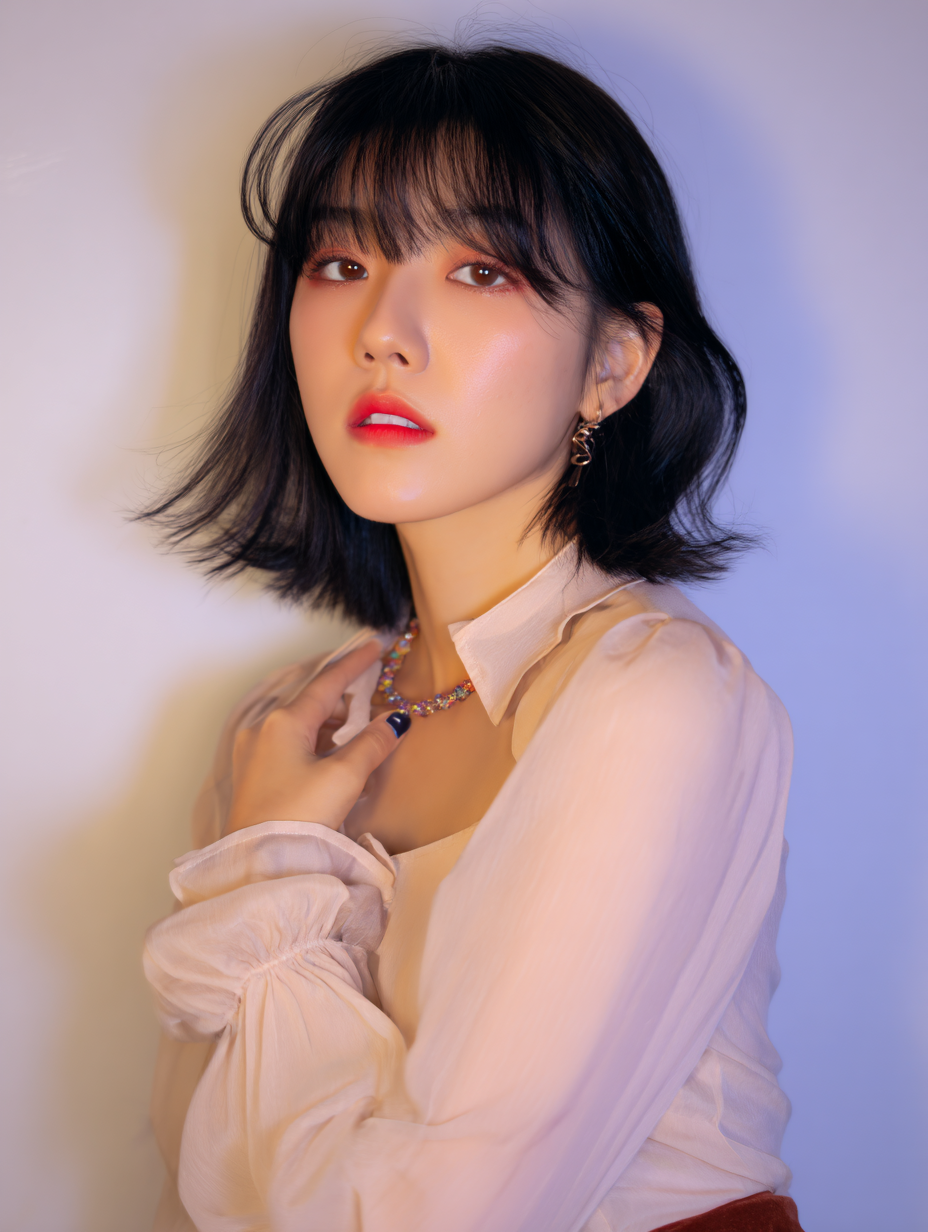
A textured bob keeps most of the hair at one length. The stylist removes weight and breaks up the blunt edge using techniques like point cutting, slide cutting, or razor work.
The goal is subtle. You want soft, choppy ends that create natural movement without visible tiered layers. The work is internal. You see the effect, not the mechanism.
The whole vibe is lived-in, effortless, and a little undone. It's as having "a more subtle shape" that "requires less maintenance at home." Or "a super sweet bob with a grungy edge."
This cut especially loves wavy and curly hair. The texturizing enhances your natural pattern with minimal daily effort. Straight hair can wear it too, but you will probably need to bend a few pieces with heat to get the movement going.
One caveat worth knowing. Stylist Chlöe Swift advises against a textured bob for very coily or tightly textured hair, noting that the daily styling becomes a chore. A sleeker bob is usually a better call for that texture.
What Is a Layered Bob?
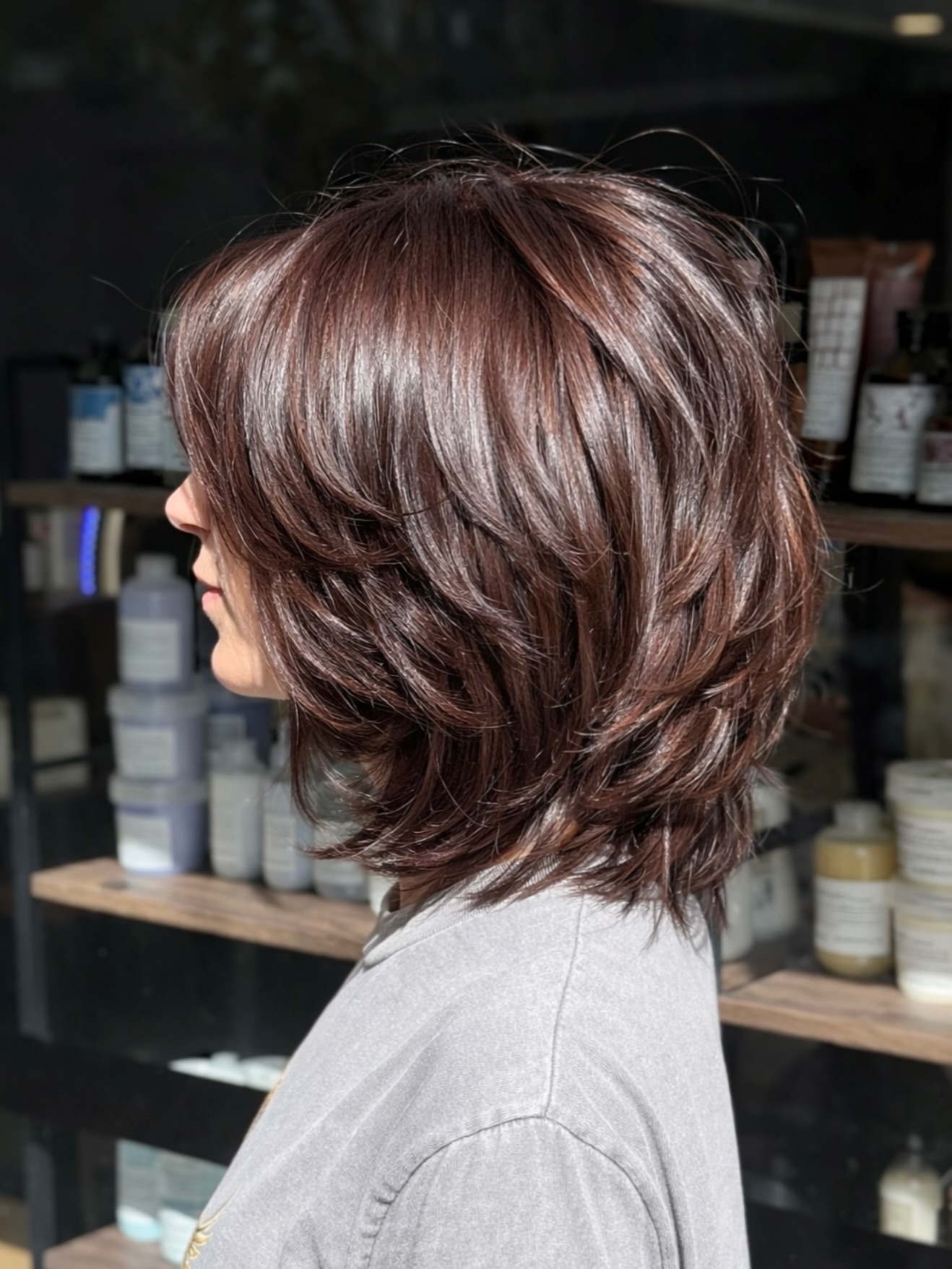
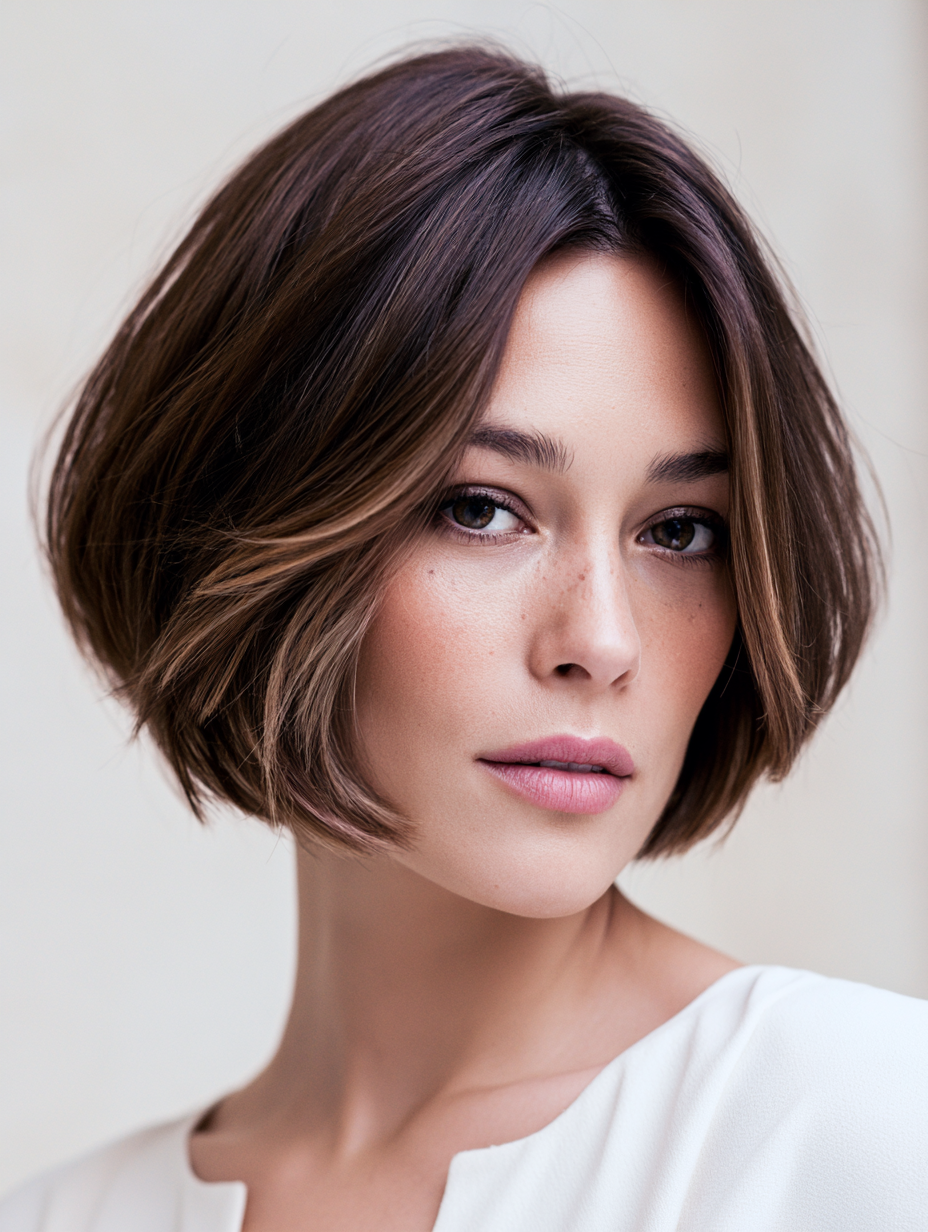
A layered bob does the opposite. It uses distinct, visible tiers of hair, with the ends falling at different lengths throughout the cut.
The shape can be subtle and blended, like a classic layered bob, or dramatic and stacked, like an inverted bob. Either way, the layers are doing the work, and you can see them doing it.
The point is volume, body, and fullness. Unlike the textured bob, which hides its structure, the layered bob shows you exactly what it is.
This cut serves two different hair types well, for opposite reasons. Fine hair gets lift and the illusion of density. Thick hair gets bulk removed so the shape doesn't turn into a helmet.
Layered bobs work best for clients with natural texture or wave, but require a bit more styling. That is the honest trade-off. You get more shape, you do more work.
Layered bobs come in flavors. A long layered bob (the lob) sits around the collarbone. A short layered bob hits the jaw. A shaggy layered bob piles on extra feathered ends for a softer finish.
The Core Differences
| Textured Bob | Layered Bob | |
|---|---|---|
| Technique | Point cutting, slide cutting, razor work on a mostly one-length shape | Distinct length tiers cut throughout the hair |
| Visibility | Hidden, internal work | Visible, structural layers |
| Maintenance | Low. Air dries well, grows out gracefully | Higher. Needs styling and more frequent trims |
| Best for | Wavy and curly hair | Fine hair needing volume, thick hair needing weight removed |
| Vibe | Relaxed, modern, undone | Polished, structured, classic |
What Your Mornings Will Actually Look Like
The daily routine is where these cuts really separate.
Textured bob. Air dry when you can. Scrunch in a sea salt spray or a lightweight styling cream. Tuck the front pieces behind your ears to frame your face. Refresh between washes with dry shampoo. Trims every eight to ten weeks.
If you want a little extra, tong a few random pieces on top for movement and call it done.
Layered bob. Plan on a blow-dryer and a round brush most days to activate the layers. A root-lifting spray at the crown earns its keep here. Use a flat iron when you want a sleek finish.
The layers need precision to style, and the shape itself needs refreshing every six to eight weeks. Skip a trim and the structure starts to blur.
Both cuts benefit from heat protection and lightweight conditioning, especially if you are styling daily.
Face Shape Considerations
Bone structure matters, though probably less than you think.
Round faces. A blunt one-length bob, or a textured bob with minimal width at the sides, elongates the face. A layered bob that falls below the chin also flatters this shape.
Square faces. Soft texture around the jaw is your friend. Keep the length a bit longer, closer to the collarbone, to balance a strong jawline.
Heart and diamond faces. Both cuts work. You can go shorter and show off the jaw.
Oval faces. Almost anything flatters. Pick based on hair type and how much styling you actually want to do.
How to Talk to Your Stylist
The fastest way to a bad haircut is being vague.
For a textured bob, tell your stylist you want a mostly one-length shape with soft, choppy ends, created through point cutting or razor work rather than visible layers. Mention that you want it to air dry well and look a little undone on purpose.
For a layered bob, ask for distinct layers throughout to build volume, with the length sitting around the chin or shoulders. Be upfront that you are okay with a few extra minutes of styling time.
Bring reference photos either way. Describe your real morning routine, not the routine you wish you had. Tell them whether you prefer heat styling or air drying. These details are what turn a generic cut into your cut.
Wrapping Up
The biggest mistake people make with either bob is choosing it for how it looks in photos rather than how it lives on their head.
A textured bob photographed on a model has usually been styled within an inch of its life. A layered bob in a Pinterest grid is being held up by hairspray and good lighting.
Look instead at how each cut behaves on day three, when you have not touched it. That is your real haircut. Pick the one you would still like to be wearing then.