You just spent four to eight hours in a salon chair. Your wallet is lighter by $150 or more, and your braids look absolutely perfect.
But here is the reality most people ignore. Without proper care, those gorgeous braids will start looking rough in just two weeks.
Frizz will creep in. Your scalp will itch. Loose strands will poke out everywhere.
You do not need that frustration. You also do not need to spend money on frequent touch-ups. A few simple habits can keep your braids looking fresh for two full months.
Let me show you exactly what works and what wastes your time.
1. Start Before You Get Braided
Wash your hair the night before your appointment. Clean hair holds braids much better than oily hair. Use a sulfate-free shampoo to remove buildup without stripping natural oils.
Apply a deep conditioner and let it sit for 20 minutes. Rinse with cool water to seal the hair cuticle. Trim split ends before braiding. Damaged ends slip out of braids faster than healthy ones.
Ask your stylist for medium or small braids. Larger braids look great initially but loosen within 3 weeks. Smaller sections distribute tension evenly and stay secure longer.
Do not let anyone braid your hair too tightly. Scalp pain means damage is happening. A good stylist creates firm braids without causing discomfort.
2. Wash Without Ruining Your Style
Wash your braids every two weeks. Waiting longer allows sweat and oil to build up on your scalp. That buildup causes itching and an unpleasant smell. Dilute your shampoo with water in an applicator bottle. Squeeze the mixture directly onto your scalp, not the braids themselves.
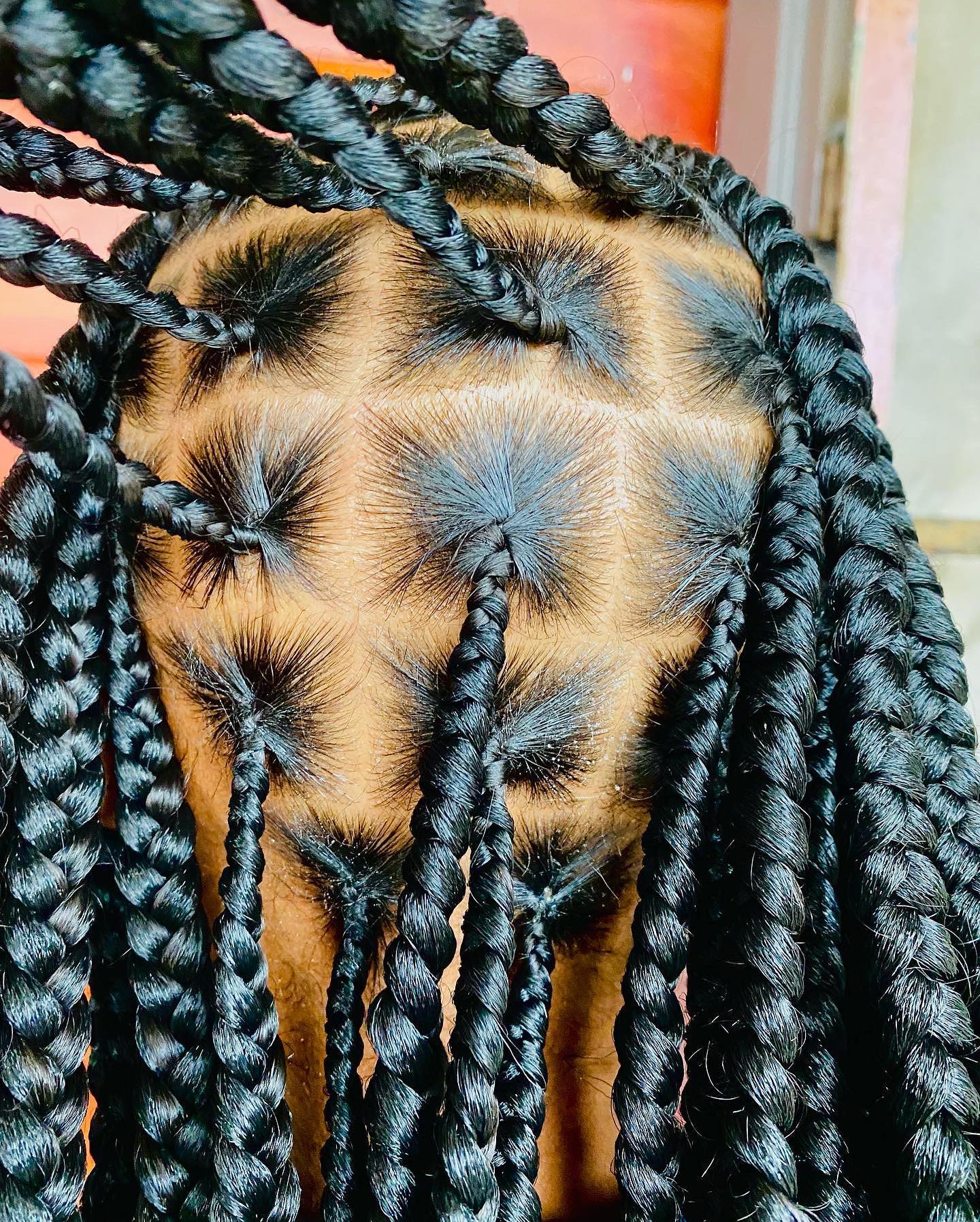
Use your fingertips to massage gently. Do not scrub or rub the braids together. Focus only on cleaning your scalp. Rinse with lukewarm water until the water runs clear.
Skip heavy conditioners. They leave residue that attracts dirt and makes braids look dull. Apply a lightweight leave-in conditioner to your scalp only.
Dry your braids completely before sleeping. Wet braids develop mildew and smell bad. Wrap your hair in a microfiber towel for 20 minutes first. Then let them air dry for several hours. Use a hooded dryer on cool if you need faster results.
3. Master Your Nighttime Routine
Friction destroys braids while you sleep. Cotton pillowcases grab hair strands and create frizz overnight. Switch to a satin or silk pillowcase immediately. These materials let your braids glide smoothly as you move.
Wrapping your hair every single night is a great alternative to getting a satin or silk pillowcase. Use a large satin scarf or a bonnet large enough to hold all your braids.
Gather your braids loosely on top of your head first. Secure them with a silk scrunchie, never rubber bands. Then wrap the scarf around your entire head. Tie it snug but not tight. A loose wrap falls off during sleep and offers no protection.
4. Moisturize the Right Way
Spray your braids with water-based products only. Oil-based sprays sit on top of synthetic hair and attract dust. Fill a spray bottle with water and aloe vera juice instead. Add 5 drops of peppermint oil for a cooling scalp sensation. Mist your braids lightly every 2 to 3 days.
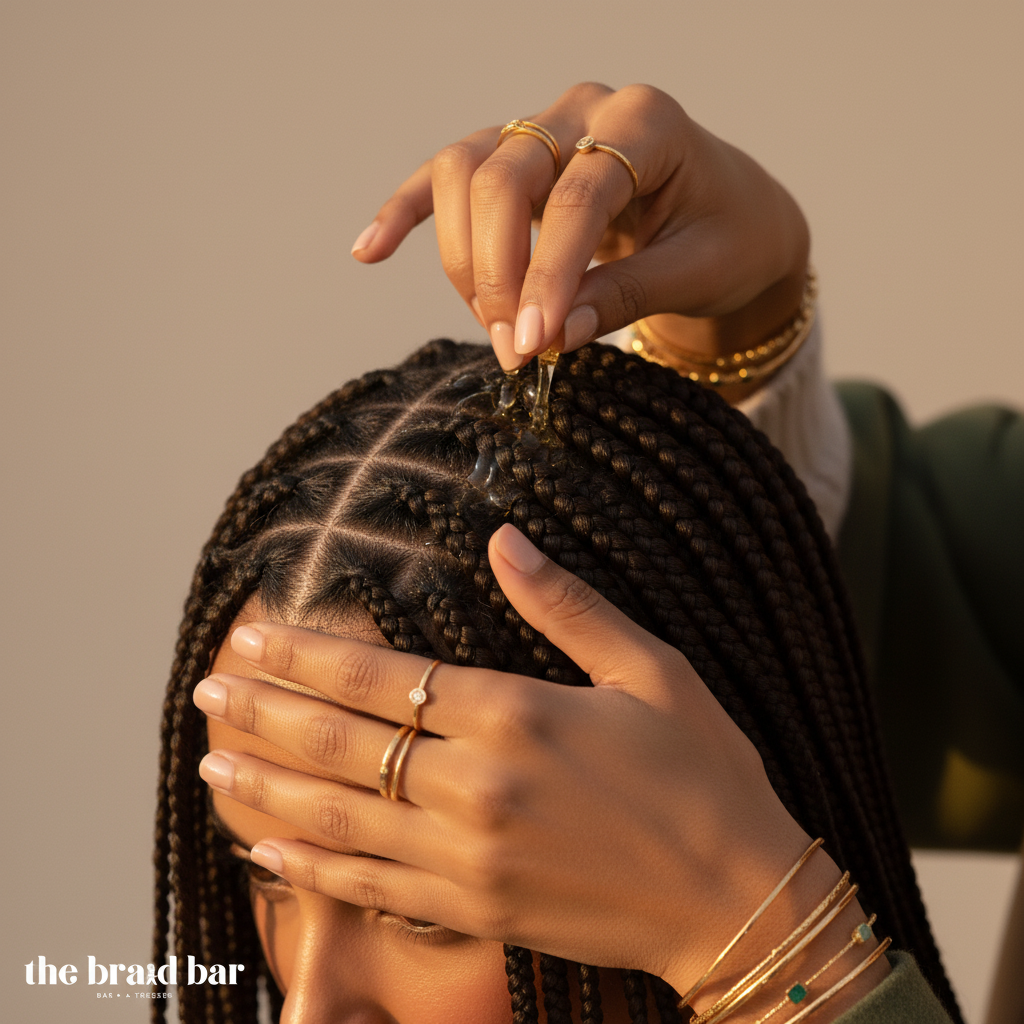
Focus moisture on your scalp, not the braid length. Your natural hair underneath needs hydration to prevent breakage. Use a dropper bottle to apply jojoba or argan oil directly to your parts. Massage the oil in with your fingertips for 2 minutes. Use just 3 to 4 drops per section. More oil creates buildup that smells bad over time.
Seal the moisture after each spray. Apply a tiny amount of lightweight oil to your palms first. Run your hands down each braid from root to tip. Pay extra attention to the ends where dryness starts first.
5. Handle With Care During the Day
Stop touching your braids constantly. Every time you twist or pull a braid, you loosen its grip on your natural hair. Keep your hands away from your head throughout the day. Do not play with loose strands. Trim flyaways with small scissors instead of pulling them out.
Wear loose styles most of the time. Tight ponytails and high buns strain your edges and cause breakage. Use fabric hair ties when you need to pull hair back. Never use rubber bands or elastic bands with metal pieces. Change your style position daily. Putting tension on the same spots every day creates weak areas.
Protect your braids during workouts. Sweat contains salt that dries out both real and synthetic hair. Wear a sweatband around your hairline to absorb moisture. Let your braids hang loose or wear them in a low ponytail. Wash your scalp within 24 hours after heavy sweating.
6. Fix Problems Before They Get Worse
Trim loose hairs as soon as you see them. Use small, sharp scissors to cut stray strands close to the braid. Do not pull or tug at these hairs. Trimming every 2 weeks keeps braids looking freshly done.
Smooth flyaways with gel, not oil. Apply a dime-sized amount of alcohol-free gel to your palms. Run your hands over the surface of your braids lightly. Focus on your hairline and the crown area first. Use a soft toothbrush for edges. Dip it in gel and brush baby hairs into place gently.
Schedule a touch-up at week 4. A professional can re-braid loose areas around your hairline. This costs much less than a full new set of braids. Your stylist will also trim damaged ends and clean your scalp thoroughly.
7. Know When to Let Go
Remove your braids after 8 weeks maximum. Keeping them longer damages your natural hair permanently. New growth creates weight that pulls on fragile strands. Matted hair at the roots becomes impossible to detangle.
Watch for these warning signs. Itching that does not stop after washing means product buildup is out of control. White or gray residue on braids signals trapped dirt and oil. A sour smell means moisture got trapped inside the braids. Do not ignore these red flags. Remove braids immediately to prevent scalp infections.
Cut the extensions off carefully. Use a seam ripper to remove synthetic hair without cutting your real hair. Work slowly and keep good lighting. Detangle each section with your fingers before combing. Deep condition your natural hair for 30 minutes after removing all braids.
Give your hair a break between braiding sessions. Wait at least one week before installing new braids. Use that time to trim ends and restore moisture. Your scalp needs to breathe and recover from tension.
Wrapping Up
Great braid care comes down to three things. Clean your scalp regularly, protect your hair at night, and touch your braids as little as possible.
Follow these rules and your braids will look fresh for 2 full months. Ignore them and you will need a redo in 3 weeks.
Your hair will thank you for good habits. Healthy braid care actually grows your natural hair longer. Less manipulation means less breakage over time.
Start tonight by wrapping your hair before bed. Small changes make a huge difference in how long your braids last.